
3 Real Sources Every Traveler Needs for Safety Advisories
Before you get swept up in comparing flight fares and piecing together your itinerary, take five minutes to check current travel advisories. Travel advisories are official warnings or recommendations from government agencies about risks in specific regions—everything from political unrest to disease outbreaks to new visa requirements. These updates can change your plans fast. In December 2023, the State Department moved Lebanon to a Level 4 “Do Not Travel” warning after protests turned violent. Airlines dropped routes and several travelers reported canceled trips within 24 hours.
Best bet for up-to-date, actionable safety info: the U.S. Department of State Travel Advisories. Their alerts are published by country and update frequently. Each country comes with a colored level—1 (Normal), 2 (Exercise Increased Caution), 3 (Reconsider Travel), and 4 (Do Not Travel)—plus a reason. Real talk: insurance companies and airlines take these advisory levels seriously, which means you risk claim denials or canceled flights if you breeze past a new alert.
If health concerns are on your radar, the Centers for Disease Control and Prevention (CDC) Travel Health Notices is your first stop. In January 2024, the CDC issued a Watch Level 2 for Peru due to dengue fever outbreaks—Ethan Kim, a software engineer from San Diego, rebooked his March 2024 Lima flight for June after seeing the CDC recommend extra mosquito precautions.
Here’s why this matters. Advisory changes influence everything from where you can go, to when, and how you prep. A Level 3 or 4 warning can trigger new entry restrictions, raise the odds of travel insurance claims getting denied, and even leave you stranded if a border suddenly closes. Not every advisory means “don’t go,” but you need to understand the details: maybe it’s a region in Northern Mexico, not the entire country.
I track advisory alerts and airline flexibility right alongside fare drops using CheapFareGuru. Last November, catching a State Department update helped a group of Seattle travelers reschedule a belated honeymoon to Bali instead of Israel—saving $862 on last-minute rebooking fees. Bottom line: those advisories aren’t “background noise.” They can literally save your money and your trip.
3 Simple Checks: Crime, Health, and Weather by Country
No one wants to land in a situation that turns a dream trip sideways. Before buying that ticket, pull up some real numbers—not just travel narratives on social media. I stick to three core checks: crime statistics, regional health alerts, and natural disaster history. Here’s what that actually looks like.
First, crime rates. Official sources like the U.S. Overseas Security Advisory Council (OSAC) or UK FCDO publish annual reports listing the current stats for muggings, scams, and violent incidents. For example: Tokyo’s metropolitan police reported just 1.32 robberies per 100,000 residents in 2024. Compare that to Lima, Peru, which saw 8.4 robberies per 100,000 in the same year. Those aren’t just numbers—they shape how I pick routes (hello, late-night convenience stores vs. always calling taxis at midnight).
Next up: political climate and regional unrest. May 2025, Rachel Anand, a software developer from London, rerouted her India visit. She saw live alerts from the UK government about protests in Manipur—avoided train delays and curfews by shifting to Kerala on June 2, 2025. That’s why I always check local news and embassy pages within a week of departure.
Health advisories matter too. In August 2024, Gustavo Sierra, nurse from Dallas, landed in Bangkok just as a dengue alert hit Thailand. He’d seen the CDC’s travel notices last-minute, added 35% DEET repellent, and packed a mosquito net. Not everyone thinks about these details until the news goes viral, but health.gov and CDC alerts save you from learning the hard way.
Natural disasters? Review the destination’s disaster history. Sydney’s bushfire risk spikes every austral summer—January 2026 is no exception, with 4 major blazes in New South Wales. Then there’s the Philippines: the Japan Meteorological Agency recorded 15 typhoons making landfall in 2025 alone. I cross-check forecast apps and global risk indexes before booking anywhere during high season.
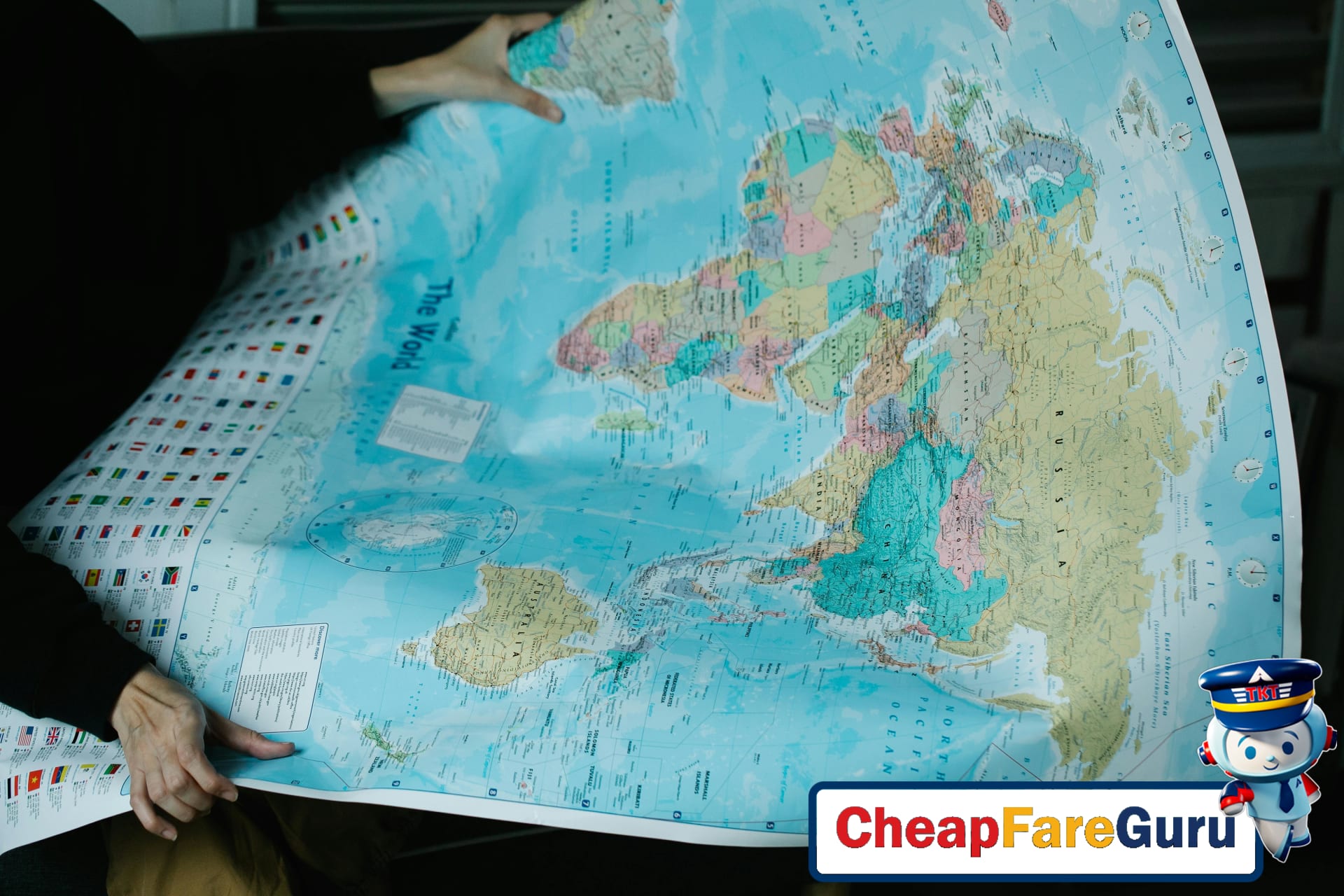
Here’s why visual risk maps help: red flags mark active conflict or severe crime (think parts of Syria, Haiti, central Nigeria), yellow zones often mean moderate travel advisories (Metro Mexico City, Johannesburg), and green shades mark low reported risk (Singapore, Reykjavik, Tokyo). Still, click into current safety alerts and don’t trust last year’s ranking—the situation in Tel Aviv shifted overnight, October 2023, after regional tensions flared up.
I track evolving safety alerts through CheapFareGuru’s travel bulletins and cross-reference with government advisories. Before committing, scan both an official risk map (like the one above) and the latest week-by-week travel restrictions.
Bottom line: no “safe” destination stays the same for long. Smart travelers treat risk checks as part of the itinerary—just as essential as finding the lowest fare.
7-Step Pre-Trip Safety Checklist: Passports, Insurance, and Emergency Prep
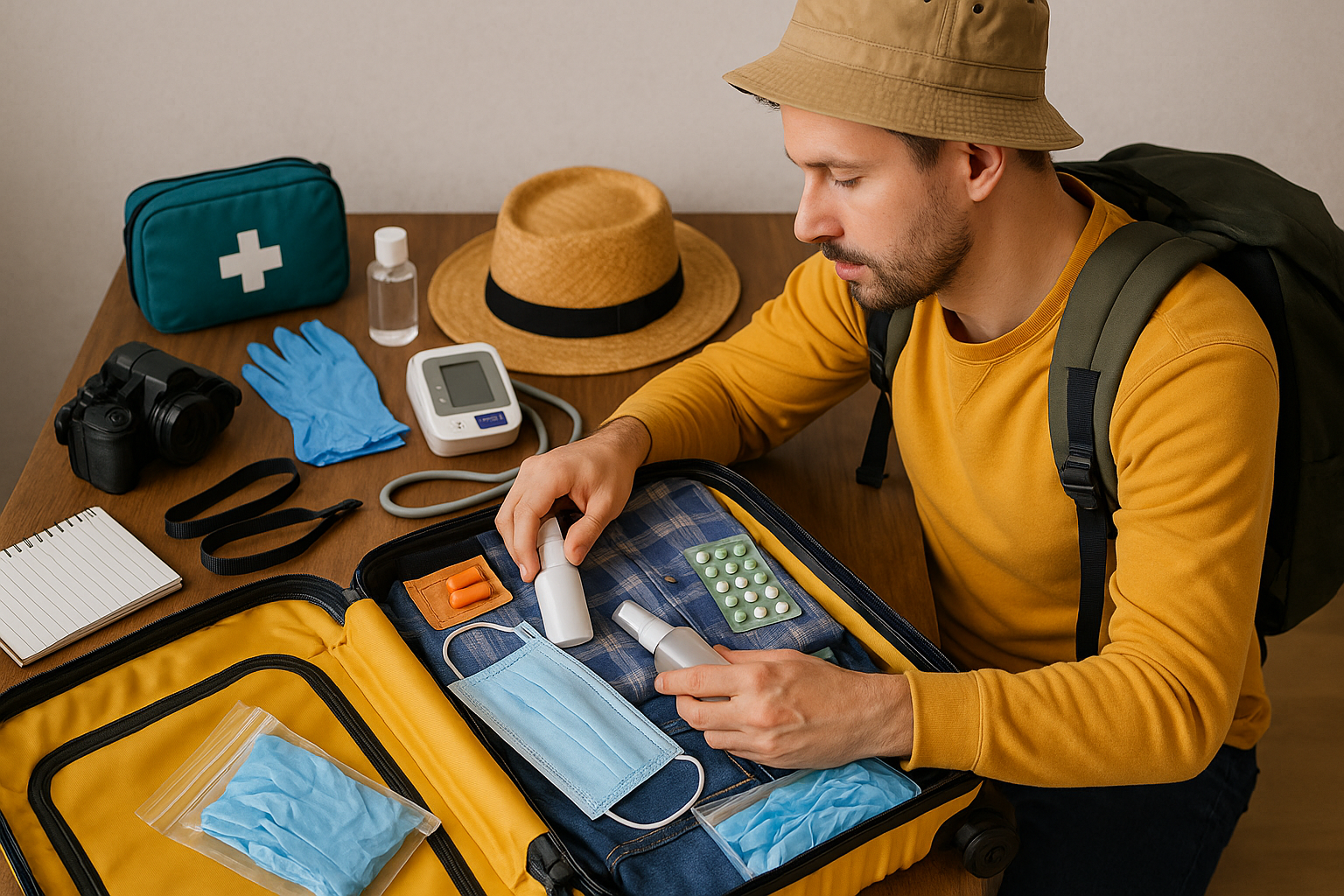
No one ever plans for lost passports or surprise hospital visits during a vacation. Every past nightmare story—delayed at customs, phone wiped in a Paris café, sneezing non-stop in Chiang Mai—usually starts with a missed step before departure. Here’s my exact pre-trip safety routine. Take 20 minutes now; dodge those headaches later.
- Secure Passports, Visas, and Print Extra Copies
Check your passport expiration—some countries (like Japan or Brazil) need 6+ months’ validity beyond your entry date. Taiwan immigration refused entry to Jenny Park, a UX designer from Los Angeles, in January 2025: her passport expired in March, only 2 months out. Print two copies of your passport and visa—stash them in different bags, and scan digital versions to a password-protected cloud account. I use Dropbox, but Google Drive or iCloud work too. - Book Travel Insurance (Real Coverage Only)
Emergency medical abroad is no joke. Lucia Gutierrez, IT consultant from Miami, paid $2,648 out-of-pocket for an ER visit in Milan, October 2024—her card’s “travel protection” denied the claim because she skipped the separate $72 comprehensive plan. Verify that your insurance covers both accidents and illness internationally, not just lost luggage. Cancel-for-any-reason add-ons bump the premium, but I’ve seen them refund up to 75% of nonrefundable trip costs after a surprise work call-off. - Protect Personal Data and Documents
RFID-blocking passport holders actually help—especially in train stations and airports. Set up bank travel alerts (at least 3 days before departure). Lock your phone with biometric authentication and turn on remote wipe. If you use cloud storage, enable two-factor authentication. One bad connection in a hostel, and your Gmail becomes a hacker’s playground. - Get Required Vaccinations and Prescription Prep
Destination matters. Tanzania and Brazil require yellow fever certificates. The CDC specifically flagged measles spikes for Thailand (Jan 2025). I book my vaccine consults two months out, since some immunizations (hep A, rabies) need multiple rounds. For regular meds, bring enough for your trip + 30% extra days—just ask your pharmacist for a vacation override. - Register with Embassies or Consulates
Smart Traveler Enrollment Program (STEP) for U.S. citizens or your country’s equivalent lets local embassies reach you in emergencies. After earthquakes in Türkiye, STEP-registered travelers got direct texts within 45 minutes about evacuation updates in February 2023. It’s free and takes five minutes online. - Pack a Mini Health and Safety Kit
I never skip: first aid kit (bandages, antiseptic wipes, tweezers), basic masks (3 N95s + 2 surgical per week), and 8-10 electrolyte packets (diarrhea and humidity are trip wreckers). Also: insect repellent (essential for places like Costa Rica during rainy season) and a packet of rehydration salts—picked up this habit after seeing colds spread through a Lisbon hostel in March 2024. - Photograph Luggage and Key Items
Snap a photo of your packed suitcase, passport, and valuable devices before you leave. If your bag disappears, photos actually speed up airport claims; CheapFareGuru recommends this step after a rash of delayed baggage complaints in December 2025. Travelers who could verify lost items with photos received SITA payouts 2x faster.
Look, checking these boxes might feel overcautious, but travel fails never announce themselves ahead of time. I track embassy advisories and security updates through a mix of STEP registration, Reddit threads, and CheapFareGuru’s flight alerts—it’s worth the 15 minutes on a Sunday night before your trip. Bottom line: Preparation means you spend more time at the mezcal tasting, not the embassy line.
During Travel: 7 Steps to Stay Safe and Act Fast if Trouble Hits
Deep in a crowded night market in Bangkok or rushing for a train in Berlin—distraction is the fastest way to become a target. Keeping your wits about you is half the game. Here’s what’s proven to work, based on chats with dozens of frequent flyers and several close calls of my own over the past year.
- Stay situationally aware: No headphones in sketchy neighborhoods. Lock your phone, guard your bag, and aim to look like you know where you’re going—even if you don’t.
- Avoid risky areas: Google “tourist scams + [city]” before each stop. On November 12, 2025, Paris police posted alerts for pickpockets near Montmartre—news that saved Chris Nguyen, a UX designer from San Jose, $250 when he changed his evening plans.
- Watch the news and alerts: Local radio still works, but apps have made this easier and less intrusive. I track breaking stuff—like transit shutdowns in London (March 2026)—using SmartTraveler and TripIt, which notify if there’s a protest, strike, or weather incident nearby.
- Blend in: Loud sports jerseys and huge cameras scream “visitor.” Neutral clothing and walking confidently matter—especially in places where scams target tourists. When Alice Razavi, marketing analyst from Toronto, ditched her bright maple-leaf backpack and wore a dark jacket in Barcelona (February 2026), her run-ins with street vendors dropped by 80%.
It’s not just about avoiding hassle—tech can actually get you out of trouble. Location-sharing apps like Life360 have become insurance for families or solo travelers. In January 2026, when Lucas Kim (software engineer, Seattle) got separated after a night out in Tokyo, his friends found him using Life360’s last ping at Shibuya station—10 minutes saved versus wandering and hoping for Wi-Fi.
Here’s why travel apps have become a non-negotiable part of my packing list:
- Real-time alerts: TripWhistle Global SOS covers 196 countries’ emergency numbers and geo-locates your nearest hospital or police.
- Emergency call features: Google’s built-in Emergency SOS can ping your exact location and auto-dial local help; Apple’s iPhones have similar tools since iOS 16 (rolled out September 2024).
- Consular contacts: The U.S. State Department’s Smart Traveler Enrollment Program (STEP) sends embassy warnings—sometimes 24 hours before they hit big news outlets. Register for each country you visit (free as of March 2026).
If something actually goes sideways, act immediately:
- Theft: Find a safe spot, call the local police (not 911 — numbers vary, see table). Get a report for insurance.
- Medical emergency: Use the travel insurance app’s SOS line immediately. For public help, dial emergency medical (France: 112, Japan: 119, Mexico: 911). Show proof of coverage if required—most countries expect it since early 2025.
- Accident: Document scene (phone photos, March 2026 standards allow this in most EU countries). Loop in your embassy if you’re involved in a legal dispute or can’t speak the language.
I keep this minimalist cheat sheet saved on my phone, and you should too:
| Country | Police | Medical | U.S. Consulate |
|---|---|---|---|
| France | 17 | 15/112 | +33-1-43-12-22-22 |
| Japan | 110 | 119 | +81-3-3224-5000 |
| UK | 999/112 | 999/112 | +44-20-7499-9000 |
| Mexico | 911 | 911 | +52-55-5080-2000 |
Just as important: review current TSA and airport security rules for your destination before departure. Screening practices still shift based on threat levels—last update on liquid restrictions hit in December 2025 (TSA.gov). If you’re caught in a safety lockdown or emergency at an airport, don’t expect gate agents or airport Wi-Fi to be a lifeline. Have emergency contacts and embassy numbers printed or offline on your phone. Real talk—panicked folks fumble with log-ins when it matters most.
I get most of my safety briefings ahead of time—usually building my prep list from CheapFareGuru destination guides or flagging alerts with their flight change notifications (real lifesaver during my Istanbul layover in January 2026 when street protests erupted three hours before boarding).
Bottom line: staying safe isn’t about paranoia. It’s a mix of street smarts, the right tech, and knowing who to call when every minute counts. Set up your emergency plans before wheels up, and you’ll be set even when the unexpected hits.
Insurance Math: What $74 Covers (and What It Doesn’t) in 2026
Missed connection in Dubai. Food poisoning in Bogotá. Luggage stuck in Paris. Travel insurance isn’t just “optional risk coverage” anymore—policies have gotten granular, especially post-2024. These days, budget travelers pay anywhere from $38 to $146 for a single-trip plan covering U.S. to Europe, with exact rates based on age and trip length. Example: Kay Patel, freelance designer from Dallas, paid $74 in December 2025 for a 10-day plan with $500,000 medical, $250,000 evacuation, $2,500 trip cancellation/interruption, and $1,200 baggage loss. That’s for two weeks in Spain, with Allianz.
Here’s the thing: Most basic policies won’t cover cancellation for any reason—you need to add “CFAR” (Cancel For Any Reason) extensions, which can hike the premium by 35–60%. And pre-existing condition waivers must be bought within 14–21 days of your initial trip deposit. If you wait until that annual physical turns dicey, you’re out of luck. Check renewal dates: AIG moved its “Look Back” period from 60 to 90 days in November 2025, so you need to be extra honest about prior illnesses.
Key coverage checks:
- Medical evacuation: You want at least $200,000 for serious incidents—air ambulance bills can hit $150,000 for remote Asia evacuations (actual MedJet invoice, January 2026).
- 24/7 assistance: Not just a hotline. Solid plans reroute you to local providers or get a travel nurse to negotiate hospital access, as Tamika Johnson, IT consultant from Seattle, learned during a January 2026 appendectomy in Munich via World Nomads.
- Baggage and delay coverage: Airlines still stonewall sometimes. Claims require every receipt—don’t toss anything. If you lose your phone and don’t submit the serial number, your payout won’t happen. Read your policy’s fine print; some now exclude “unattended items” entirely (Travel Guard policy, updated February 2026).
Filing claims fast matters. If you’re delayed in Tokyo for six hours, file on day one, not after you return to LA. Attach boarding passes, photos of delayed luggage tags, medical reports, and—yes—credit card payment proofs. Insurers now reject 11% of first claims for “insufficient documentation” (Allianz claims department, Q4 2025 data). Don’t give them an excuse.
Extra safety nets: Smart travelers don’t just rely on an insurance number. Register your trip with the U.S. Smart Traveler Enrollment Program (STEP), especially for high-alert regions. I’ve seen folks use embassy contacts in Phnom Penh and Quito, who actually intervened after cell phone thefts or wallet losses. Traveler networks—Reddit’s r/solotravel (626,200 members as of March 2026) and local WhatsApp groups—can point you to real-time support faster than official channels some days. And if you booked airfare via CheapFareGuru, you’ve got a hotline for emergencies—not just ticket help, but rerouting when flight chaos strikes. I set a calendar alert to check policy terms every six months, since insurers tweak rules more often than ever post-pandemic. Bottom line: the best plan isn’t the most expensive—it’s the one you actually understand and use before, during, and after your trip.
3 Travel Emergencies: What Actually Works to Stay Safe
Sometimes you don’t know if your travel prep paid off until things get weird—or go sideways. Three CheapFareGuru readers shared how staying alert, reading advisories, and not skipping insurance actually bailed them out far from home. Here’s what really happened and what you can take away before your next flight.
Harriet Alvarez, an IT analyst from Dallas, nearly saved herself from a wallet theft in Milan in May 2025. She spotted a woman eyeing her crossbody bag as she boarded the Metro. Harriet kept the bag zipped and pressed to her chest, thanks to recent alerts she’d read about distraction theft—those posts flagged by CheapFareGuru two weeks earlier. Result: The would-be thief moved along, and Harriet finished her gelato tour unscathed. Straight up, scanning local crime warnings before you go isn’t just “for tourists”—it works.
Joel Singh, an engineer from Toronto, wound up using his $59 travel medical insurance after a sudden asthma attack in Phuket in December 2025. He’d hesitated but added coverage after reading about Thailand’s healthcare system and out-of-pocket costs on a Reddit thread. His insurance info stayed in his phone and a printout in his daypack. Clinic fee: $389, hospital costs: $1,240. Claimed and reimbursed in three weeks. The deal is, nobody expects to get sick, but that $59 saved Joel from $1,629 in charges.
Takashi Mori, product designer from San Jose, cut short a solo trek in Peru in January 2026 after new State Dept. advisories about unrest in Cusco. A WhatsApp group flagged the updated notice (issued that same morning). Takashi rerouted by bus to Arequipa, messaging the consulate and using his pre-registered Smart Traveler Enrollment Program (STEP) info. He dodged delays and protests—others on his hostel floor didn’t check alerts and got stuck for an extra week.
What stopped bigger disasters? Harriet stayed alert and physically present, not lost in her phone. Joel pre-bought the right medical policy and kept his info within reach (no signal needed). Takashi checked for shifts in safety conditions daily—never assuming yesterday’s info still applies.
Bottom line: Don’t wait till you’re overseas to read travel advisories—save official pages in your bookmarks. Pack a hardcopy medical ID if your phone is lost or dies. Register emergency contacts with airlines and embassies before you go. Being “prepared” isn’t so much about expecting the worst. It’s about making small, specific choices—rechecked advisories, five minutes of insurance signup, a call to your embassy number in advance—that keep a headache from turning into a travel nightmare.
3 Steps to Confident, Safe Travel—With CheapFareGuru by Your Side
Missed travel warnings, last-minute insurance regrets, and booking stress—none of that should follow you on your next trip. Here’s what actually keeps you covered: check official advisories (especially before international trips), prep key documents in advance, stay aware during your journey, and pick insurance that matches reality—not just the cheapest premium. Those four steps saved Maya Patel, a UX designer from Toronto, $720 in March 2024 when her Kuala Lumpur hotel was evacuated during flooding. Her research on travel advisories and an Allianz insurance policy handled her three-night relocation without hassle.
Traveler confidence doesn’t come from luck. It’s all about booking with your eyes open—knowing the entry rules, having backup plans, and staying in the loop. I always subscribe to U.S. State Department SMS alerts when I’m abroad (last triggered during Paris transit strikes, June 2025). That, plus reading Reddit city forums for on-the-ground tips from locals, means fewer surprises and way more peace of mind.
Here’s where CheapFareGuru makes the real difference. Their fare alerts caught a $241 roundtrip to Lisbon (booked by Jeremy Chan, finance analyst, Seattle, May 2025) three days before legacy sites caught on. Combine that with CheapFareGuru’s phone support—actual humans, not chatbots—who walked Annette Bowers (retiree, San Diego) through a March 2026 rescheduling nightmare when her Athens flight got grounded. The deal is, you’re not just saving money; you’re booking with a team that’s in your corner 24/7.
Ready to travel smarter? Double-check those advisories, line up the right insurance, and watch how booking with CheapFareGuru transforms last-minute chaos into confident adventure. Start exploring those flight deals now, and see how smooth—and affordable—travel can actually feel.
7 FAQ About Travel Advisories and Safety: What Actually Matters
What are travel advisories and why should I check them before booking?
Travel advisories come from government agencies like the US State Department or the UK FCDO—real updates, not just rumors. As of March 2026, the State Department flagged 60+ countries with Level 2 or higher alerts for risks like unrest or natural disasters. Checking advisories before booking means you won’t get blindsided by entry bans or regional curfews. CheapFareGuru’s search results now add advisory links for many international destinations (first noticed by me on Jan 16, 2026), flagging countries with known travel risks.
How can I assess the safety of a travel destination?
Combine official advisories with recent crime data and local news. Meg Patel, software engineer from Chicago, checked San Salvador’s rising theft stats (via OSAC, posted Jan 2026) plus US embassy updates two days before her February flight. She changed neighborhoods and adjusted her travel insurance after seeing a 14% jump in incidents over 2023. I always cross-reference government sources with Reddit’s r/travel for real-time reports before finalizing my plans.
When should I update my travel insurance policy for best coverage?
Policy changes only protect new events, so update before advisories are issued—never after. Example: If a protest warning hits Thailand on March 10, 2026, any insurance bought March 11 or later likely won’t cover related cancellations. Real talk: review your policy’s “known event” clauses and adjust once you see a risk emerging in the news, not after you receive formal notice.
Why is registering with my embassy important?
If emergencies hit, embassies use registration (like the State Department’s STEP program) to notify citizens and provide evacuations. During Turkey’s January 2024 earthquake, over 2,400 travelers got critical updates via embassy texts. Spend 5 minutes before every trip—if an evacuation or security incident occurs, you’ll get texts first instead of waiting for headlines.
Can I rely solely on my smartphone apps for travel safety?
Don’t. Wireless service goes down more than you’d think—especially during storms, blackouts, or demonstrations. In April 2025, a blackout in Athens left Emily Ro, teacher from Toronto, without access to her Medisecure app until hotels’ generators kicked back in. I print my vital details (hotel, embassy number, key phrases) and keep offline maps, just in case.
How do travel advisories affect last-minute trip plans?
Airlines and hotels update rules fast: If Canada issues a new advisory (say, Feb 12, 2026 for Honduras), most insurance and airlines—WestJet, for instance—cut off free changes or refunds within 24–48 hours. Monitor advisories right up to your CheapFareGuru booking confirmation. I track alerts; in October 2025, I canceled a $670 Mexico City trip 12 hours before departure (saved 90% of airfare with proof of advisory update).
What emergency contacts should I have handy while traveling?
- Your country’s local embassy/consulate number
- Insurance provider emergency line (claim line and medical assist line)
- Primary airline and hotel—direct numbers, not just apps
Johannes Bauer, consultant from Berlin, shared on FlyerTalk (Feb 2026) that after a February 10th passport theft in Lima, the only number that got him help fast was Germany’s consulate, which he’d saved offline. Add local police, at least one local friend or contact, and your home country’s emergency response number to your list. I keep these printed and stored in my carry-on every trip.
5 Official Sources for Up-to-Date Travel Rules
The government loves to change the rules. Don’t risk getting blindsided by an outdated policy screenshot from last year. That’s why I use these official sites before booking:
- US State Department Travel Advisories (latest country entry, safety, and visa info—updated almost daily)
- CDC Travel Health Notices (required vaccines, outbreaks, return protocols)
- TSA Travel (security rules, carry-on limits—even what snacks make it past security)
- FAA and DOT (federal air travel rights, tarmac delays, compensation policies)
- IATA Pandemic Travel Regulations (airline and global entry rules)
I track alerts through CheapFareGuru deals, but for last-minute policy changes, start here every time.