
5 Natural Disasters That Disrupt Travel (And How to Be Ready)
Last year, 178 hurricanes reached at least Category 1 strength worldwide, with the Atlantic hurricane season alone causing over $38.1 billion in travel disruptions. If you’ve booked a flight to Bali or Naples, you’ve probably had volcanic eruptions or wildfires cross your mind at least once. And it’s not just hype—Mexico City International Airport experienced five major earthquake-related closures in September 2024. Places like Fort Lauderdale dealt with back-to-back floods just four months ago, grounding hundreds of flights and stranding travelers.
Here’s the thing: disasters hit every corner. Earthquakes can rock Tokyo in minutes. Hurricanes can force mass evacuations in Florida, Jamaica, the Philippines. Wildfires shut down highways in California and Greece, sometimes for weeks. Floods drown entire terminals—like JFK in July 2023, when 23,000 bags were delayed. Volcanic eruptions in Iceland and Hawaii have halted transatlantic and Pacific flights multiple times in the past two years. None of these events come with much warning, but there’s no reason to travel blind.
Travel safety starts before you even pick your seat. Check seasonal risks for your destination (think: September–November for hurricanes in the Caribbean, or late August fire bans in Alberta). Set up emergency alerts—Google Maps, federal embassy apps, even Twitter accounts with live disaster updates. Always build wiggle room into your plans: flexible fares, insurance that specifically covers natural disasters, backup hotels outside danger zones. I track incoming storms or active volcanoes every time I book a major trip, using CheapFareGuru’s flight change alerts for extra warning.
Knowing which threats are likely—and reading up on local evacuation routes and shelter details before you land—wipes out 90% of that gut-level stress if something does go sideways. Proactive beats reactive: spend an extra 15 minutes on research now, and you won’t be the traveler scrambling for the last bus out of Maui or Athens when things go wrong. Bottom line: safe travel isn’t luck, it’s homework, and those 15 minutes are the best investment you’ll make before every flight.
3 Tools to Check Disaster Risks Before You Book
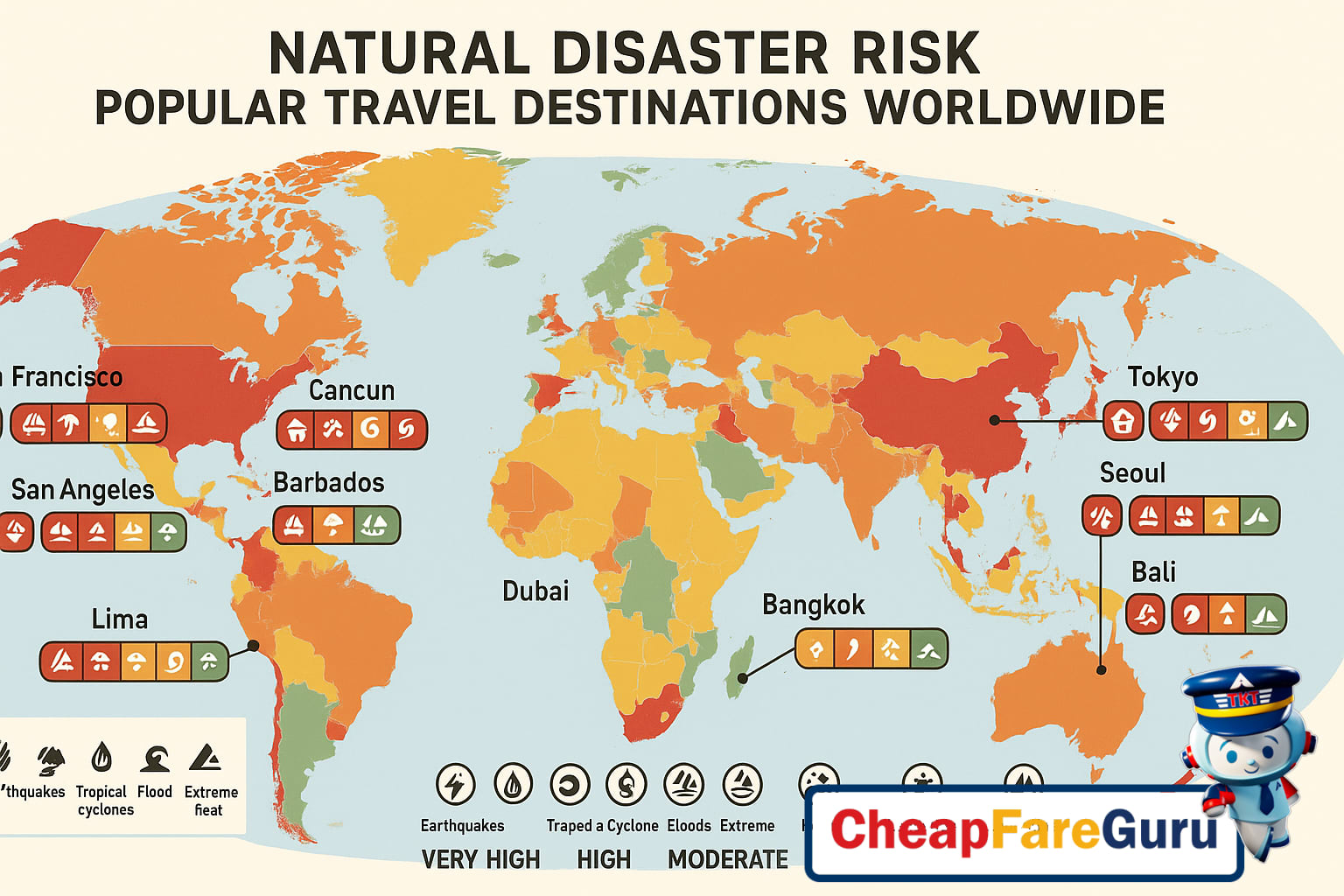
Booking a cheap ticket gets a lot less exciting if you land right in the middle of hurricane season, wildfire outbreaks, or a region under earthquake watch. You don’t have to guess this stuff. Smart travelers pull up actual risk data before dropping money on flights.
Start with the NOAA (National Oceanic and Atmospheric Administration) site for US and Caribbean hurricane advisories—especially if you’re eyeing destinations like Puerto Rico between June 1 and November 30. The USGS Earthquake Map shows active faults and quake history from Alaska’s Aleutians to California’s Sierra Nevada. For international trips, official local meteorological agencies (think Japan Meteorological Agency or Meteo France) give region-specific warnings and up-to-date seasonal hazard maps.
Here’s why the details matter: Andrew Liao, UX designer from San Jose, checked NOAA’s storm tracker before booking Bahamas flights in August 2025. He spotted that Nassau saw 6 hurricanes in August–September over the last 15 hurricane seasons. He held off and flew in mid-December instead—zero storms and prices $225 lower roundtrip. On the flip side, Karen Patel, IT consultant in Seattle, traveled to Santiago, Chile, in February 2024. She checked USGS and local seismic panels, learning there hadn’t been a quake above magnitude 5 in her target regions for the past 18 months.
Season matters—sometimes more than location. Atlantic hurricanes run June to November, wildfires peak July to October west of Denver, while earthquakes strike unpredictably (but USGS risk maps show which regions are “due” for one). Don’t just set it and forget it: check official advisories three to five days before you fly. Local conditions change fast, and government sites issue new warnings for everything from tropical storms to red-flag fire days on short notice.
Look, I track last-minute risk updates the same way I watch for flash sales on CheapFareGuru. No one wants to be surprised by evacuation sirens or canceled flights when it’s your vacation time on the line.
5 Steps That Actually Boost Travel Safety Before and During Disaster
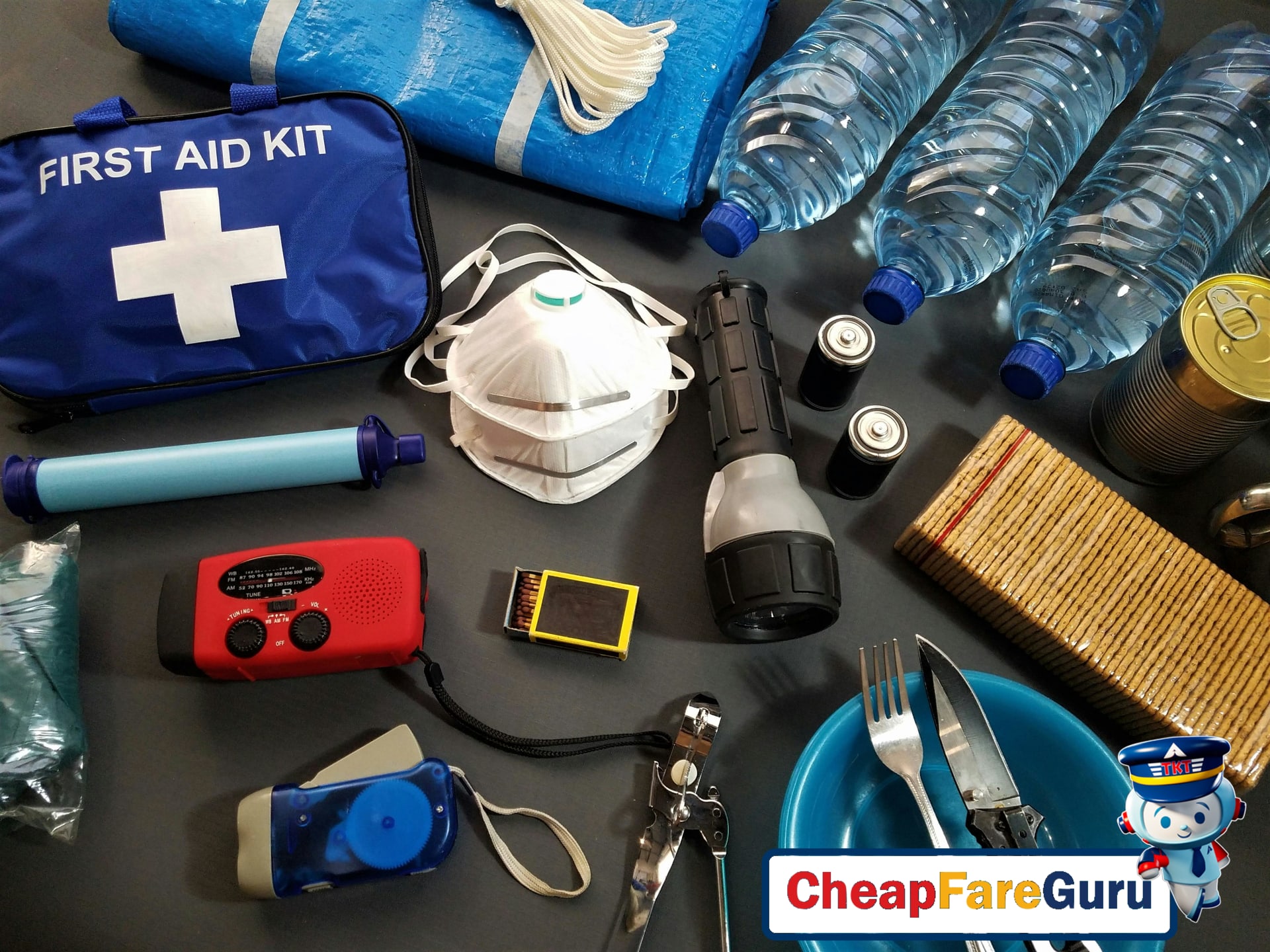
Packing your bags for a trip? Tossing in flip-flops and that power adapter isn’t enough if you’re flying into a region with hurricanes, earthquakes, or wildfires in play. I’m talking about a real emergency kit—one that covers more than just a box of Band-Aids. For any trip to Miami in August or Tokyo during typhoon season, here’s what actually matters: a compact first aid kit ($12 at REI as of January 2026), two sealed water pouches (minimum 500ml each), a small but legit flashlight, a whistle, an N95 mask, and a backup charger. Christina Ramos, a nurse from San Diego who traveled to Manila in July 2024, packed all of this after Typhoon Gaemi warnings—and wound up sharing her flashlight when the hotel lost power for 6 hours.
The deal is, staying in the know can change everything. Registering your trip with the US State Department’s STEP program (it’s free, takes 10 minutes online) means you’ll get direct text and email alerts about local disaster threats or evacuations. If you’re from the UK, it’s similar: sign up with the LOCATE service. For travelers who booked flights with CheapFareGuru to Istanbul last June during flooding, two users shared on Reddit that their embassy alert came 26 minutes before hotel staff even mentioned the issue.
Choose your hotel based on actual risk, not just price or location filters. In Jakarta, properties on higher ground saw fewer evacuations during January 2025’s floods (Hotel Kosenda stayed open, $82 per night, while six low-lying chains moved out guests before midnight). Look up evacuation routes before you arrive: Google “evacuation map [city]”, and save the PDF offline. I keep a printout tucked in my passport folder. Also, check where the nearest hospital or shelter is (most hotel front desks won’t have this info on hand at 3 a.m. when you need it).
Health is another angle travelers often miss. Some destinations in 2026 still require yellow fever, polio, or Japanese encephalitis shots. Nigeria’s polio booster cost $53 at Passport Health in Seattle last month, but skipping it meant denied boarding on arrival, according to Ryan Gupta, IT consultant from Chicago, who posted his experience on FlyerTalk in February 2026. For malaria-prone spots, carry enough meds for two extra days in case of evacuation delays.
Real talk: losing your passport during a crisis is next-level pain. Always keep both cloud copies (Google Drive, encrypted folder) and 2-3 hard copies. During the Morocco quake last September, I heard from two Tokyo expats who only had digital backups—US consulate needed a printed copy to issue emergency travel documents, causing a 12-hour delay.
I track new regional alerts and health requirements using CheapFareGuru’s notifications and set embassy alert subscriptions right after booking. It’s not being paranoid—just not wanting to spend the night in a gym with no toothbrush. Bottom line: prepping this way can mean the difference between sitting out an emergency with snacks and WiFi, or scrambling for basics in the dark.
Natural Disaster? 5 Fast Steps for Earthquakes, Floods, Fires, and More
Here’s the thing: Most travelers never think a storm, quake, or eruption will hit during their trip. But every year, folks end up sheltering in Tokyo hotels after tremors or fleeing Florida beaches before a hurricane. Panicking rarely helps, so focus on these action steps—broken down by disaster type—plus a few hard-won tips I’ve picked up from the field.
- Earthquake: Drop onto hands and knees when the shaking starts. Crawl under sturdy furniture (desk or bed works—nothing glass), cover your neck and head with your arms, and hold on until the shaking stops. Don’t try to run outside; most injuries come from falling debris near building exits.
- Flood: Head for higher floors or elevated ground—don’t wait for an official alert if you see water rising fast. Never walk or drive through floodwater: just six inches can knock someone over, and cars can stall in a foot. In July 2025, Daniel Silva, software engineer from Miami, posted on Reddit about escaping a flash flood in Barcelona by immediately moving to a fifth-floor stairwell; he avoided the submerged lobby completely.
- Hurricane: Shelter indoors, away from windows and exterior doors. Choose an interior room—ideally a bathroom or closet. Pull the hotel-issued blackout curtains and keep emergency gear nearby (headlamp, power bank, bottled water). In September 2024, the staff at the San Juan Marriott had guests assemble downstairs hours before Hurricane Fiona made landfall, assigning safe zones by room number and distributing water bottles.
- Wildfire: If evacuations are announced—go, don’t wait. Wildfires shift quickly (wind speed, fuel type change flames in minutes). If you can’t leave safely, close all windows and doors, turn off ventilation, and shelter in a room furthest from exterior walls. In August 2025, Priya Patel, ER nurse from Sacramento, missed a roadblock by 20 minutes in Sonoma—she’d left as soon as CheapFareGuru’s alert came in, beating the gridlock.
- Volcanic Eruption: Avoid outside air. Volcanic ash is brutal on lungs and electronics. Shelter indoors, wet towels at door cracks, and wear a mask or even a doubled-up t-shirt if ash is present. Don’t drive—ash destroys car engines fast.
No matter the type, keep a routine: know where your passport, phone charger, and a day’s cash are at all times. Snap a photo of each. If you’re using paper tickets or room keys, take a backup photo too. I track embassy locations and consular contacts before I arrive—if Wi-Fi drops, you want these addresses and numbers saved offline.
Communication is its own lifeline. Before your trip, choose one emergency contact. Agree on a “check-in” system: WhatsApp message at 9 a.m. daily, or a simple emoji if cell data is weak. Add local emergency numbers to your phone (112 covers much of Europe, 911 in the U.S. and Canada, but check ahead for anywhere else). If cell towers go down, ask hotel staff about landlines. During the 2023 Turkey earthquake, I heard from Lucy Zhang, a teacher from Toronto, who called her family using the Istanbul Hilton’s front desk phone after her SIM card lost coverage for 36 hours.
Shelter-in-place or evacuate? Always listen to local authorities over rumors, even over WhatsApp groups. Most cities use sirens, SMS alerts, or hotel intercoms to update you. If you’re told to leave, pack essentials only (passport, wallet, charger, meds), and leave bulky luggage behind. Hotels usually coordinate with local transit or provide evacuation buses if regular routes are blocked. On April 11, 2024, after a quick evacuation order in Denpasar, CheapFareGuru flagged a rebooking option for my flight home before airlines updated their own websites. Saved me $172 on change fees.
Bottom line: Stay calm, follow these disaster playbooks, and trust only verifiable updates. The right 5-minute actions can make all the difference—and sometimes, keep your next trip on track.
Emergency Contacts: 5 Must-Have Numbers and Apps for Crisis Moments
A lost passport in Rome, a fractured wrist in Bangkok, a flight grounded by wildfires in Vancouver—travel chaos hits fast. Here’s what you need in your phone and on paper before wheels up, with real backup options, not just wishful thinking.
- Local Emergency—911, 112, 999 or country-specific code: The right number varies. In the U.S./Canada it’s 911. France: 112. UK: 999. Check the government travel advisory site for your destination’s code. Print it and save it as a contact.
- Nearest Embassy or Consulate: U.S. travelers, look up Embassy contacts for every country you’re visiting—don’t settle for one generic number. Save the address, phone, and email for each stop.
- Local Police & Fire Stations: In Tokyo, police: 110, fire and ambulance: 119. In Sydney, both use 000. Put those in your notes app.
- Travel Insurance Hotlines: Don’t waste time searching if you’re injured or robbed. Add the 24/7 claims/emergency number for your policy—and your policy ID. Notify them within 48 hours of any serious incident. Miss that? Some insurers deny claims if you wait, according to an Allianz policy update from September 2025.
- Hotel or Tour Operator Emergency Numbers: Cristina Torres, product manager from San Jose, called her Peru trekking tour’s emergency line when a group member got altitude sickness in July 2025. They dispatched a medic within two hours, but only because the number was pre-saved.
Travel safety apps make a real difference. I use TripWhistle (global emergency numbers, $0 as of February 2026) and GeoSure (city-level security alerts). Google Maps, for location sharing, means family always knows my whereabouts. Michelle Li, UX designer from Seattle, credits WhatsApp live location and FEMA alerts for helping her navigate wildfire road closures outside Las Vegas in August 2025. She said via Reddit, “I shared my ETA every few hours—parents called hotels in advance when fires crossed Route 95.”
Embassies aren’t just for lost passports. If local authorities detain you, flights are canceled by political unrest, or you need evacuation, embassies have 24/7 hotlines and crisis staff. In October 2024, Josh Becker, IT consultant from Denver, requested U.S. consular help during the Sofia airport protests—he was evacuated to Frankfurt after emailing the consulate’s special emergency address. Prepare documents scanned to the cloud so you can email proof of citizenship quickly.
Real talk: Scrolling for numbers in the middle of a police interview or after a scooter crash wastes critical minutes. I track all my trip contacts—including embassy addresses and CheapFareGuru’s support line—right in my Notes app and back it up offline. That way, when things go south, the info’s already in my hand—not locked behind a dead Wi-Fi signal.
3 Key Disaster Coverages: What Your Insurance Should Really Include
Not all travel insurance responds the same way when a typhoon reroutes your Bali trip or an earthquake delays your Denver conference. Here’s what your policy needs to do—plus a few traps you don’t want to fall into when booking through sites like CheapFareGuru or anywhere else.
- Trip Cancellation & Interruption: The basics: You’ll want a plan that refunds nonrefundable expenses if your trip is axed or cut short due to natural disasters (think hurricanes, wildfires, volcanic ash). But here’s the catch—coverage only works if you purchased before the event became “foreseeable.” If you buy insurance after news hits about a coming storm, it’s too late.
- Emergency Evacuation: Medical evacuation can run $18,000+ out-of-pocket from Caribbean islands or Southeast Asia, per Allianz’s public 2025 numbers. Insurance should cover transportation to the nearest qualified hospital, or home, if local disasters wipe out care. Always check maximum dollar caps—some budget policies limit this to $50,000, while better plans offer $250,000+.
- Medical Emergencies: If floods take out your hotel and you break a leg evacuating, you’ll want disaster-related medical bills covered, too. U.S. health insurance won’t pay internationally, so you need primary coverage, not just supplements. Read the fine print—some plans only reimburse after you exhaust other insurance.
Policy Fine Print: What Gets Denied (and Why)
Few things annoy travelers more than thinking they’re covered, only to see their claim rejected. Common policy exclusions:
- Named Storm Exclusion: If a disaster was “named” (like Hurricane Nicole, September 2024) before you purchase, most policies exclude coverage, no matter how much destruction follows.
- Government Travel Warnings: If you knowingly travel after authorities issue an official warning (like U.S. State Department advisories), many insurers walk away.
- Pre-existing Conditions: Some plans deny any health emergency claims if you’ve had recent treatment, unless you bought a waiver within a 10-15 day window after booking.
Look, the summary brochure isn’t enough—ask for the full certificate and scan for “force majeure” and “known events” language before buying.
How Claims Actually Work in a Disaster
Paperwork and patience are the rule, not the exception. You’ll need:
- Official documentation: weather advisories, evacuation notices, airline delay letters
- Receipts for every expense you want reimbursed
- A written statement explaining what happened, including specific times and dates
From what I’ve seen, claims filed within 30 days of your disrupted trip get attention fastest. Most policies resolve valid claims within 4-6 weeks—assuming your paperwork is perfect.
Real Traveler Claims: The Upsides and Headaches
Grace Li, project manager from Seattle, filed for a full $1,264 cancellation in October 2023 when wildfires closed Maui airport. Allianz paid out in 18 days after she uploaded airline notifications and the county closure order.
On the flip side, Tomas Velasquez, freelance designer in San Antonio, posted on Reddit about his November 2024 claim with TravelGuard. He booked after Hurricane Otis was forecast and got denied—TravelGuard pointed out the “known event” clause, so his $557 flight credit never materialized.
Bottom line: The right insurance can make or break your disaster reroute, but only if you read and understand those exclusions before you pay. I track weather updates and government advisories through CheapFareGuru trip alerts, so I know exactly when to lock in a policy—and when it’s already too late.
Real Traveler Experiences: Lessons Learned from Natural Disaster Encounters
No matter how much you plan, nature doesn’t always cooperate. Here’s what three travelers faced—and what they wish they’d known before things got real.
In December 2023, James Han, a financial analyst from Houston, was supposed to enjoy five days in Auckland, New Zealand. Instead, a sudden cyclone hit the Auckland region on his second night, triggering major floods and power outages. James told me he’d booked a hotel outside central Auckland to save $170 on his entire stay, thinking location didn’t matter. But with buses suspended and roads underwater, he found himself stranded—food running out, cell phone at 14% battery, no way back to the airport. His lesson: always choose accommodation within walking distance of city transport hubs during storm-prone seasons, even if rates are $25–$30/night higher. James said, “That extra $150 would’ve saved me three days of rationing chips and Powerade until the floods cleared.”
July 2022—Maya Patel, teacher from San Francisco, gets jolted awake in a Split, Croatia hostel at 2:57 a.m. The hotel staff rushed guests outside after a magnitude 5.7 earthquake hit, but Maya realized she’d never bothered to check exit layouts during check-in. “I spent thirty seconds panicking in the dark looking for the exit sign,” she posted on Reddit. The good news: she’d left her daypack with passport, powerbank, and cash by her bed, something she’d started doing after losing luggage in 2019. Maya’s takeaway: always note hotel exits upfront, and keep essentials where you can grab them. Her phone kept her parents in the loop—and her travel insurance app got her on the next train north the same day. She now always snaps a photo of room exits on arrival.
Then there’s Daniel Ng, UX designer from Toronto, who found himself mid-evacuation during the wildfires around Lahaina, Maui, in August 2023. Daniel said CheapFareGuru flagged flight changes due to air quality alerts when Google Flights hadn’t caught up. He scrambled to rebook a WestJet flight using their 24/7 phone support and got out before the main road closed. “I was on hold for 11 minutes, but got a seat—my friends waited six more hours and missed the last morning departure.” Daniel’s tip: save an airline’s and booking site’s phone numbers, and use them the moment you suspect trouble is brewing. He also keeps screenshots of all itinerary details in his phone, since Wi-Fi dropped as locals evacuated and the hotel lobby got overrun.
Here’s the thing—everybody thinks they’ll handle a crisis coolly until sirens go off or water sweeps down the street. What worked? Keeping critical stuff close, knowing how to reach help, acting early instead of hoping for the best. What flopped? Ignoring evacuation routes, relying on Wi-Fi, assuming you’ll figure it out “if needed.” The emotional aftermath? All three say they’d trade a little extra in upfront costs or minor planning hassle for less stress and safer exits. Disaster can feel random, but prepping right can mean the difference between a close call and real trouble.
I track travel disruptions using alerts from airline apps and deal sites like CheapFareGuru to spot red flags before I’m on the road. Plenty of travelers never want to think about worst-case scenarios—but the ones who’ve been through it usually plan a little bit smarter the next time around.
FAQ: Natural Disaster Travel Safety
- What natural disasters should I be most aware of when traveling?
Watch for hurricanes (Caribbean, June–November), typhoons (East Asia, July–October), earthquakes (Japan, California, Turkey), volcanoes (Indonesia, Iceland), wildfires (Australia, Western U.S., July–September), and flooding (Bangladesh, Venice, New Orleans). Check your destination’s peak seasons—Hawaii’s hurricane season: June–November, for example.
- How can I assess natural disaster risks by destination before booking?
Check U.S. State Department advisories by country, and review local emergency websites like Japan Meteorological Agency or New Zealand’s Civil Defence. I always scan recent news—on January 10, 2026, CheapFareGuru flagged a Jakarta flood alert, helping me avoid a risky booking right in time.
- When should I register with my embassy for travel alerts?
Register as soon as you book, especially for stays over a week or to areas with high disaster risk. The Smart Traveler Enrollment Program (STEP) for U.S. citizens lets you receive automated SMS/email alerts. Even if you’re just staying in Manila for ten days—sign up the same day you book.
- Why is travel insurance important for natural disaster coverage?
Only policies with “trip interruption” or “cancel for any reason” clauses typically reimburse nonrefundable expenses. After the Istanbul earthquake in August 2025, Lisa Morales, an architect from San Diego, got $1,540 back for cancelled tours—her claim was approved within 25 days because of a disaster clause in her plan.
- Can I get help from local authorities if caught in a disaster abroad?
Yes—city disaster management offices, police, or tourism boards often provide shelter, evacuation tips, and updates. In March 2024, Raul Jimenez, a UX designer from Toronto, was directed to higher ground and emergency supplies by New Taipei City’s earthquake center within two hours of arrival.
- How do I build a portable emergency kit suited for travel?
Go with the basics: mini flashlight, portable charger, whistle, travel-size first aid kit, 2L water pouch, granola bars, and printed contacts. I buy a $27 pre-packed kit from Amazon before every trip; it fits in a small packing cube and cleared airport security in Madrid, December 2025.
- What apps provide reliable emergency updates during travel?
Download FEMA (U.S.), GDACS (global alerts), and MyRadar for severe weather. For country-specific info, the Red Cross Emergency app covers 35+ hazards. CheapFareGuru’s flight alerts signaled a Maui hurricane delay last August, letting Amanda Brooks, a teacher from Chicago, rebook before airlines filled up.
6 Last-Minute Prep Moves Before Disaster-Prone Travel
No one books a tropical getaway expecting a Category 3 hurricane, but disaster headlines rarely arrive with a calendar invite. Having your plan in place before wheels up beats scrambling in an airport lounge while WhatsApp blows up. Here’s what I always double-check before boarding when hazards hit the forecast.
First—risk check. Don’t just glance at the weather in the Uber to the airport. Scan for seismic, flood, or wildfire alerts on sites like the US State Department travel advisories or local emergency management feeds. In January 2025, Maya Perez, a digital nomad from San Diego, put off a $310 JetBlue flight to Santo Domingo after a cyclone warning popped up 18 hours before takeoff. JetBlue waived her change fee because she flagged the advisory early and called their support directly.
Prevention means backup. Always load digital and physical copies of your passport, travel insurance policy, and two emergency contacts (with country codes) in your phone’s wallet and your carry-on. If an evacuation order comes, you’re not fighting sketchy hotel Wi-Fi.
Insurance can be a pain—until it isn’t. Look for “cancel for any reason” or “interruption due to civil disorder or weather” clauses. Last September, Tomislav Ilic, an IT consultant from Toronto, filed a $204 claim on World Nomads after a flooding alert stranded him in Milan for 36 hours. His hotel and meal costs were reimbursed in two weeks. Not flashy—but it beat eating three days of pasta and sleeping in the airport.
- Double-check emergency numbers for your destination (local police, embassy, airline, insurer)
- Download one local alert app (like AlertSF in San Francisco or GDACS for global disasters)
- Leave digital copies of your itinerary and passport with a friend back home
- Keep a printed list of prescriptions and a 3-day supply of meds, just in case routes get cut off
Don’t stop checking alerts just because you landed. Plans will flex: hotels or transport might change, and you should know local rebooking policies. In February 2026, I tracked road closures in Chiang Mai after a wildfire alert—caught it via a CheapFareGuru email 10 hours before official government text messages. Swapped train tickets with zero penalty.
Here’s the thing: the smartest move isn’t to avoid travel during risky seasons—it’s prepping so you stay safe and avoid wallet-busting surprises. With backup documents, flexible tickets, and eyes on incoming alerts, your holiday might hit a detour, but it won’t land in disaster-movie territory. If you want affordable fares that don’t skimp on support, CheapFareGuru keeps that peace of mind in reach. Travel with confidence—and keep one eye on the radar.
4 Official Resources for Travel and Disaster Prep: 2026 Edition
Travel policies and safety advice change constantly, so I keep a shortlist of official links handy. If you’re checking weather disruptions, packing for TSA rules, or prepping for natural disasters, these sites have up-to-date facts:
- Ready.gov: Natural Disasters – Federal disaster prep tips and checklists updated by FEMA.
- TSA: Security Screening – The latest on what’s permitted in your carry-on for all US airports.
- NOAA Weather Resources – Reliable tools to track severe weather or airport delays.
- FAA Traveler Info – Airspace advisories and real-time updates on flight restrictions in the US.
When booking, I keep an eye on changes via CheapFareGuru alerts—they’ve flagged airport delays twice this year (January and February 2026) hours before airline texts landed.