

Define Hotel Points Maximization Benefits
Hotel points maximization is the strategic use of loyalty or rewards points to lower the cost of hotel stays significantly. Instead of paying standard room rates, travelers leverage accumulated points from hotel loyalty programs, credit card bonuses, or partnership offers to book accommodations at a fraction of the usual cost. This smart approach helps stretch travel budgets further, enabling more frequent or higher-quality stays without increasing expenses.
When executed effectively, hotel points maximization can deliver impressive savings, typically ranging between 15% and 40% compared to regular pay-and-stay prices. These savings vary based on the hotel brand, location, and timing, but even modest points redemptions can dramatically reduce out-of-pocket costs. For budget-conscious travelers and frequent guests alike, this tactic transforms routine lodging into a rewarding and economical experience.
This guide aims to equip you with actionable strategies for maximizing hotel points value. From pinpointing the best booking windows and using helpful tools, to understanding tiered redemption rates and special promotion opportunities, you’ll learn how to optimize every point earned. Real-world examples will further illustrate ways to secure unbeatable deals that conventional booking methods often miss.
By mastering hotel points maximization, you will gain greater control over accommodation expenses and enjoy travel freedom with fewer financial constraints. Whether you’re a casual traveler or a seasoned loyalty program participant, understanding these principles is crucial for maximizing hotel rewards and getting the best value for your trips.
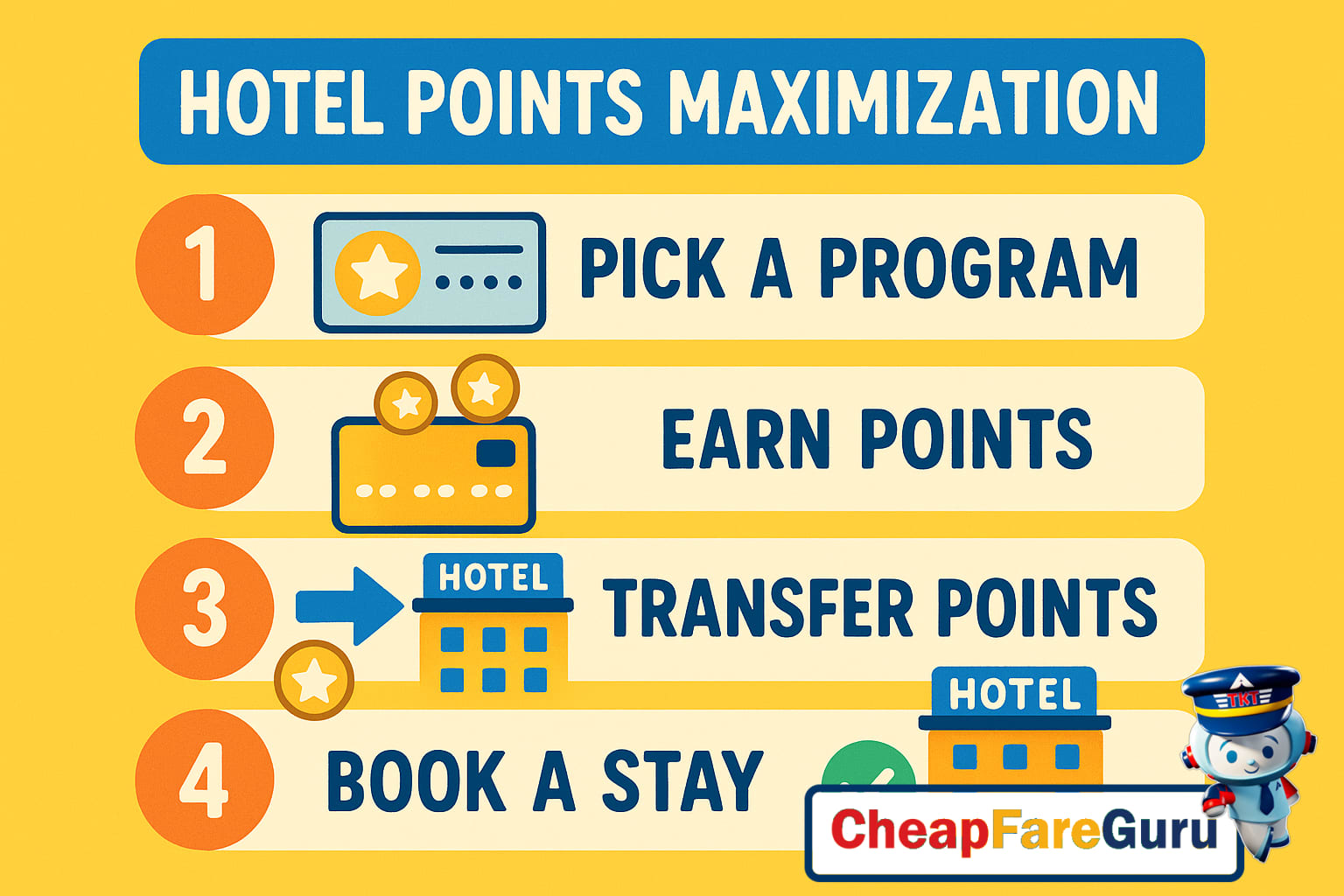
Stepwise Hotel Booking with Points Maximization
Selecting the right hotel rewards program is foundational for maximizing your travel points. Begin by evaluating your travel habits—consider your preferred hotel brands, typical destinations, and frequency of stays. If you often stay at luxury properties, programs like Marriott Bonvoy or Hilton Honors offer tiered benefits tailored to frequent guests. For budget-conscious travelers, programs with flexible redemption options and widespread hotel networks might be more appealing. Aligning a rewards program with your goals ensures every stay builds value towards future travel.
Accumulating points effectively requires a multi-faceted approach. Naturally, earning points through actual hotel stays is the most straightforward method, but don’t overlook linked credit cards, which amplify points on everyday spending. Many hotel programs partner with credit cards that offer bonus points just for signing up or for spending within specific categories. Additionally, hotel promotions and targeted offers can boost your balance quickly—sign up for newsletters and notifications. Finally, transferring points from airline miles or flexible travel currencies like Chase Ultimate Rewards or American Express Membership Rewards can enhance your program balance, enabling faster redemptions.
When it comes to booking, deciding between direct hotel bookings and third-party platforms impacts your points strategy. Booking directly through the hotel’s website or app usually earns you the highest points and qualifies your stay for elite status credits. Plus, direct bookings often provide access to exclusive promotions or flexible cancellation policies. In contrast, third-party platforms might offer lower prices upfront but exclude you from earning points on the stay or using elite perks. For travelers aiming to maximize rewards, direct bookings are generally superior despite potentially higher sticker prices.
Reward program tiers play a critical role in availability and benefits. Higher-tier members often enjoy perks like room upgrades, bonus points, and most importantly, fewer blackout dates when redeeming points. Blackout dates can restrict availability during peak travel times, so accumulating elite status in your chosen program can increase your chances of booking with points when it matters most. Understanding the specific rules and restrictions of each program’s tiers will help you time and plan your bookings to get the best value and availability.
To clarify points redemption value, consider typical points-to-dollar ratios across popular programs. Marriott Bonvoy points often redeem around 0.8 to 1.2 cents per point, meaning a redemption of 35,000 points could save you approximately $280 to $420 on a mid-tier hotel night. Hilton Honors points average about 0.5 cents each, with sweet spots at higher-end properties where points can stretch further. IHG Rewards points hover near 0.6 cents per point. While those figures vary by property and season, keep in mind that redemption value improves significantly when redeeming for higher-category hotels rather than budget options.
Tips for maximizing points redemption value during booking:
- Book during off-peak times: Points rate often drops in low-demand periods, expanding options for budget-friendly redemption.
- Combine cash and points: Some programs allow hybrid redemptions, stretching points further while reducing out-of-pocket costs.
- Monitor promotions: Hotel loyalty programs frequently launch bonus redemption offers or point discounts; timing bookings accordingly boosts value.
- Leverage elite status perks: Use complimentary upgrades or free night certificates to enhance your stay without extra points.
- Compare cash rates to points cost: Not every redemption is a deal—always calculate cents per point to ensure maximum savings.
Compare Hotel Booking Platforms and Tools
When booking hotels with points, choosing the right platform can greatly affect your redemption success and deal-finding efficiency. Official hotel chain websites, online travel agencies like Expedia, and dedicated deal sites such as CheapFareGuru each offer unique tools and features to help travelers maximize their points value while securing affordable stays.
Official hotel chain sites like Marriott Bonvoy or Hilton Honors provide direct access to their loyalty programs, allowing easy points booking and straightforward redemption. These sites often feature points calculators and tiered pricing models tailored to reward members. However, they may lack flexible date searches or alerts that help spot the lowest-price options across different days.
Expedia, a major OTA, supports points bookings for partnered loyalty programs and aggregates diverse hotel choices worldwide. Expedia’s flexible date search and comprehensive filters make it easier to compare cash versus points rates. Another advantage is its price alert function, which notifies users of sudden drops in rates for specific hotels or dates.

CheapFareGuru specializes in uncovering cheap travel deals and integrates powerful hotel booking tools designed to simplify points redemption. Its intuitive interface includes points calculators that instantly display how many points are needed per night and compares these with cash prices. Flexible date search tools highlight the cheapest stays within a date range, helping you plan around the best deals.
User Interface Tips:
- Use platform filters to toggle between ‘cash’, ‘points’, or ‘cash + points’ options for clearer comparisons.
- Leverage the flexible date search that shows variations week-over-week, unlocking savings by adjusting check-in or check-out days.
- Set up price and point-value alerts to get notified on deals without daily manual checks.
- On official sites, check availability often as points redemption rooms can open or close suddenly.
Latest developments show increasing partnerships that allow cross-platform points transfer or booking. For example, some hotel loyalty points can now be transferred to airline miles or to certain credit card programs, expanding your redemption flexibility. Additionally, CheapFareGuru continually updates its platform to incorporate new partnership options that users can capitalize on.
For ease of use and comprehensive toolsets, CheapFareGuru ranks among the best platforms to manage hotel points redemption. Its clean interface, clear display of points-to-cash value, and convenient flexible date searches streamline decision-making. Expedia offers strong search filters and price alerts, ideal for travelers seeking a wide hotel selection with frequent rate updates. Meanwhile, booking directly through hotel chain websites remains vital for members wanting to maximize loyalty perks and ensure points availability.
Ultimately, combining the strengths of these platforms enhances your ability to secure the best hotel deals using points—empowering you to travel smarter and spend less on accommodations.
Apply Timing Strategies for Maximum Hotel Savings
Timing plays a pivotal role in securing the best hotel rates and maximizing the value of your points redemptions. Hotel prices fluctuate according to demand cycles, seasonality, and booking patterns, making when you book just as important as where you book. Understanding these timing dynamics can unlock significant savings on accommodations.
Booking well in advance often guarantees the lowest rates, especially for popular destinations and peak travel seasons. Hotels offer early-bird discounts and more available room types, providing better inventory for cash bookings or points redemptions. However, this approach limits flexibility if your plans might change.
Conversely, last-minute bookings can offer steep discounts when hotels aim to fill unsold rooms at the eleventh hour. This method suits travelers with flexible schedules and destinations. The downside is unpredictability—availability may be scarce, and premium properties rarely discount heavily at the last moment.
The shoulder season—the period between peak and off-peak travel times—strikes a balance by combining moderate crowds with attractive rates. Hotels often reduce prices to attract guests, allowing points redemptions to stretch further and increase redemption value. This season also often brings better weather and fewer tourists, enhancing travel enjoyment.

For calendar-based advice, target booking windows vary by region:
- North America and Europe: Book 60-90 days in advance during summer and winter holidays; consider late spring or early fall for shoulder season deals.
- Tropical destinations (Caribbean, Southeast Asia): Aim for off-peak months, typically during rainy seasons, where hotel prices and points requirements dip.
- Urban business hubs: Midweek stays often have better availability and rates, with weekends being pricier due to leisure travel.
Comparing hotel timing with airfare pricing reveals complementary trends. Airlines typically release deals 6 to 8 weeks before departure, similar to hotel advance booking windows. However, airfare can fluctuate more frequently due to airline competition and fuel prices, whereas hotels follow more predictable seasonal cycles. Leveraging this knowledge, savvy travelers can coordinate flight and hotel bookings to hit low-price sweet spots simultaneously.
Respected travel research sites such as STR and Airlines Reporting Corporation (ARC) confirm that hotels see the greatest price volatility in peak travel periods, while airfare discounts often align with promotional calendar cycles. Keeping these trends in mind helps travelers create a timing strategy that maximizes both cash savings and points value.
Use Insider Hotel Industry Tips
Maximize your hotel rewards by tapping into insider strategies that many travelers overlook. One of the smartest ways to enhance your points value is by stacking promotions. Hotels frequently offer special deals—seasonal discounts, bonus points, or partner offers—that can be combined with points redemption to stretch your loyalty currency further. For example, booking during a “double points” promotion while paying partially with points can effectively double your value.
Additionally, consider leveraging the “points plus cash” option, a flexible redemption method that many hotel programs offer. This approach lets you use some points to reduce the cash portion of your stay, keeping points in reserve for future bookings and broadening your affordability. It’s especially useful if you don’t have enough points for a full redemption but still want to save.
Flexible cancellation policies also play a crucial role in booking decisions. Hotels increasingly offer refundable rates or “book now, pay later” options. These provide peace of mind and allow you to adjust plans without penalty. According to hospitality expert Sarah Kim, “Flexibility in cancellation is driving traveler confidence and influencing when and how guests book.” This flexibility means you can secure a room with points or cash, then reassess closer to your trip.
| Booking Option | Cancellation Policy | Typical Penalty | Recommended For |
|---|---|---|---|
| Fully Refundable Rate | Cancel anytime before 24–48 hours | None | Flexible travelers |
| Non-Refundable Rate | No cancellation allowed | Full charge | Budget-conscious, sure plans |
| Points Redemption | Varies by program; often flexible | Points forfeited if late cancel | Loyalty members, cautious bookers |
| Points + Cash | Usually flexible, check terms | Partial charges may apply | Balanced spenders |
Another perk of utilizing points is the opportunity for room upgrades. Many programs allow you to upgrade standard rooms to suites or premium rooms using points or a combination of points and cash. Understanding specific program perks—like free breakfasts, late check-outs, or exclusive lounge access—can significantly elevate your stay experience. For instance, Hilton Honors members often receive complimentary room upgrades and priority late check-out, making their points redemptions more valuable.
Travel industry insider Jason Lee notes, “Being aware of your loyalty program’s unique perks can transform a simple hotel stay into a luxury experience without the hefty price tag.” Keep an eye out for these benefits when booking through platforms like CheapFareGuru, where you can compare multiple hotel deals and loyalty options in one place.
Present Real Booking Examples and Savings Analysis
Understanding when to pay with points versus cash can significantly impact your travel budget, especially when booking hotels across different regions and hotel chains. Below, we analyze actual booking cases to compare cash and points redemption, revealing where the best savings lie and key factors shaping each scenario.
Case Study 1: Luxury Hotel in New York City
A 3-night stay at a well-known luxury hotel in Manhattan costs $900 when paid entirely in cash. Alternatively, using the hotel’s loyalty program, you can redeem 60,000 points for the same stay. At a baseline value of $0.015 per point, this redemption equates to $900, seemingly a break-even. However, when factoring in potential blackout dates and less flexible cancellation policies on points bookings, the cash option offers more flexibility despite no apparent cost savings.
Analysis: In this example, savings percentage is close to 0%, but points booking sacrifices flexibility. For travelers valuing cancellation options or potential upgrades, cash fares remain preferable.
Case Study 2: Mid-Range Hotel in Bangkok
Booking a 5-night stay in a popular mid-range Thai hotel costs $350 on a cash basis, or 25,000 points when redeemed via the chain’s program. Using points, you effectively pay $375 based on a $0.015 per point valuation.
Analysis: Here, cash booking saves roughly 7% compared to point redemption. The hotel’s loyalty program enforces blackout dates during high season that restrict points use, further favoring cash payments for peak travel times. Additionally, cash bookings often come with free cancellation up to 24 hours before check-in, whereas points bookings carry firmer restrictions.
Case Study 3: Budget Hotel in Europe
A budget hotel chain in Europe offers a room at $120 per night. Redeeming 8,000 points per night, this equates to $120 at a $0.015 redemption rate. However, some brands allow a higher valuation of up to $0.02 per point based on transfer bonuses or promotional offers, effectively lowering the cost to $96 per night when paid with points.
Analysis: This case presents approximately 20% savings when leveraging promotional valuations on points. However, upgrades and amenities are typically limited with points bookings at budget hotels, unlike cash reservations where add-ons can be purchased directly.
Regional and Brand Nuances Affecting Savings
- Blackout Dates: Many loyalty programs restrict point bookings during holidays or events, skewing which option is cheaper depending on your travel dates.
- Cancellation Policies: Cash bookings generally permit more lenient cancellations. Points redemptions often require full non-refundable commitments.
- Upgrade Opportunities: Paying cash may allow room upgrades at check-in or via special packages, while points bookings sometimes limit this flexibility.
- Dynamic Pricing: Hotel points redemption rates can fluctuate, affecting the cents-per-point value and thus altering the overall savings comparison.
Across the examples, cash bookings tend to offer better flexibility, while point bookings may yield savings in specific cases, particularly when transfer bonuses or promotions elevate points value. Travelers using CheapFareGuru can compare both methods in real time to find the optimal booking strategy for their trip.
Answer Common Questions about Hotel Points Maximization
How can I maximize hotel points for better deals?
Maximize hotel points by strategically booking stays during promotions, using credit cards with hotel rewards, and redeeming points during peak value periods. Combining points with member-exclusive rates or upgrades often yields the best deals and enhances your overall travel experience.
What is hotel points maximization and why is it important?
Hotel points maximization means efficiently earning and redeeming loyalty points to get the highest value. It’s important because it saves money, unlocks perks like free stays or room upgrades, and makes your travel budget stretch further without sacrificing quality or comfort.
When should I book hotels to maximize points value?
Book hotels during off-peak seasons or special promotions to maximize points value. Early bookings often secure lower points rates, while last-minute deals can also offer good redemptions. Timing plays a key role in stretching your points for the best possible benefits.
Why is cancellation flexibility important when using points?
Cancellation flexibility is vital because travel plans can change unexpectedly. Booking with refundable or flexible point reservations ensures you don’t lose valuable points if you must adjust or cancel your stay, preserving your hard-earned rewards.
Can I combine hotel points with other discounts or promotions?
Some hotel programs allow combining points with discounts or promotions, but policies vary widely. Always check terms carefully to see if stacking benefits is permitted, as this can significantly enhance overall savings and value.
What platforms are best for hotel points bookings?
Use official hotel loyalty websites or apps to book with points for maximum security and perks. Third-party sites can offer deals but often exclude points bookings or add restrictions, so prioritize direct booking to maximize rewards value.
How do blackout dates affect points redemption?
Blackout dates restrict when you can redeem points, often during holidays or peak travel periods. Understanding these limitations helps you plan stays strategically, avoiding disappointment and ensuring you get the most out of your hotel points maximization efforts.
Summarize Smart Hotel Booking with Points
Mastering hotel bookings using points can significantly boost your travel savings, often cutting costs by 15-40% compared to standard rates. Throughout this guide, we explored essential strategies like timing your bookings during promotional periods, selecting the right platforms, and applying insider tips tailored for maximizing the value of your points. Combining these techniques together creates powerful synergy that makes each point go further.
One of the most effective approaches involves leveraging CheapFareGuru’s deal-focused technology and user-friendly platform. Their tools continuously monitor hotel offers, providing real-time insights into exclusive discounts and optimized options that align with your point balances. This not only saves you money but helps simplify the otherwise complex process of navigating reward programs and fluctuating hotel prices.
Being aware of cancellation flexibility and verifying all offer details before finalizing your reservation is crucial. Flexible policies allow you to adapt plans when travel details shift without losing your valuable points or prepayments. Think of this diligence as a shield against costly errors that can undermine your travel budget.
By integrating these practical insights—combining timing, platform choice, savvy points redemption, and mindful policy review—you position yourself to enjoy smarter hotel bookings that deliver enhanced savings and flexibility. Whether booking a weekend getaway or an extended trip, these strategies help you maximize your rewards while maintaining control over your travel plans.