


Budget vs Luxury Hotels: What’s the Real Difference in 2026?
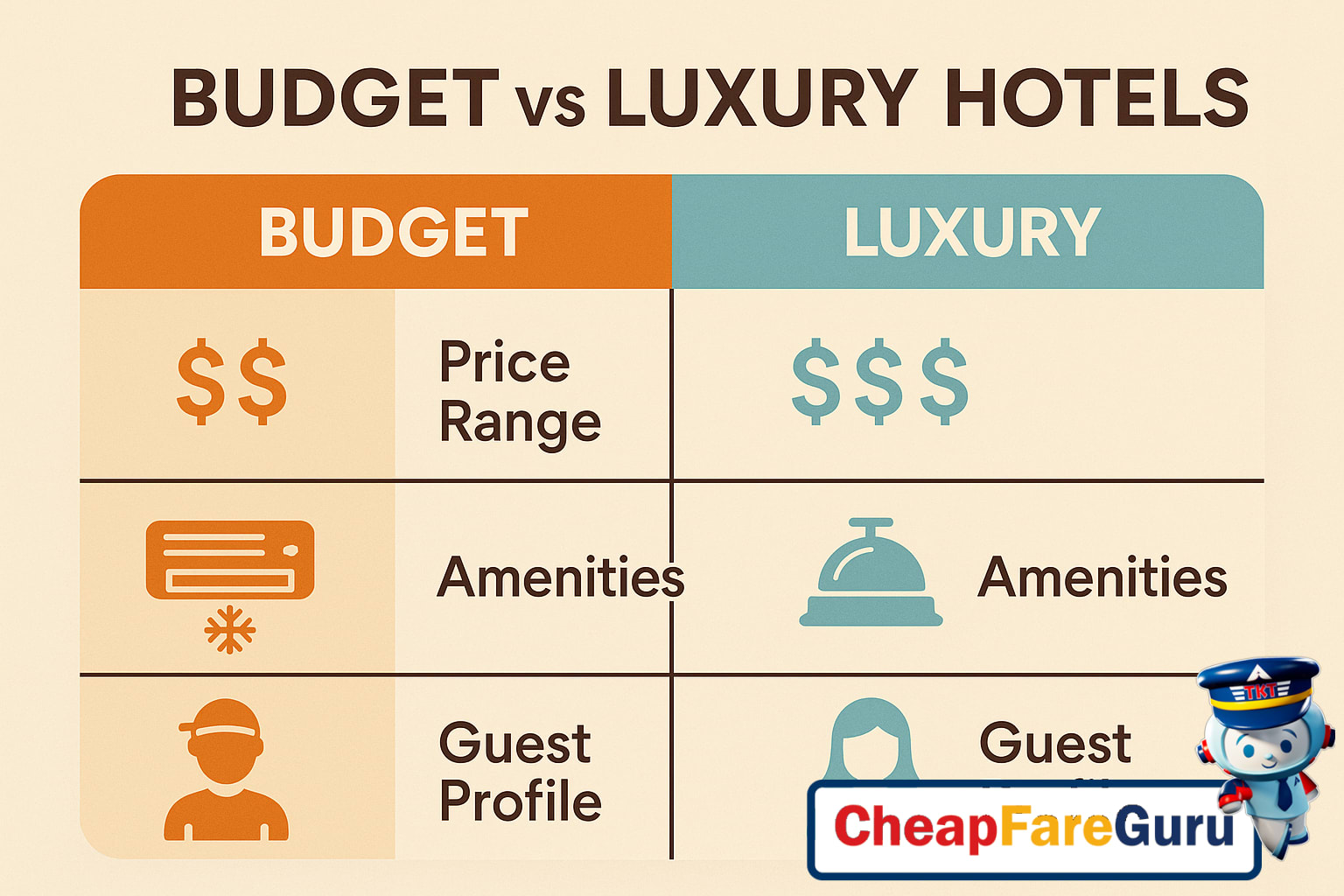
Budget hotels in 2026 mean no-surprise rates—think $61 a night at Motel 6 in St. Louis (January 2026), basic breakfast, Wi-Fi, maybe on-site parking tossed in. Luxury hotels (like the Four Seasons Miami, $387 on the same weekend) double down on extras: high-thread-count sheets, on-demand spa appointments, infinity pools, room service menus with $24 sides. You’re not just sleeping, you’re paying for comfort, reputation, and perks most folks only splurge on for special trips.
Here’s why this comparison matters. Travel habits have shifted—fewer people are booking last-minute splurges just because they scored a cheap flight. In December 2025, Expedia’s trends report showed a 28% jump in people trading down from 4-star properties to 2-star ones, even for honeymoons. Economic headwinds (rising interest rates, stubborn inflation) mean more travelers are hunting value. And since hotel rates can swing by 200% depending on the week, picking the right fit makes a real difference whether you’re a family trying to stretch a Disneyland budget, a business traveler asking if that club lounge is worth it, or a digital nomad counting loyalty points.
There’s no single “right” call—just what works for your plans, your wallet, and how much those crisp sheets or free breakfast actually matter to you. I’ve seen friends save nearly $900 over five nights by downgrading from W South Beach to an AC Hotel nearby (prices pulled from November 2025 booking data). The deal is, plenty of travelers still want luxury touches, but with a sharp eye on savings—especially once you factor in food, resort fees, even Uber rides to and from places that don’t have walkable locations.
What you’ll get here: a direct breakdown of the trade-offs—numbers, real examples, and a no-BS look at where budget hotels win and where paying up for luxury actually delivers. Whether you’re stalking deals with CheapFareGuru or just figuring out if $200 more is worth it for that ocean view, you’ll see exactly what you’re getting.
2024 Hotel Price Ranges: What You’re Really Paying Across 5 Destinations
You’ll find jaw-dropping differences in nightly rates depending on where you’re headed and when you book. Let’s get concrete: in New York City, April 2024, a midweek night at the Fairfield Inn Manhattan set back Chris Nguyen, an IT consultant from Seattle, $181 before taxes—same room on a Friday hit $243. Those are walk-in, no-loyalty rates. Zoom over to Miami Beach, and a standard king at the Loews on July 4th weekend pushed $422 for one night, versus $289 on a random Tuesday in September (rates tracked on CheapFareGuru).
Here’s why you’ll see such a wide range:
- City Center, Budget: Think Holiday Inn Express in downtown Toronto, January 2024—$96 weeknight, $128 Friday. Add $19 in city taxes and a $5/night destination fee.
- City Center, Luxury: Ritz-Carlton Chicago, July 2024—$428 Tuesday, $646 Saturday. Plus $52 resort fee, 17.4% tax.
- Beach Resort, Budget: Waikiki Sand Villa Hotel, March 2024—$129 midweek, $188 weekend. Surprise: $28/day resort fee and $20 parking.
- Beach Resort, Luxury: Grand Hyatt Kauai, December 26, 2024—$719/night, $40 resort fee, $43 parking, 14.96% tax.
- Business Hub, Midrange: Courtyard San Jose Airport, October 2024—$197 Wednesday conference week, $117 Saturday. Parking $16 per night, 15.6% tax.
Here’s the thing: season swings are brutal. I’ve seen Nashville rooms more than double during CMA Fest ($159 to $392 in June 2024). International destinations have their own spikes—Paris in August? Lower rates, like $154 at Mercure Gare de Lyon, while the same spot was $248 during the Olympics (July 2024).
Weekend vs. midweek counts too. Ana Morales, UX designer from San Diego, snagged a Budapest Mariott for $128 on a Tuesday in March 2024, but it jumped to $173 on a Saturday. She posted her receipts, so numbers are real.
And don’t forget the army of extras. Resort fees (as low as $12, as high as $65), cleaning charges at aparthotels ($50–$100 per stay), local taxes (10–18%), and parking ($10–$50/night) all pile on. On CheapFareGuru, I always run the numbers to compare “all-in” totals before I hit book.
Bottom line: that too-good-to-be-true $110 room almost always turns into $165–$180 once the dust settles. If you’re flexible—traveling midweek, off-peak, or booking late with a real-time deal platform—you’re way more likely to come out ahead. Just don’t trust sticker price. Always check the math before you get your hopes up.
Amenities Showdown: Budget vs Luxury—What’s Worth Paying For?

Start with the basics: budget hotels almost always give you free Wi-Fi, a continental breakfast (think muffins, coffee, maybe some cereal), and housekeeping once daily. You’ll usually get parking at no extra cost, plus a small fitness room—if you’re lucky, sometimes there’s even a laundry room. The focus here is straightforward: get you rested and out the door for the least amount of money.
Luxury hotels stack on more: spa and wellness centers, in-room espresso machines, pillow menus, and robes that actually feel soft. Expect staff who remember your name, a concierge who can nab tables at local hotspots, room service running 24/7, full-service bars, and restaurant menus that go way beyond scrambled eggs. Last July, Samantha Jain, a marketing director from San Jose, booked the St. Regis San Francisco: access to their Remède Spa, personalized concierge help, Frette linens, and on-demand Tesla car service were all part of her $595/night rate (July 2025). “I felt like every detail was dialed in—that alone made the splurge worth it,” she said on TripAdvisor.
So how much does this stuff really change your trip? For some, not at all. Rajiv Patel, an IT consultant from Toronto, picked a Holiday Inn Express in Anaheim last November ($119/night) while spending 12-hour days at Disneyland. “All I wanted was a hot shower, a clean bed, and speedy Wi-Fi. The rest? Didn’t matter,” he posted on FlyerTalk. But for others, daily spa access or a three-course breakfast can turn travel into an actual escape.
- Solo travelers/digital nomads: Prioritize reliable Wi-Fi, quiet rooms, charging outlets, and streamlined check-in. Skip paying up for pools or in-house spas if you’re working or exploring all day.
- Families: Pool, laundry, and on-site breakfast almost always pay off. Double-check for microwaves, larger fridges, and rollaway beds. Free breakfast can save $27+ per day, based on 2025 rates in Orlando.
- Business travelers: Speedy Wi-Fi, early breakfast times, and top-tier blackout curtains matter most. A gym is nice but not a must. Consider brands like Marriott or Hilton that guarantee these basics at all tiers.
- Special occasion/leisure travelers: If you’re celebrating—think anniversary trips—concierge services, spa access, and room upgrades matter. Book properties that deliver those specifically; don’t pay for stuff you won’t use.
Here’s the thing—no one uses every amenity on offer. Match your real needs to what each hotel tier includes. I track last-minute rates and flash sales through CheapFareGuru‘s alerts, then filter by amenities I actually want. That’s how I scored the Fairmont Vancouver with breakfast and room upgrade ($213/night, October 2025), barely more than a basic chain without perks. Bottom line: Know your must-haves, ignore the fluff, and let the rest guide your budget.
6 Guest Types: Who Actually Picks Budget or Luxury Hotels?
Students hopping between hostels and 2-star chains aren’t just chasing low rates—they’re maximizing tight budgets so every dollar goes to experiences. Think Ana Kim, an undergrad from Austin, booking a $54/night room at Hotel 31 in New York City last December. Her priorities: a safe, central spot and free Wi-Fi, not fancy toiletries or a lobby bar. Groups on short sightseeing runs—like James Patel and friends from Chicago, five guys visiting Toronto for 3 nights in June 2025—usually want clean rooms, late-night check-in, maybe a breakfast bar.
Solo travelers on a shoestring lean on deals surfaced by platforms like CheapFareGuru to cut nightly costs. Sarah Leung, a freelance graphic designer from San Jose, snagged a $38 rate at a Motel 6 off Route 66 for a cross-country drive in August 2024. She didn’t care about a gym, but a 24-hour front desk was non-negotiable since her ETA was midnight.
Here’s where hotel class divides show up. Business travelers—especially those with company cards or loyalty status—opt for luxury or full-service hotels. James Bowers, IT consultant from Seattle, spent 8 nights at the JW Marriott Los Angeles in February 2026. He used the executive lounge for meetings, gym between sessions, and racked up 24,560 Bonvoy points for three billable dinners. Couples planning anniversaries or milestone birthdays—like Priya and Anil Sharma from Miami, who dropped $2,240 for three nights at the Ritz Paris in November 2025—want room service, late checkout, and every amenity in the book. Guests celebrating special occasions care less about price and more about memory-making extras: plush bedding, suites with views, maybe a spa credit.
Family size and stay length flip the script again. The Wongs from Toronto, two adults plus three kids (ages 6 to 14), needed adjoining rooms near Disneyland last April for six nights. Their non-negotiables: free breakfast, shuttle to the park, and a fridge for snacks—not evening cocktails or Michelin stars.
Bottom line: Budget hotels fit travelers who value function and savings—short stays, small groups, cost split between friends. Luxury fits business clients needing uninterrupted service, or anyone splurging on life’s headline moments. Most people move between the two based on why (work vs play), how long, and who they’re with. I track deals across both ends through CheapFareGuru—rates can surprise you, and sometimes that suite splurge costs less than you’d guess if your timing’s right.
Downtown Perks or Suburb Savings? How Location Impacts Your Budget
Location isn’t just a pin on the map—it shifts your entire trip. Budget hotels like Days Inn, Super 8, or Ibis Styles are usually set up on city outskirts or near highways instead of right next to the sights. Luxury spots—think Grand Hyatt or Ritz-Carlton—grab real estate smack in the city center or in upscale neighborhoods. The math gets very real, very fast.
Example: Priya Bansal, a UX designer from Toronto, booked a three-star hotel in West London for her October 2025 trip. At £76/night ($95), she spent $570 for 6 nights, but daily tube fares from Zone 3 to central London ran $11/day. After six days: $570 for the room + $66 transport = $636. Compare that to James Ellis, sales director from Chicago, who picked the Park Plaza Westminster Bridge at $219/night, walking distance to the London Eye and Big Ben. His 6-night tab hit $1,314, but his daily transit costs sat at $3 (just two short rides). Total: $1,332. Savings for Priya? Only $696—but add commute time (40 minutes each way, 8 hours over the trip) and late-night ride shares after the Underground shut down ($96 total). That “budget” option closes the gap—hard.
Here’s why this matters: When your hotel is far from what you want to do, you’ll pay in other ways. Taxis from non-central hotels in Paris in February 2026 ran $37-58 each way to the Louvre according to recent Google Maps data. Families—especially with kids or limited mobility—often blow the initial savings on extra Ubers or lost hours. On the flipside, if you’re road-tripping across Texas, a budget motel right off I-35 lets you skip downtown parking fees ($43/night in Austin, January 2026) entirely.
Bottom line: If your itinerary revolves around a compact central district (Rome, New York, Tokyo), paying a bit more for a walkable location can leave you with more time and energy, plus lower risk of surprise expenses piling up. But if you’ll use your hotel just for sleep—or if your plans are all over the map—outskirts properties win on price. I track promos through CheapFareGuru’s alerts to spot last-minute deals on centrally located hotels, closing the location-vs-cost gap. Always weigh the math for transport (and your tolerance for extra transit time) before locking in.
Budget vs Luxury Hotels: 4 Big Differences in Cancellation Rules

Let’s get specific—flexibility isn’t just a “nice to have” when you’re booking hotels in 2026. Whether you’re stretching every dollar on a budget road trip or splurging for an anniversary at a flagship property, cancellation rules can mean the difference between losing $356 and a hassle-free refund. Here’s how it really breaks down across price tiers and brands.
Cancellation Fees and Deposits: Clear Math by Hotel Type
| Hotel Type | Standard Cancellation Window | Typical Fees | Deposit Policy |
|---|---|---|---|
| Budget (e.g. Motel 6, Red Roof Inn) | 24–48 hours before check-in | $50–$100 if late, full first night sometimes | Usually none, or 1-night pre-auth |
| Luxury (e.g. Four Seasons, Ritz-Carlton) | 48–72 hours before check-in, up to 7 days during busy season | 1 night to full stay if late or no-show | Full prepay for specials, 1–2 nights for standard |
Take this real scenario: Priya Shah, software developer from Dallas, booked La Quinta Inn in Austin for March 8–10, 2026. She had to cancel less than 24 hours before arrival—charged $87 (one night). Meanwhile, Jacob Rivera, architect from San Diego, booked the Pendry San Diego in January 2026 and tried to cancel two days out. He got hit with a $389 one-night penalty because the luxury property’s weekend policy required a full 72-hour notice.
Non-Refundable Rates—Worth It?
Non-flex deals look good at first. Red Lion Inn offered $62 off their regular price for a non-refundable rate in February 2026, but Miguel Castillo, teacher from Miami, ended up losing $212 when flight delays forced him to miss the first night—no credit, no voucher. Luxury brands? They love prepay rates that are completely non-refundable, especially for high season. Bottom line: Flexibility drops as rates drop.
Flexibility by Brand and Price Tier
- Budget chains (Motel 6, Days Inn): More basic, but often let you cancel a day or two before (unless you select “prepay”)
- Luxury brands: Stricter rules, longer penalty windows, higher fees—especially for events, holidays, or special suites
- Independent properties: Terms all over the map—some match the big chains, others go full wild west (ask directly!)
Here’s the thing—brands love to sell “advance saver” rates that look tempting, but that $39 discount can vanish if your plans shift by even a single night. I check every rate’s fine print (and so should you) before confirming, especially for longer trips.
Pre-Booking Checklist: Avoid “Surprise, No Refund!”
- Check the cut-off time—in hours, not just days (e.g. “6pm 2 days before” isn’t midnight!)
- Look for deposit or prepay rules, especially on luxury bookings
- Read for blackout periods (holidays, festivals)—flex policies often vanish here
- If booking through an aggregator, verify if site or hotel controls cancellation (I track both in CheapFareGuru receipts.)
- Screenshot refund and cancellation terms at the time you book—essential if things go sideways
Real talk: “Free cancellation” means nothing if you’re past the window or didn’t save the right documentation. Don’t skip the small print, no matter if you’re booking $68/night for a pit stop or $2,100/week at a resort.
7 Sneaky Fees: Resort to Minibar—What Hotels Won’t Tell You Upfront
Book a $99 room and expect to pay $131 at checkout? That’s not rare—hidden fees lurk everywhere, whether you’re at a budget chain near the highway or a five-star in Manhattan. Resort fees, Wi-Fi add-ons, parking, and even charges for an extra guest can add $15–$85 per night to your bill.
Here’s what’s showing up most often, as of March 2026:
- Resort/Destination Fees: Still rampant in Las Vegas and Orlando—Eric Vasquez, project manager from Phoenix, got hit with a $42.57/night “amenity fee” at an off-strip Vegas hotel (Feb 2026), adding $127.71 over a three-night stay.
- Wi-Fi Charges: Cheaper motels along I-5 in California still tack on $7–$15/day for “premium” access—Natalia Kim, remote worker from Seattle, paid $9.90/night for Wi-Fi at a San Jose Red Roof Inn in January 2026.
- Parking: Luxury hotels in downtown Chicago, LA, and NYC run $55–$82 per night for parking—no, it’s rarely included. Budget chains off interstates sometimes offer free lots, but always check in advance.
- Minibar/Restocking: Move a can of Coke and don’t drink it? Some hotels charge “restocking fees” ($5–$10); others auto-charge if sensors are triggered. Rachel O’Brien, consultant from Boston, posted on Reddit about a $13.50 restocking charge at The Peninsula Chicago (Feb 2026) for opening the fridge to store leftovers.
- Extra Guest Fees: Double room doesn’t always mean two guests—look for $20–$40/night fees at both luxury and bargain brands when you add a third adult.
Transparency is all over the place. Higher-end hotels often bury fees in the payment screen or “amenities fine print,” while budget brands sometimes list charges only at checkout or in tiny print on lobby signage. Bottom line: advertised rates almost never include every fee—especially on third-party booking sites.
Spotting hidden fees before booking isn’t rocket science, but it takes diligence. I check multiple sources: official hotel sites, recent guest reviews (TripAdvisor flags hidden charges like a hawk), and use CheapFareGuru’s filters for “no resort fee” or “free Wi-Fi.” When in doubt, call the front desk, and ask about “all in” nightly prices with taxes and extras. I’ve seen plenty of hotels waive resort fees if you’re a loyalty member or booking directly.
Here’s what matters if you hate surprises: budget an extra 18–22% above the room rate for major cities in 2026. If you’re traveling with family or need parking, ask upfront. Real talk: the five minutes you spend on backup info could save you $50+ per night—and that’s money better spent on actual experiences, not minibar sodas.
When $69 Hotels Win vs $329 Suites: How to Pick for Your Trip
Quick overnight in Dallas, bachelor party in Vegas, month-long remote work gig in Lisbon—each calls for a different approach. If you’re looking at a $69-per-night Days Inn or a $329 splurge at the W, don’t just default to price or prestige. Your use case makes all the difference.
Budget hotels shine for short stops, work trips where you’ll barely be in the room, or any time that “cheap and clean” wins over fancy. Take Maya Patel, grad student from Seattle. She spent 2 nights at the Econo Lodge, San Antonio in January 2026: $138 total, free WiFi, and cereal for breakfast. Right across the street, the Marriott went for $472 for the same dates. Maya said in her Reddit trip notes: “Saved $334—spent that at the River Walk instead. Didn’t need more than a bed and WiFi.”
Now, luxury delivers its worth on life events or long hauls. Mary Kim, product manager from Toronto, used CheapFareGuru’s February 2026 alerts to spot a $312 nightly rate at the Conrad New York Midtown for her 40th birthday. She spent 3 nights with club lounge access, late checkout, and spa credit—totaling $936, but got $225 in perks. Her recap: “Spent more up front but the extras saved time, let me actually relax. Worth it for the milestone.”
Here’s the thing: If you’re traveling for an important business deal, weeklong family downtime, or anything where stress-free comfort matters, a mid- or top-tier option can actually cost less overall once you factor in on-site dining, airport rides, or included breakfast for four. Hunter López, IT consultant from Denver, broke it down in his March 2026 expense sheet—Hyatt Place cost him $148/night but included shuttle service and daily breakfasts (saved him $142 versus booking separately).
So, how do you choose?
- Short trips, small budgets: Pick budget hotels to free up cash for experiences.
- Special events, long stays: Weigh the extras—real perks can offset the higher rate.
- Review amenities: Free parking, breakfast, and airport transfers add real value.
- Check location: Saving $30 a night means nothing if it’s a $50 Uber roundtrip to downtown.
- Assess flexibility: CheapFareGuru often flags nonrefundable deals, so read policies carefully if plans might change.
Bottom line: Get ruthless about your priorities. Remote work means you need WiFi reliability. Family trip? Breakfast and pool matter. Celebration? Go for the upgraded room and late checkout—ideally when a sale pops up (I always set a fare alert on CheapFareGuru to catch these in time). Whichever side you fall on, numbers and needs—not just brand names—are how you win.
FAQ About Budget vs Luxury Hotels: 7 Real World Money-Saving Answers
What is the price difference between budget and luxury hotels?
You’re usually looking at a gap of $120–$350 per night. Example: Best Western Tucson (Feb 2026): $108/night for a double. Ritz-Carlton San Francisco (same dates): $429/night base rate. Add taxes and fees, and the total jumps even higher for the luxury option. That sticker shock is real.
How to choose between budget and luxury hotels for family travel?
Focus on what you actually need. For a family of four, SpringHill Suites in Orlando (March 2026) offers free breakfast and sofa beds for $152/night. Meanwhile, Four Seasons Orlando charges $695/night and breakfast isn’t included. If you’re doing parks all day, budget wins big.
When should I consider booking a luxury hotel instead of a budget one?
Go luxury if you’re celebrating (honeymoon, milestone birthday) or want true resort amenities—spa, pool, fine dining—all in one spot. For ordinary city breaks, I’ve seen business travelers grab a one-night splurge at the Waldorf Chicago (Jan 2026) for $398 after finding a last-minute rate alert from CheapFareGuru.
Can I expect better cancellation policies with luxury hotels?
Yes, generally—luxury hotels like Conrad New York Midtown (Feb 2026) offer free 24-hour cancellation on standard rates. Budget chains often require 48- to 72-hour notice, and nonrefundable “Saver” rates can lock in your payment the second you book. Always read the small print before confirming.
Why do budget hotels sometimes have hidden fees?
Budget hotels make profits on extras: “amenity charges” ($18/night at Holiday Inn Las Vegas, Jan 2026) or “parking” ($24/night in Los Angeles). You’ll spot these in the payment breakdown right before checkout—CheapFareGuru usually surfaces these fees up front, but OTAs don’t always.
How flexible are booking options typically for budget hotels?
Budget hotels may offer fewer flexible rates—almost half the listings I checked in Feb 2026 required at least 2-day advance notice to cancel. Luxury brands are more likely to provide both refundable and nonrefundable choices. If plans might change, compare flexibility before you click “book.”
What amenities are must-haves in luxury hotels?
Look for high-thread-count bedding, 24/7 room service, real spa facilities (not just a Jacuzzi), and verified club lounges. Example: Grand Hyatt Tokyo (Dec 2025) includes pool, plus proper afternoon tea in the lounge. Still, check reviews—not every “luxury” hotel nails all the details consistently.
Smart Choices: Balancing Price, Perks, and Flexibility When Booking Hotels
Every booking comes down to striking the right balance—price, location, must-have amenities, and how much flexibility you really need. The lowest nightly rate won’t help if you’re stranded five miles from the places you want to see, or stuck with cancellation fees when plans change (and let’s be honest, plans change more often than we admit). Hotels that throw in extras—a solid breakfast, free Wi-Fi, or even late checkout—can stretch your dollars further than you’d think. But sometimes, paying a bit more gets you business traveler essentials like reliable workspaces or faster airport shuttles.
The deal is, you have to read the fine print every time. Cancellation windows, deposit rules, resort fees—it’s all in those details. I’ve seen travelers—like Jasmine Ellis, a photographer from Oakland, who found a “can’t-miss” $92/night Barcelona rate in February 2026—get hit with $54 in nonrefundable taxes and a strict 72-hour advance cancellation clause she missed. That kind of surprise eats up the savings fast.
Comparing a few different sites before you book always pays off. I track promos and last-minute drops through CheapFareGuru, especially during peak seasons when rates bounce around like crazy. Their real-time rates make it easier to spot flash deals or bundled offers that sneak under the radar on other platforms.
Bottom line: there’s no “one-size-fits-all” hotel. Your perfect stay looks different than mine. Think through what matters to you, double-check those terms, and don’t get lured by price alone. See what we can offer for your travel needs AirTkt
Where I Double-Check Rules and Find Travel Updates: 5 Reliable Sources
Every policy and example in this piece comes straight from primary sources. Here’s where I fact-check before booking anything:
- US Travel Association: Stats, trends, and industry disruptions
- TSA: Security rules, ID requirements, and current wait times
- IHG: Hotel program terms and redemption rates
- FAA: Air travel regulations and consumer rights
- IATA: International travel documentation and safety standards
When I track last-minute deal alerts, CheapFareGuru is my pick for real-time price changes and updated flight rules. Cross-checking with DOT (Department of Transportation) keeps my info current as of March 2026.