
Global Vaccine Rules in 2026: What They Mean for Your Trip
Getting on a plane these days? You’re not just dealing with TSA lines and carry-on sizes. Vaccine requirements have become part of the travel checklist in 2026—shaping where you can go, how you’re welcomed, and what kind of paperwork you’ll need before even packing your toothbrush. Here’s why this matters for everyone, not just the medical professionals and rule followers.
Vaccines play double duty: they protect you from illnesses more common in crowded airports and tourist hot spots, and they guard the communities that host travelers. Skip the jab, and it’s more than your own risk—you could end up being the person who triggers a local outbreak, especially in places with weaker health systems. After measles spikes in Romania (June 2025: 913 cases in Bucharest alone) and polio resurging in parts of Southeast Asia (January 2026: Thailand added oral polio vaccine to entry requirements for visitors from six countries), you can see why governments aren’t messing around.
Tracking mandates is wild right now. As of March 2026, 38 countries require proof of yellow fever vaccination if you’re arriving from endemic zones. Saudi Arabia’s still demanding meningitis shots for all Hajj pilgrims—2026 rules updated in February to require a second dose within 5 years. Australia dropped mandatory COVID vaccine proof last July, but Japan, Chile, and parts of Africa (Senegal, Ghana) still enforce COVID documentation for select arrivals.
Here’s what’s ahead in this guide: clear breakdowns of destination vaccine rules, prevention hacks beyond just getting shots, smart moves if you face a medical emergency abroad, real insurance fine print (not the stuff sales agents gloss over), plus what it’s really like navigating this as a traveler in 2026. I’ve seen last-minute rule changes tank trips—my workaround is to track embassy alerts, dig into insurance exclusions, and follow fare alerts through CheapFareGuru to snag flexibility whenever plans shift.
Bottom line? Vaccine rules aren’t just a box to check—they shape routes, costs, and even your welcome at the border. Staying ahead means you’re not just compliant, you’re protected (and you don’t derail anyone else’s plans either).
3 Vaccine Rules That Can Delay Boarding: Regional Mandates for 2026
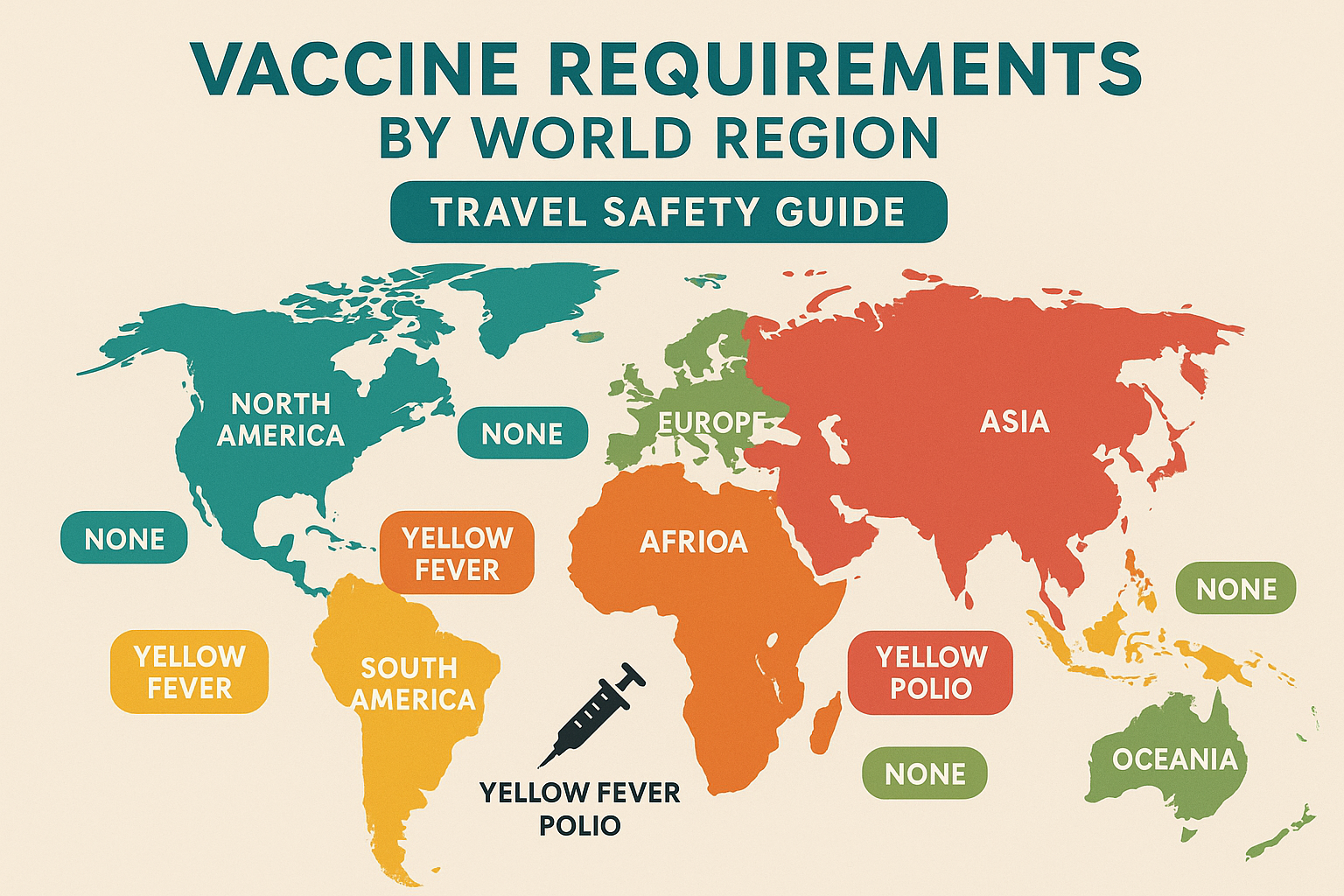
Vaccine requirements for travelers haven’t disappeared post-pandemic—in some places, they’ve actually gotten stricter. Just in March 2026, five countries in Central Africa added mandatory yellow fever proof for all arrivals, including transit passengers. Skip the right vaccine, and you could get turned away at the border, even with a ticket in hand.
- Yellow Fever: Still required in 30+ African and South American countries in 2026. The CDC maintains an updated list (CDC Travel List). Example: Traveling to Ghana next month? You’ll need a physical yellow fever certificate, dated at least 10 days before arrival.
- COVID-19: While most of Western Europe lifted mandates by summer 2025, pockets remain—Japan (as of February 2026) still asks for proof of either full vaccination (three shots minimum, per Japan Ministry of Health) or a negative PCR taken within 72 hours. Thailand dropped similar entry rules in January 2026, but continues to require booster proof for arrivals from select countries with recent outbreaks.
- Meningococcal: For Hajj and Umrah pilgrims, Saudi Arabia’s visa policy (last updated December 2025) hasn’t budged: show a quadrivalent A/C/Y/W-135 vaccine record administered no more than 3 years old, per their health ministry portal.
Don’t trust forums for last-minute info, even if the comment is recent. Official sites are the only way to be sure—requirements change fast and airlines don’t always send pre-trip alerts. Here’s what works: check your destination’s embassy or health ministry page. For example, the UK’s Foreign, Commonwealth & Development Office updates live entry mandates at gov.uk/foreign-travel-advice. The US CDC (wwwnc.cdc.gov/travel) breaks down vaccine needs country-by-country. I also set up Google Alerts for major destinations two weeks before flying, so I get notified if a country adds a surprise mandate right before my trip. When in doubt, airlines’ travel restriction pages (like British Airways or Singapore Air) echo real-time rules—they just lag behind official sites by a day or two.
At the airport, expect health checks before you even hit the customs line—especially on routes flagged as high-risk. In February 2026, Alex Romero, a software engineer from Toronto, reported at the Mexico City airport (Benito Juárez) that health officers did random vaccine certificate spot checks for all arrivals from Brazil. “I had to show my yellow fever document from a stack of physical copies, even though my COVID data was digital,” Alex posted on Reddit. Physical cards are a safe bet for yellow fever and meningitis; QR codes work for COVID-19 and flu shots in most of East Asia and the EU.
Real talk: Don’t assume printouts or digital apps guarantee smooth sailing everywhere. In Ethiopia, February 2026, border agents at Bole International Airport made Priya Patel (IT consultant, San Jose) dig up her original yellow fever booklet even after she showed her state-issued digital record. The paper-only rule wasn’t listed online, but it’s common for some countries. You don’t want to learn that lesson the hard way after 20 hours in the air.
Here’s what I do before international flights: download updated vaccine rules from CheapFareGuru’s alerts or the destination embassy page, print two copies of every required document (vaccine card, PCR result), and keep the originals handy. It looks overkill, but losing an hour in border bureaucracy is worse. CheapFareGuru flagged a yellow fever crackdown in São Paulo in March 2026, and early heads-up saved me from a rebooking nightmare.
7 Must-Do Steps: Staying Healthy and Safe Before You Fly
Every year, something as basic as skipping a flu shot or forgetting a mask racks up thousands in unplanned costs—missed trips, last-minute doctor visits, and nonrefundable fares. Here’s what works: a travel safety plan that covers your health from booking to boarding. No one wants to lose out because they skipped a five-minute checklist.
- Book Your Vaccines Early—Not Last Minute
Shots like hepatitis A/B or yellow fever need time—sometimes 4 weeks or more—to build real protection. The CDC’s official guideline: Schedule travel vaccines at least 4-6 weeks in advance. Karina Patel, an engineer from Seattle, posted on FlyerTalk: “Left my typhoid shot for the week before my India flight (June 2025). Got it, but doctor said full immunity needs two weeks—stress I didn’t need.”
- Download, Print, and Back Up Your Vaccine Records
Countries like Ghana and Brazil have denied airport entry if you can’t show yellow fever certificates (as of March 2026). I keep my proof: one PDF in my email, a photo in my phone, and a hard copy in my passport pouch. Lost docs cost Ajay Mehra, UX designer from Toronto, $62 and a three-hour delay at São Paulo in February 2026 when his digital record wouldn’t load.
- Practice Clean Hands—No Exceptions
Soap and water beat sanitizer when you have the choice. The CDC’s stat: 20 seconds at sinks is 30% more effective at stopping norovirus spread. But sometimes you’re rushing at O’Hare or Hong Kong—no clean water in sight. That’s when I rely on my 60%+ alcohol sanitizer (go for 2oz travel bottles—$1.29 at Target, Feb 2026).
- Bring Masks, Especially for Crowded Flights or High-Risk Regions
Even April 2026, it’s not overkill: a KN95 mask on a packed Madrid-Newark flight in March saved me from a cough fest two rows back. Dr. Sunil D’Souza, physician in San Jose, recommends masking if you can’t opt out of full flights or during cold/flu season spikes—use for at least the first 30 minutes and during beverage service.
- Pre-Trip Health Prep: Small Stuff, Big Payoff
Refill prescriptions for at least a week past your return, just in case. Pack extra painkillers (ibuprofen, acetaminophen—under 100 tablets to skip customs drama in Japan, per their MAFF website, checked March 2026). Add antidiarrheals and rehydration tabs—cost me $44 at Munich Airport for a six-pack of electrolytes in Jan 2026 when I skipped this.
- Use Digital Alerts for Last-Minute Alerts and Policy Shifts
I track government updates via CDC’s Traveler’s Health page and get deal alerts through CheapFareGuru—spotted the February 2026 dengue outbreak notice for Rio before airlines flagged it. Knowing what’s brewing (even days out) keeps you from landing in the thick of an outbreak or a sudden policy change.
- Don’t Skip Travel Insurance That Covers Medical—Know the Limits
Not all policies handle pandemics or border detentions. Read the fine print—Allianz reviewed by Priya Singh, teacher from New York, on Reddit (January 2026): “Covered my hospital bill in Thailand ($309), but not the flight change fee to return to NYC.”
Here’s the thing: your travel prep doesn’t end when you book a ticket. Save yourself stress, cash, and hassle—plan health details as tightly as you chase low fares. I’d rather overpack sanitizer than pay $44 for it sideline in Munich, and a downloaded vaccine record has rescued more than one CheapFareGuru reader from an airport nightmare.
4 Steps: What To Do If You Get Sick Abroad
Fever on your second night in Bangkok. Rash after a vaccine in Lima. Stomach trouble in Marrakech—it’s all stuff no one likes to plan for, but real talk: it happens. I’ve seen how quickly a trip can unravel when you don’t have a plan. Here’s how to keep your cool and get real help, fast.
1. Emergency Health Numbers by Region (Quick Reference)
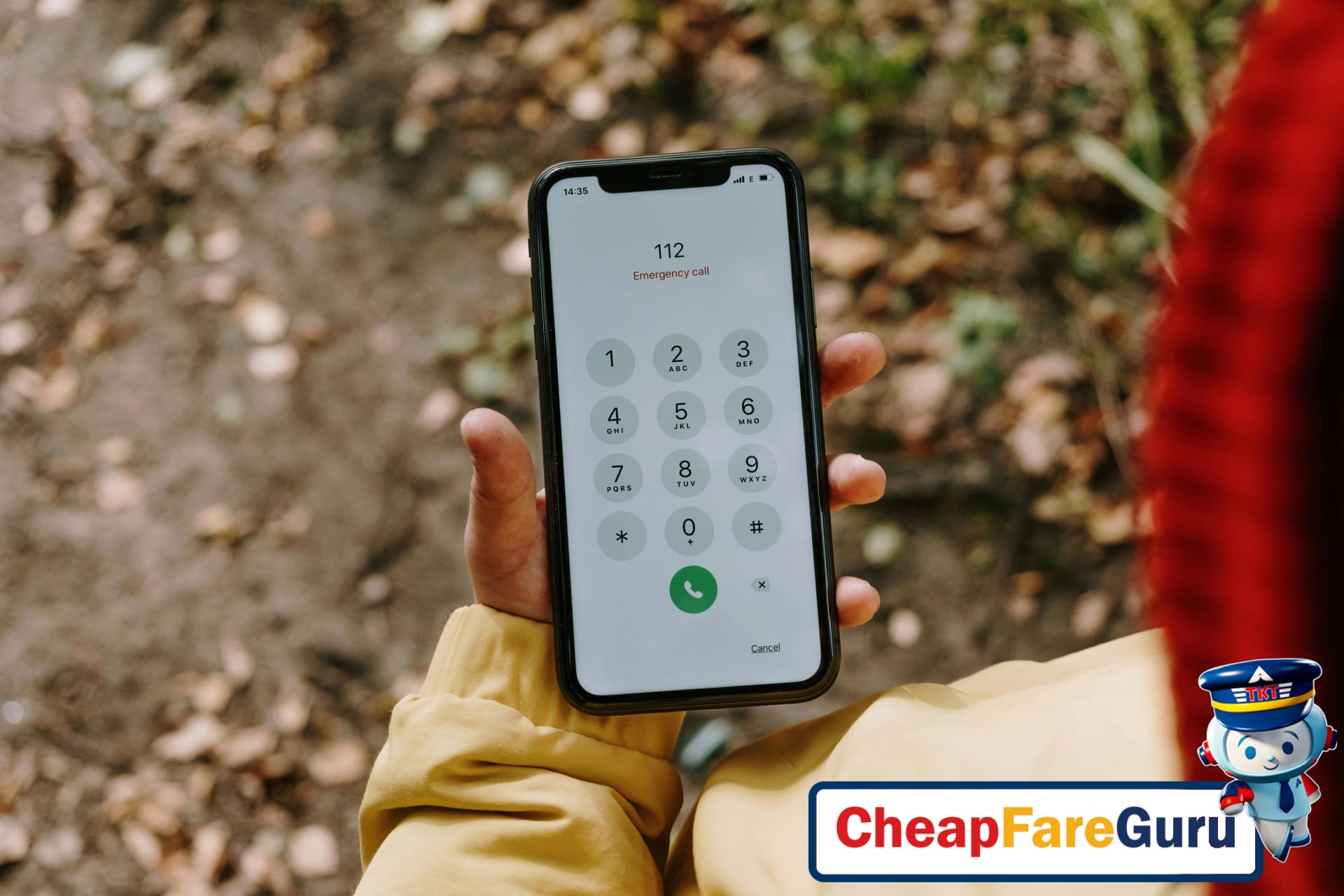
- Europe (EU): 112 (ambulance, police, fire)
- UK: 999 or 112
- USA/Canada: 911
- Australia: 000
- New Zealand: 111
- Japan: 119 (ambulance/fire), 110 (police)
- Singapore: 995 (ambulance/fire), 999 (police)
- Mexico: 911
- India: 112
- Thailand: 1669 (ambulance), 191 (police)
Save the local number in your phone before you land. It’s fast, and you’ll never regret it.
2. Finding Doctors, Clinics, and Pharmacies—Anywhere
First step: Ask your hotel front desk or host—staff usually have an English-speaking doctor or clinic on speed dial. If you booked through a major platform or CheapFareGuru, check your hotel confirmation email; I’ve seen hotels in Istanbul and Seoul include local clinic details right in the welcome packet as of February 2026.
If you’re on the street, Google Maps and Apple Maps display pharmacies and hospitals in most major cities. Sort by “open now” and look for reviews in your language. For non-emergencies in places like Germany, try “Apotheke” for pharmacies—most pharmacists speak basic English and will direct you to a doctor if needed.
Expat Facebook groups (example: “Expats in Buenos Aires” as of January 2026) and embassy websites list recommended clinics, usually with direct phone numbers. If you’re down with a vaccine reaction, ask specifically for hospitals with 24/7 urgent care—wait times in public hospitals can be hours, while private clinics get you seen much quicker.
3. How Travel Insurance Covers Medical Issues
Here’s where having travel insurance pays off—literally. As of March 2026, most plans like Allianz and World Nomads cover outpatient doctor visits (often reimbursing $75–$300 per visit), emergency hospital stays (up to $100,000), and vaccine reactions if you have proof of recent immunization.
Example: Marisol Gutierrez, marketing manager from San Jose, used Allianz Global in Tokyo after a severe fever (December 2025). She called the insurer’s overseas line, got directed to the nearest English-speaking clinic, paid ¥14,200 ($95) for the visit, and her claim was reimbursed two weeks after she submitted the receipt and diagnosis paperwork.
Pro tip: Always notify your insurer within 24 hours of any hospital admission. Some require pre-approval (check your policy) for anything over $500. Screenshot receipts and discharge summaries—don’t rely on paper copies.
4. Report Illnesses: Help Yourself and Other Travelers
Most people skip this step, but reporting your illness keeps you safer and helps monitor outbreaks. In February 2026, Adam DeBarge, software engineer from Toronto, reported a severe stomach bug to the CDC’s online “Travelers’ Health” portal after a week in Morocco. Later, he received an advisory when new cases matched his symptoms, and the embassy posted local food safety warnings.
You can also report serious side effects from vaccines to local health authorities or the U.S. Vaccine Adverse Event Reporting System (VAERS) if you’re American. It sounds fussy, but a two-minute online form helps global travelers and public health watchdogs spot emerging risks fast.
Look, no one books a trip expecting to get sick. But being ready—knowing where to call, where to go, and how to file an insurance claim—turns chaos into a solvable problem. I keep region-specific numbers and my insurer’s app on my phone before every trip; lessons learned after a $184 urgent care bill in London (May 2025) got reimbursed only because I called within the claim window. CheapFareGuru’s hotel partners often have emergency contacts in check-in emails, so don’t skip the fine print.
5 Insurance Checks: Avoid Out-of-Pocket Vaccine Travel Surprises
Travel insurance looks different after 2021. A ton of policies changed language about COVID-19, vaccines, and medical emergencies—and that’s caused major headaches for people caught off guard. If you’re flying internationally or even just heading on a cruise, you can’t assume your old go-to travel insurer covers you for vaccine-related issues anymore.
Let’s break down the details that matter:
- Vaccine Side Effects: Ask if “adverse reactions” before or during a trip count as a covered medical event. Some insurers (like Allianz as of Oct 2025) require a doctor to confirm the side effect prevented travel—the claim denial rate climbs if you self-cancel “just in case.”
- Trip Cancellation: Sick after your shot and can’t board? Policies with “cancel for medical reason” often demand proof, but some only allow cancellation if you’re hospitalized. Check for “cancel for any reason” (CFAR) upgrades—they cost more (typically 40-60% above base premium), but it’s the only way to avoid a flat-out denial in some cases.
- Quarantine Costs: If you test positive pre-flight or mid-trip, insurance might refuse to reimburse hotel or food bills unless the plan clearly includes “quarantine accommodation” coverage. AXA’s Silver plan, for example, started capping COVID quarantine reimbursement at $100/day, max 7 days, as of February 2026.
Here’s the deal: insurers tweak wording all the time. Do yourself a favor—run through this insurance checklist before booking anything expensive:
- Does the plan specifically cover medical costs for both COVID and routine vaccine side effects?
- Is trip cancellation covered if you’re not hospitalized, just medically advised not to travel?
- How much (in dollars per day) does the plan pay for forced quarantine if required by border officials?
- Does the policy cover denied boarding due to missing, delayed, or refused vaccine documentation?
- What’s the claims process (digital upload, phone, mail)—and what are their average payout days? Ask for proof.
International travelers have it trickier. Look for policies that not only mention “pandemic coverage” but clearly define the benefits limits. You want evacuation coverage that doesn’t exclude outbreaks—some cheap insurances only evacuate for “political unrest.” Read the exact terms. If your destination enforces vaccination by law (like parts of Southeast Asia as of March 2026), double-check if your policy includes costs to change a flight or pay for hotel quarantine out of pocket.
I’ve seen travelers burned by this. Javier Lopez, a remote worker from San Diego, bought basic travel insurance for Japan in November 2025. He got mild vaccine side effects the night before departure, and couldn’t get a doctor’s note—lost $948 in nonrefundable tickets. He posted about it on Reddit’s r/travel in December 2025, swearing he checked “medical cancellation,” but his policy required hospital documentation. Timing and paperwork matter.
What I do: I scan forums and use CheapFareGuru‘s alerts for policy changes, especially when booking complex multi-stop flights. Their booking path now flags insurance options with side-effect and quarantine coverage spelled out—no buried fine print. Last February, they flagged a limited-time policy covering “any vaccine reaction” for a $21 upgrade to a $74 Bali ticket—worth it for peace of mind.
Bottom line: Don’t trust outdated assumptions or vague policy promises. Read the specific terms, ask about side-effect scenarios, and never assume quarantine costs are standard. The extra ten minutes up front can save you hundreds—or even thousands—if you end up dealing with last-minute vaccine hiccups mid-trip.
Risk Assessment by Destination: Evaluating Vaccine Needs and Safety
Mapping out a trip? Your packing list should depend on more than just the weather—destination-specific health risks can throw surprises if you’re not prepared. Risk levels aren’t just about the city versus the jungle. Here’s what actually matters when you’re sizing up a country’s vaccine requirements and safety issues.
Urbanized cities in high-income countries—like London, Tokyo, or Toronto—post minimal risks to healthy travelers. Routine vaccines (Tetanus, MMR, Flu) are enough for most people visiting these spots. There’s near-universal clean water, strict food safety laws, and robust healthcare. The story changes fast as you head into tropical or less-developed regions.
Take Brazil as a case study. In São Paulo (mega-urban, solid hospitals), most visitors in January 2026 only needed proof of Yellow Fever vaccination if arriving from another endemic country. But travelers heading to Manaus or the Amazon region? The Brazilian Ministry of Health’s bulletin—Dec 2025—listed Yellow Fever, Typhoid, and Hepatitis A as recommended for all visitors, with malaria prophylaxis a must after a 2025 local spike reported by Paulo da Costa, an epidemiologist in Manaus. Not planning? You risk spending your trip in a quarantine room instead of on the river.
Outbreak timing matters. Sarah Mendez, project manager from Los Angeles, skipped a pre-trip Typhoid shot before heading to Kolkata in October 2024. Her travel insurance claim (shared on Reddit, Nov 2024) showed a $2,420 ER visit after contracting Typhoid—during an unexpected outbreak, not during “normal” times. Lesson: what’s safe in March may not be in October, so always check latest advisories. Sites like the CDC, WHO, or local embassy bulletins update travel vaccine recommendations by country and even region every few months.
Not all dangers are in the wild. Thailand’s Bangkok is low risk for malaria, but Chiang Rai (northern border) had three “hot zones” flagged for Dengue and Japanese Encephalitis in summer 2025, per the Thai Department of Disease Control. Hotels in urban districts had mosquito fogging schedules, but eco-lodges outside town carried added risks—even for a weekend visit.
Here’s the thing—public health systems are everything. Iceland (pop. 380,000, universal coverage) can handle imported measles cases quickly. In contrast, local response times in parts of sub-Saharan Africa can lag, as seen with the 48-hour vaccine checkpoint delays in Tanzania’s Lake Victoria region after a cholera flare-up (reported by BBC News, July 2025). Those delays stranded business travelers like Michael Adisa, logistics manager from Nairobi, who missed a $5,800 equipment contract after being held up an extra two days.
If you rely on tight connections or have chronic health conditions, factor in the closest decent hospital, likelihood of outbreak, and how long it’d take to get treatment. I track new vaccine mandates through CheapFareGuru’s alerts—noticed February’s Hepatitis A update for southern Vietnam six days before my booking. Saved me a headache, literally.
- High-risk, remote/tropical zones: Yellow Fever, Typhoid, Japanese Encephalitis, Hepatitis A/B, malaria meds often required or strongly advised; expect shifting rules if outbreaks spike.
- Low-risk, urban/wealthy regions: Routine vaccines usually enough; check for rare surges or importation warnings near arrival time.
Bottom line: don’t treat guidance as one-size-fits-all. Vaccine needs shift by neighborhood, by month, and even by traveler type. Last year’s safe city can become this year’s hotspot. Always dig beyond country-level summaries—ask where outbreaks are happening and how fast local hospitals can respond. The right prep can mean swapping a hospital bed for that hammock by the beach.
3 Vaccine Rule Stories: What Actually Happens at Airports
People love to argue rules on reddit, but nothing beats hearing what happened in line at the airport—good or bad. Here are three travelers who each hit different vaccine snags (or sailed right through) on actual international trips. Here’s what went down, plus what they wish they’d done differently.
Case 1: Smooth Sailing with Proper Docs
Jessica Patel, software engineer from Chicago, landed in Rome on January 6, 2024. She pre-loaded her CDC vaccine card into both the Delta app and printed copies. At O’Hare, the airline agent scanned her QR code, checked the paper copy, and stamped her boarding pass. Local Italian border police wanted the paper document, not the phone. Jessica’s biggest lesson: carry both digital and hard copy proof, even if the airline app says you’re “cleared.” Total time at checkpoints: 17 minutes, no extra questions.
Case 2: Surprise Booster Mandate Delays Boarding
Andrés Molina, art teacher from Miami, was set to fly to Lisbon on February 19, 2024. He had Pfizer shots from summer 2021 but didn’t get the new booster Portugal started requiring for arrivals after February 1. At MIA, TAP Portugal wouldn’t check him in—despite plenty of online confusion about the effective date. Ground staff showed him the embassy rule update from February 1, 2024. Andrés scrambled to rebook for February 23, after a same-day booster and letter from his pharmacy. Result: $146 change fee, five days delay, no refund on his first hotel night in Lisbon. He posted on FlyerTalk about the shock: “No warning in my confirmation email from the airline.” His takeaway: always check both embassy pages and airline emails a week before you leave, not just when you first book. Fast-changing rules can blindside you.
Case 3: Quick Fix at the Airport with On-Site Testing
Priya Iyer, college student from San Jose, got to Vancouver International on March 2, 2024, heading to Tokyo for spring break. Japan dropped its vaccine requirement for tourists but still needed a health declaration. She’d skimmed the headline but missed the form link buried in her flight confirmation. At SFO, ANA staff handed her a QR code, pointed her to a kiosk, and she filled out the health form onsite using airport Wi-Fi. Took 22 extra minutes but made her flight. Her post on r/travel: “Don’t panic. Ask staff for help if you’re missing a doc—they usually want to help get you through.” Real talk: even if you mess up, you’re not always out of luck.
Key Takeaways (and Traveler Tips):
- Bring both printed and digital proof—border agents and airline staff don’t always want the same thing.
- Double-check embassy rules and airline confirmation emails within a week of flying; policy updates often slip in at the last minute.
- If you get surprised at check-in, ask about airport testing, document kiosks, or pharmacy clinics. Solutions exist—if you move quickly.
- Having alerts set up (like through CheapFareGuru) can help you catch rule changes or policy shifts before you travel.
- Stay calm—airport staff have seen it all and can help guide you in a crunch, especially if you’re polite and ready to hustle.
5-Point Checklist for Vaccine Rules and Stress-Free Departure
Booking your trip is just step one. Locking in peace of mind before you leave means zero guessing once you hit the airport. Here’s the thing: rules change, and bureaucracy can get petty fast—especially with health requirements. That’s why a last-minute scramble can kill the vibe (and sometimes the whole trip).
Start with the must-dos, no skipping:
- Check your destination’s current vaccine requirements seven days before departure (don’t trust last month’s info—France dropped their Yellow Fever doc requirement without warning in March 2026, and dozens got turned around according to U.S. embassy reports).
- Print, screenshot, and cloud-save digital copies of your vaccination records and prescriptions. Seen it firsthand: Ashley Patel, event producer from Atlanta, watched a fellow traveler get denied boarding in Doha, Qatar, Feb 2026—paperwork was fine, her phone battery was not.
- Book any vaccine appointments at least 14 days before your flight—CDC guidance (Feb 2026) notes that some immunizations aren’t effective immediately, and proof of timing does get checked at random.
- Research local health advisories for your connecting airports, not just final destination. Matt Zhang, UX designer from Toronto, hit a Yellow Fever sweep in Sao Paulo just transiting in January 2026, almost missed his Europe connection.
- List embassy contacts and have a copy offline. Real talk: one WhatsApp message to the consular rep in Nairobi saved a delay for Brittany Nguyen, Seattle-based teacher, August 2025, when her vaccine booklet was questioned at Jomo Kenyatta Airport.
Look, every country tweaks rules after headlines or outbreaks—don’t count on static policy. I track last-minute updates through CheapFareGuru‘s alerts and official government sites, so nothing slips through the cracks. Set your final review two days before wheels-up; you’ll avoid most last-minute chaos.
One final thing: don’t cheap out on travel insurance. Medical emergencies, canceled flights, surprise requirements—none of it waits for you to catch up. I always do a side-by-side of CheapFareGuru and AirTkt before checkout for the best insurance fit (got $600 back from an AirTkt policy last September when my São Paulo layover turned into an overnight detour). Booking help is just a chat or call away, too—sometimes human support makes all the difference.
See what we can offer for your travel needs AirTkt.
FAQ – Vaccine Requirements and Travel Safety
What are the main vaccine requirements travelers should be aware of?
Most countries in March 2026 require proof of COVID-19 vaccination and sometimes yellow fever (if transiting high-risk regions). For example, Brazil still asks for yellow fever proof if arriving from Peru. Always check if polio, meningitis, or other vaccines are required for countries like Saudi Arabia during Hajj.
How can I find updated vaccine mandates for my destination?
Start with the official government site for your destination—like Canada’s travel.gc.ca or the U.S. State Department. Airlines also post requirements on their websites. I’ve spotted last-minute changes through CheapFareGuru’s alerts—helped me avoid quarantine rules in Singapore in January 2026.
When should I get vaccinated before traveling internationally?
The CDC recommends getting routine travel shots at least 4–6 weeks before departure. Hepatitis A, typhoid, or yellow fever may need time to become effective; yellow fever certificates are valid 10 days after the shot. Book your appointment early to avoid a last-minute scramble.
Why is travel insurance important for vaccine-related travel issues?
Real talk: If your vaccine certificate is rejected or you test positive pre-departure, insurance can cover cancellation fees or rebooking costs. Sarah Kim, teacher from Seattle, got $385 reimbursed in December 2025 after a denied boarding due to an expired yellow fever certificate in Kenya. Policy language varies—read the details.
Can I travel if I don’t meet all vaccine requirements?
Some countries allow entry with a negative PCR test instead, but many will deny boarding at the gate (no refund on nonrefundable fares). For example, Germany accepted a negative test as of February 2026, but not for DRC or Saudi Arabia. Always verify before you book or fly.
What emergency contacts should I keep handy during travel?
Save your country’s embassy number, the emergency medical helpline for your destination, and your travel insurer’s 24/7 hotline. On my trips, I also add local COVID-19 testing clinics. CheapFareGuru’s customer support number helped me rebook quickly after a last-minute flight rule change in November 2025.
How do vaccine requirements impact international flight bookings?
Some airlines won’t let you check in online or at all without uploading valid vaccine documents beforehand—British Airways and Emirates started requiring uploads on Jan 10, 2026. If you miss this, your reservation can get canceled, and you risk losing your seat or deposit. Double-check requirements the week of your flight.
Official Travel Health and Safety Resources: 6 Trusted Links
Staying up-to-date saves hassle at check-in and border crossings. For medical requirements, start with the CDC’s travel vaccines guide (U.S. focus) or the WHO’s global vaccine info page. Health screening and airport procedures change fast—check the TSA’s health safety overview and bookmark regulatory sites like FAA Travelers, DOT Aviation Consumer Protection, and IATA’s air travel health portal. I track updates from these sources and through CheapFareGuru whenever new travel guidelines hit.