
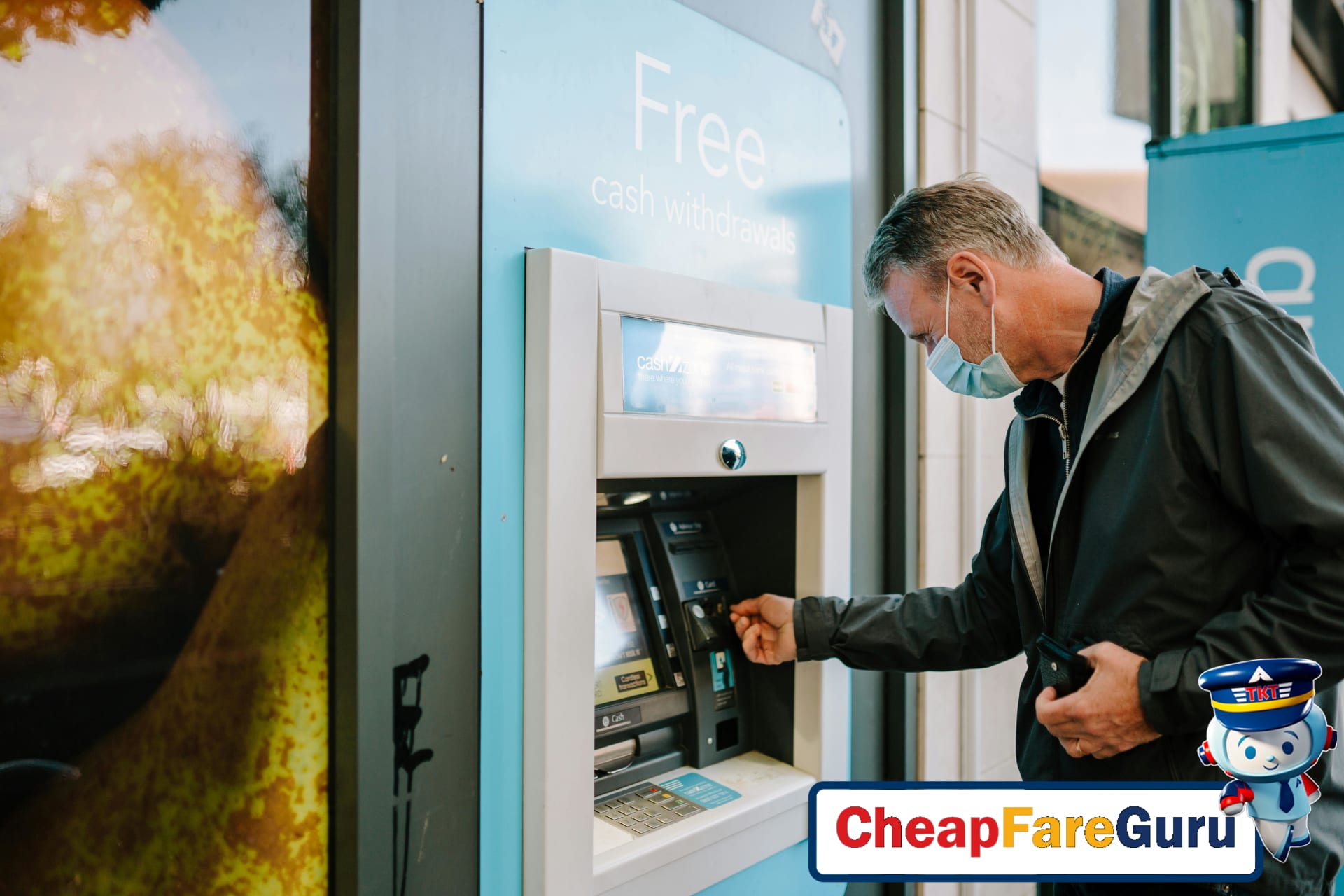
Why ATM Fees Add Up Fast

Using an ATM abroad might seem like a simple way to get local cash, but international ATM fees can quietly eat into your travel budget. There are usually two main charges: the ATM owner’s fee—what the local bank or machine operator charges for each withdrawal—and your own bank’s foreign ATM fee. On top of these, you might also face a currency conversion or foreign transaction fee, which is often a percentage of your withdrawal amount.
I still remember checking my bank statement after a trip to Spain and realizing those $3.00 and $5.00 charges per withdrawal added up to more than $30.00 by the end of the week. It’s easy to underestimate the impact when each fee seems small—until you add them together. For example, if you withdraw cash four times during a trip and pay about $4.00 per transaction (including all combined fees), that’s around $16.00 lost just to access your own money.
According to the NerdWallet guide on international ATM fees, travelers commonly face combined charges of $2.00–$7.00 per withdrawal, depending on the banks involved. That’s why understanding these costs matters for anyone watching their spending. For more strategies on cutting these kinds of costs, check out our guide on how to avoid hidden travel costs.
Bank Cards Built For Travelers

Choosing a bank card with travel-friendly perks can save you a surprising amount on your next trip. Look for cards that offer no foreign ATM withdrawal fees, are part of global networks like Visa or Mastercard, and waive currency conversion charges. In my case, I switched to a no-foreign-fee debit card after one too many trips where ATM charges stacked up to more than $40.00.
Some leading options include Charles Schwab’s Investor Checking debit card, Capital One 360, and fintech solutions like Wise or Revolut. These cards are accepted at most international ATMs and typically reimburse or eliminate extra withdrawal fees. If you’re withdrawing cash abroad, the difference between a standard card and a travel-optimized one can mean keeping about $50.00 extra in your pocket per trip.
Before you decide, compare features like ATM network size, customer service, and currency conversion rates. For a deeper breakdown, check out our best cards for international travel guide, or browse the current directory of no-foreign-fee cards from NerdWallet.
Find The Right ATMs Abroad

Not all ATMs overseas are created equal when it comes to fees. “In-network” ATMs are those that partner with your home bank, often letting you withdraw cash with lower or even no extra charges. “Out-of-network” ATMs, on the other hand, usually tack on extra fees—sometimes from both the local bank and your own. I’ve saved a surprising amount just by taking a few minutes to find an in-network ATM during my last trip.
To make this easier, many major banks have global ATM locator tools online. For example, Visa’s ATM locator helps you find partner machines almost anywhere. Always look for ATMs attached to large bank branches; these typically offer better security and lower withdrawal fees compared to standalone machines or currency kiosks you’ll see in airports and tourist spots. Those airport ATMs might be tempting, but they usually come with higher charges and less favorable exchange rates.
If you want more details on safely managing your cash abroad, check out our guide on how to access cash safely when traveling.
Smart Withdrawal Strategies That Work

ATM fees can add up fast when you’re traveling, especially if your bank charges a flat fee each time you withdraw cash. Most banks and foreign ATMs apply a per-transaction fee—so taking out cash frequently in small amounts means you’ll keep paying that fee over and over. For example, if each withdrawal costs about $5.00, five daily withdrawals quickly eat up $25.00 in fees, while a single larger withdrawal only costs you $5.00.
I learned early on to check my bank’s fee structure before a trip, and now I usually make one larger withdrawal every few days instead of grabbing small amounts daily. This approach helps me keep more of my money and lessens the hassle of constantly finding an ATM. Of course, carrying large sums of cash isn’t always wise—so I stick to amounts I’m comfortable managing and use my hotel safe or a hidden travel pouch when possible.
If you can’t access an ATM, consider using a backup like a prepaid travel card or exchanging a small amount of currency at a reputable exchange office. For extra peace of mind, I’d also recommend reading up on managing travel money safety tips before your trip.
Watch For Dynamic Currency Conversion Traps

Dynamic Currency Conversion (DCC) is a sneaky feature you’ll often see at foreign ATMs and card terminals. It pops up when you withdraw cash or pay with your card abroad, asking if you want to be charged in your home currency (like U.S. dollars) instead of the local currency. While it sounds convenient, DCC usually means you’ll get a poor exchange rate and pay extra hidden fees.
Here’s how it works: You insert your card at a foreign ATM, enter your amount, and suddenly the screen offers to convert your withdrawal to dollars “for your convenience.” If you accept, the ATM operator—not your bank—sets the exchange rate, often padding it with a markup that can add several dollars to your transaction. I nearly fell for this once in Prague, and the markup would have cost me about $12.00 on a single withdrawal.
To avoid these unnecessary charges, always choose to be charged in the local currency. When prompted, firmly select “decline conversion” or “charge in local currency.” This way, your own bank handles the exchange at a typically better rate. For more on this, check out our guide on avoiding hidden exchange fees when traveling abroad. For an official explanation, the Consumer Financial Protection Bureau offers a clear overview of how DCC works.
ATM Withdrawal Budget Table Comparison

Factoring in ATM withdrawal fees can make a surprising difference in your daily travel costs. I like to track my ATM fees in real time using a notes app, so I always know how much cash access is really costing me. The table below breaks down typical daily expenses for Budget, Mid-range, and Luxury travelers, including a representative ATM/foreign transaction fee per day. If you use a bank that refunds ATM fees, your actual costs could be a bit lower. For more strategies on managing your expenses, check out our complete guide to budgeting for international trips.
| Budget | Mid-range | Luxury | |
|---|---|---|---|
| Accommodation | $30.00 | $80.00 | $180.00 |
| Food | $15.00 | $40.00 | $90.00 |
| Transport | $8.00 | $20.00 | $50.00 |
| Activities | $10.00 | $35.00 | $70.00 |
| ATM/Foreign Fees | $4.00 | $5.00 | $7.00 |
| Total per Day | $67.00 | $180.00 | $397.00 |
Banking choices—like using cards that refund ATM fees or allow free international withdrawals—can shift these daily totals. If you’re looking to trim your travel budget, compare your bank’s fee structure before departure.
FAQ On Reducing ATM Fees
- How can I avoid foreign ATM fees?
Look for banks that reimburse international ATM fees or partner with global networks. If your home bank has overseas partners, you can often withdraw cash without extra charges. Check your bank’s website before you travel to map out partner ATMs at your destination.
- What’s the cheapest way to get cash abroad?
Using a debit card with no foreign transaction or ATM withdrawal fees is usually the cheapest way. I usually recommend withdrawing larger amounts less frequently to minimize per-withdrawal fees, but always keep safety in mind and don’t carry too much cash at once.
- Should I use a credit card or debit card at an ATM?
Debit cards are generally better than credit cards for ATM withdrawals. Credit card cash advances often come with high fees and immediate interest charges. If you must use a credit card, review the costs first so you’re not surprised by expensive fees on your statement.
- How do I find ATMs with low fees?
Before you travel, research which ATM networks are available in your destination and if your bank is part of any fee-free alliances. Once, I learned this the hard way by using a random ATM and getting hit with a big fee—now I always check bank apps for partner locations first.
- Are there ways to save money on travel banking fees?
Yes, there are several ways to save, including opening an account with a bank that offers international fee waivers, using fee-free global ATM networks, and planning your cash needs ahead. For more ideas, see our guide on ways to save money on travel banking fees.
- Does currency conversion at the ATM add extra fees?
Many ATMs offer Dynamic Currency Conversion, letting you see the amount in U.S. dollars. However, this usually comes with a poor exchange rate and extra fees. Decline this option and choose to be charged in the local currency for a better rate from your bank.
Wrap-Up: Travel Smarter, Pay Less
Minimizing ATM and banking fees on your travels really comes down to a few smart habits: use fee-free debit cards, withdraw larger amounts less often, and always decline dynamic currency conversion at foreign ATMs. Planning your cash strategy ahead of time helps you stick to your travel budget and avoid unnecessary charges. In my experience, taking a few minutes to sort out these details before a trip has saved me more than a few headaches—and dollars—on the road.