
Bangkok After Dark, Temple at Dawn: Why First-Timers Need a Call Sheet
Bangkok throws you headlong into contrasts. One minute, you’re weaving through alleys steamed with pad thai and durian, the next you’re craning your neck at a golden stupa that’s older than most countries. Streetfood hawkers hustle below neon-lit malls; monks move quietly by skyscrapers. The city pulses 24/7, but it doesn’t hand out a rulebook for newcomers.
If you wing it, overwhelm hits fast. First-timers get tripped up by chaotic traffic and signboards that swap between Thai and English mid-street. But a bit of legwork—understanding how to snag a fair cab ride or sidestep tourist scams—turns confusion into adventure. Here’s what you’ll get from this guide: real talk on top temples and street markets, tips for breaking through the language barrier, subway shortcuts, neighborhood picks (and no-goes), a flexible itinerary, and a budget reality check. I track rate drops and city hacks through CheapFareGuru’s alerts, so you’ll get ways to save before you even hit Suvarnabhumi.
Bottom line: if you want to come home bragging about the hidden night bazaar and not just the Grand Palace, don’t just show up—show up ready. Let’s get started.
10 Bangkok Sights: How to Skip Lines and Save Hours
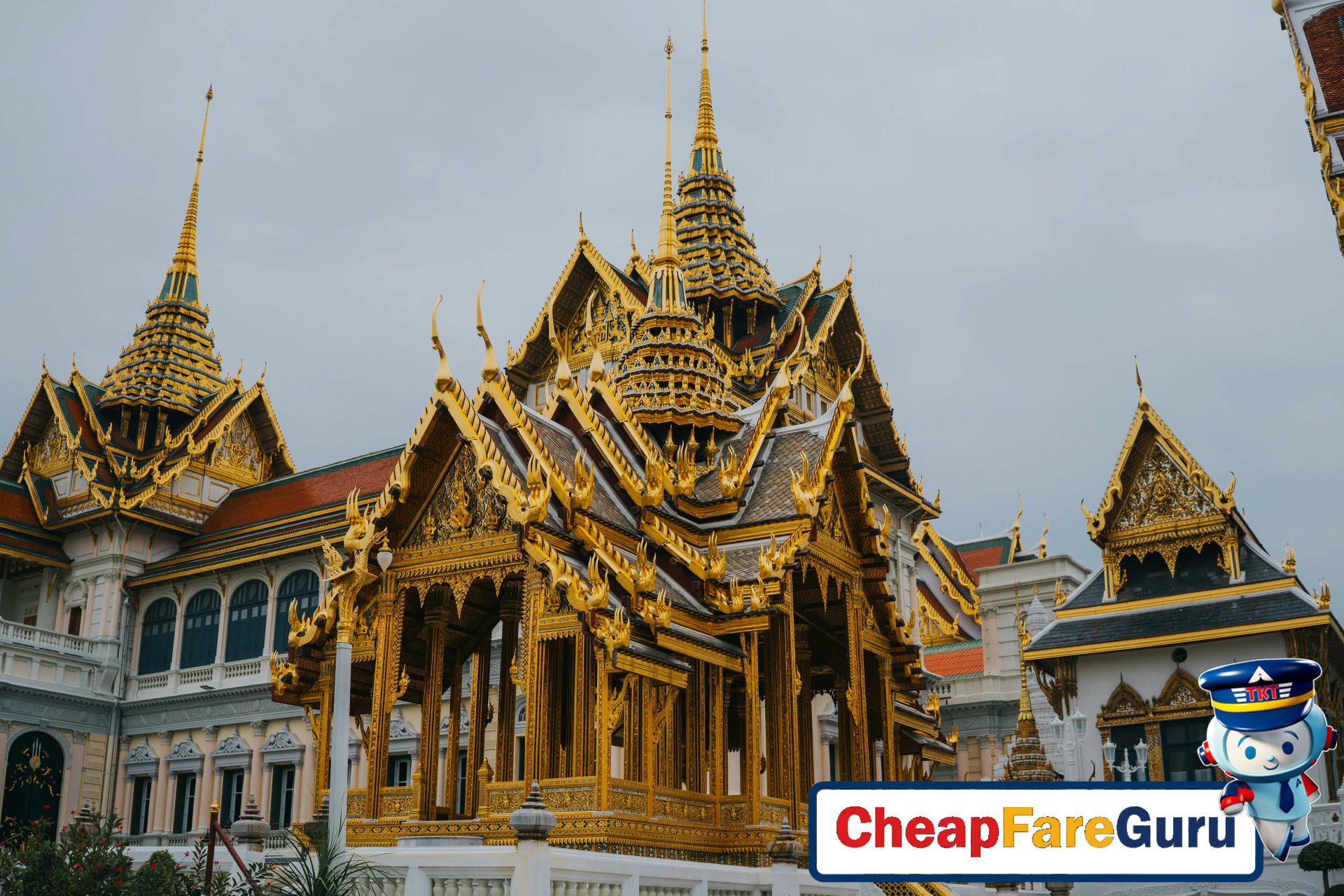
Bangkok doesn’t do mellow queues—at least not at places like the Grand Palace, where wait times hit 35+ minutes by 10 a.m. last December. In this city, your time-saver isn’t just an app, but knowing when to go, where to book, and how to dodge sticky lines with a few local hacks. Here’s a hit list of 10 must-sees, plus skip-the-line advice you’ll actually use.
- Grand Palace & Emerald Buddha
Go early (arrive before 8:45 a.m.)—by 11:00, tour groups fill the inner courtyards. Buy tickets on the official website, not reseller sites that charge up to 30% more.
Skip-the-line tip: Book through the Palace’s app for a scannable QR code. Fastest: weekday mornings (avoid major Thai holidays). - Wat Pho (Reclining Buddha)
Last time I went (March 2025, Thursday), the line after 10 a.m. wound past the main gate. Entry on Klook: ฿200 (~$5.50) fast access—show QR at the side entrance, skip the general ticket line. Best after 3:30 p.m. (day tours thin out). - Wat Arun (Temple of Dawn)
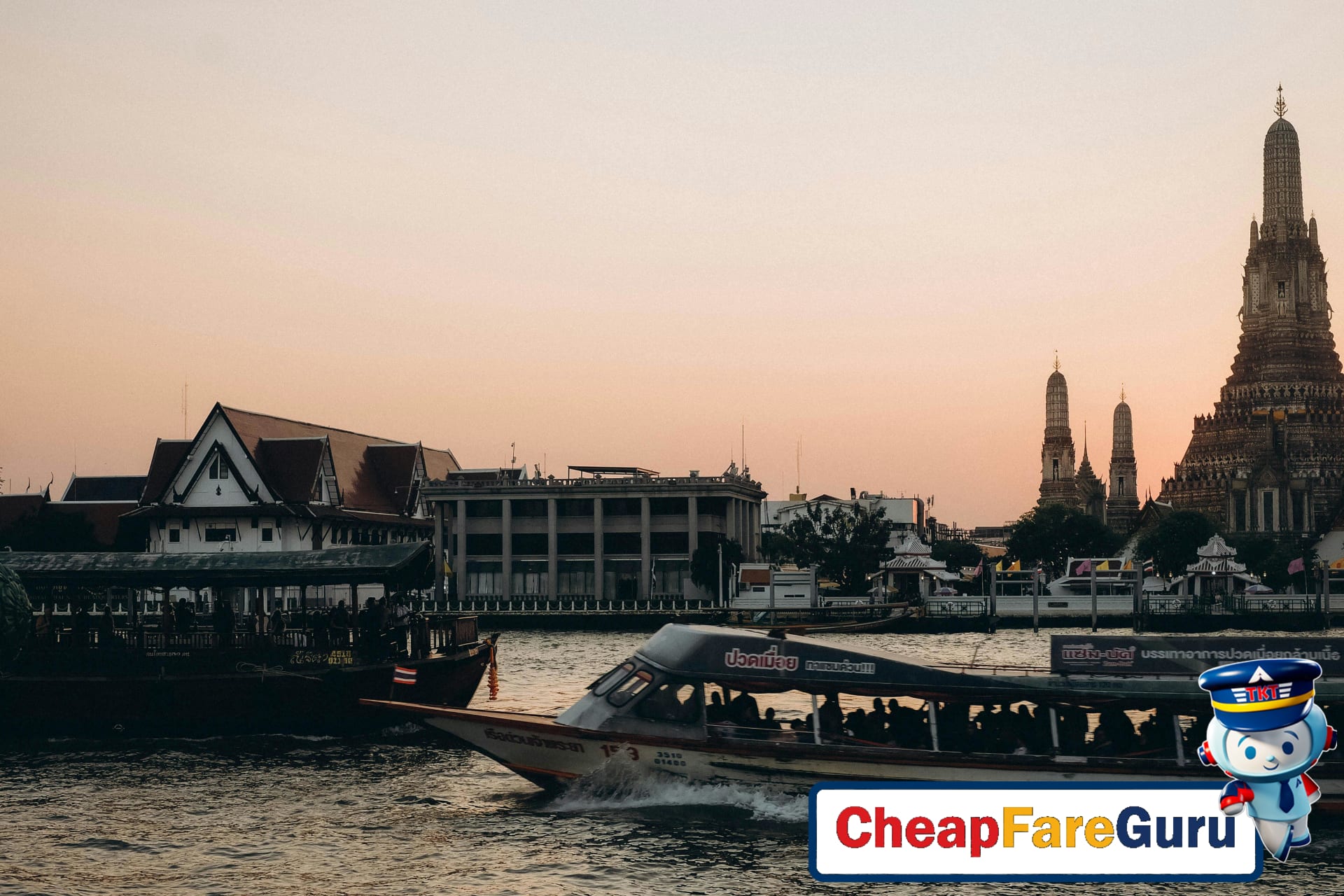
Honestly: sunset is packed. Mornings before 9:00 a.m. = photos without crowds. Tickets on Tiqets allow you to head straight to the scan-in point. Combo ticket (Wat Pho + Wat Arun): ฿350 ($9.60) on GetYourGuide, mobile QR accepted at both spots. - Chatuchak Weekend Market
Arrive before 10 a.m. Saturday or Sunday—by noon it’s tight, and stall alleys overheat fast. The official Chatuchak app posts real-time busiest zones. No entry tickets, but order food and pay at vendors via Rabbit Line Pay for quick service. Expect 15% shorter lines at north-side entrances. - Khao San Road
Skip Friday/Saturday after 8 p.m.—shoulder-to-shoulder and drink queue chaos. Best time: Wednesday 6–8 p.m., faster bar service. Grab drink coupons or “bucket” bundles via Eatigo app up to 40% off (I booked three rounds at The Macaroni Club: $2.80 per cocktail, Jan 2026). - Jim Thompson House
Buy timed-entry tickets on their official site (฿200/$5.50 adults). In November 2025, my friend Ayesha Malik (UX designer, Toronto) snagged a 9:30 a.m. slot and walked straight in while the paper-ticket line stretched outside. - Lumphini Park
Early arrival beats the heat—sunrise or after 5:00 p.m. No lines here, but if you want a Swan Boat, reserve via GoWander app: ฿60 ($1.65), skip the kiosk queue entirely. - MBK Center
If shopping, go weekdays before noon (Saturday afternoon is a 10-minute wait at escalators and checkout lines). Book mobile e-vouchers for electronics via Shopee app to claim at service counters. - Yaowarat Road (Chinatown)
Food lines start forming by 6:30 p.m. Try Chinatown Walks app to reserve ahead at eateries like Nai Ek Roll Noodle. No joke: I cut a 30-person queue at T&K Seafood with a digital booking (Jan 2026). - Bang Krachao (“Green Lung”)
Ferry over before 9:00 a.m.; the quietest hours are sunrise to 10:30 a.m. Bike rental via BangkokBike app (฿100/$2.75 3 hours) lets you pick up at the pier—zero waiting on-site.
Booking skip-the-line tickets through Klook, GetYourGuide, and official attraction apps almost always costs less than buying when you arrive—and you’ll get QR scan entry that shaves at least 15–40 minutes per hot spot. I track discount combo passes and flash sales using CheapFareGuru‘s deal alerts, so I don’t miss the weekday price drops.
Real talk: Most major sites don’t accept paperless tickets bought via third-party resellers unless it’s from their acknowledged list. If in doubt, check the official attraction site before you pay. Otherwise, you could end up waiting twice (once to show your reservation, again to swap for a “real” ticket).
Cultural Etiquette in Thailand: 5 Key Habits to Know Before You Land
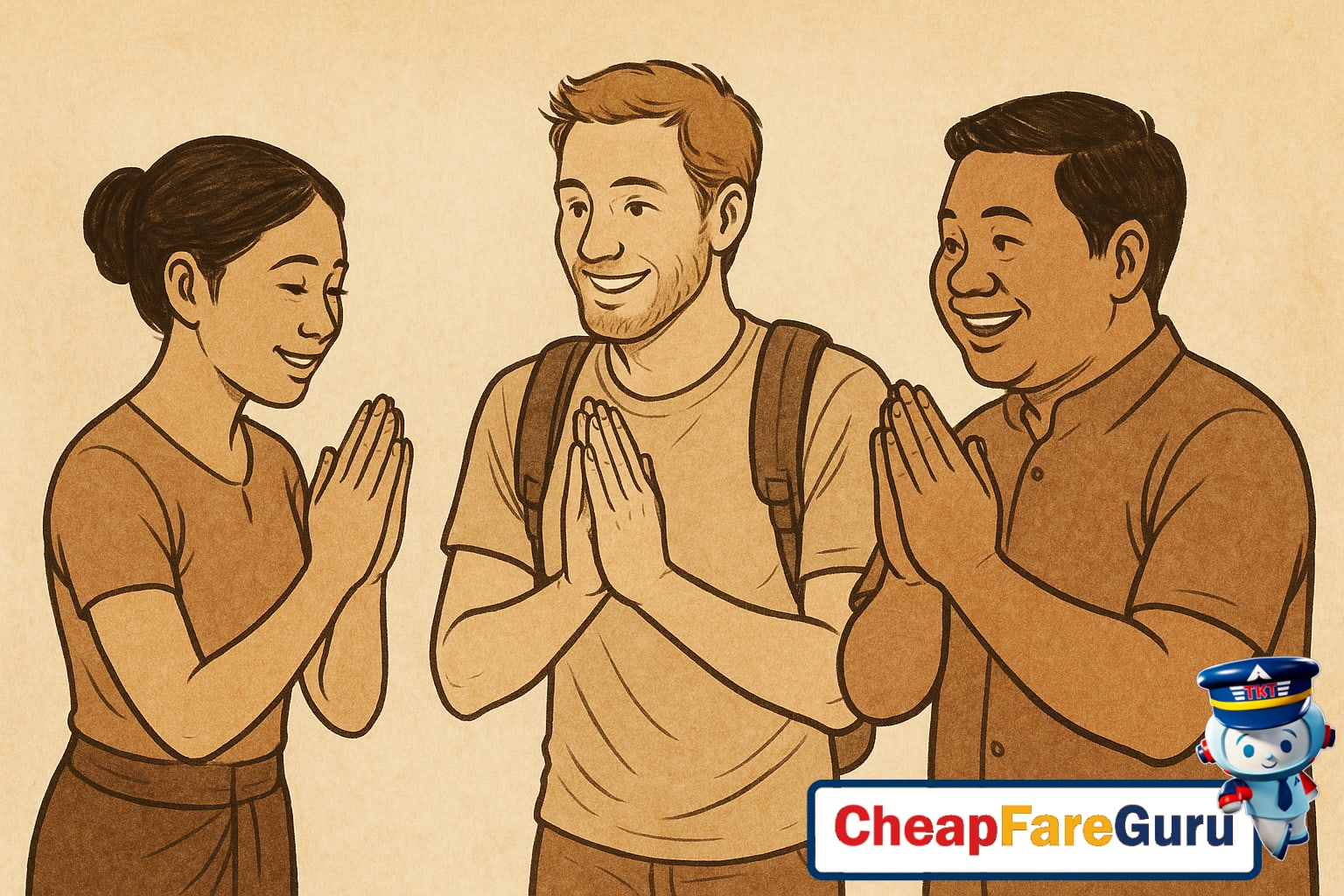
Start with the wai. If you’re new to Thailand, this traditional greeting—a quick bow with palms pressed together at chest or nose level—beats a handshake almost every time. Save handshakes for business meetings or when a local offers you their hand first. At temples or when meeting elders, wai first and wai low. Tourists usually get a pass if you’re awkward, but there’s respect in trying.
Stepping into a temple starts with your shoes—take them off at the door. Temples like Wat Pho in Bangkok (visited by 9+ million people in February 2024) post signs everywhere, but locals still wince at bare shoulders or short shorts. Cover knees and shoulders, and skip loud talk or phone selfies right in front of a Buddha statue. Here’s the thing: Pointing your feet at any Buddha image (even if you’re just sitting) is a no-go. Tuck your legs to the side or kneel if possible. Locals mean it.
Tipping in Thailand isn’t as loaded as in the US, but it’s appreciated. At sit-down restaurants or with cab drivers, 20–40 baht ($0.57–$1.15) goes a long way in Bangkok and Chiang Mai. Staff at hotels or spas in Phuket get similar tips. But don’t toss coins—hand bills directly or leave on the tray. In small street food stalls, leave coins out but don’t stress if you don’t tip.
Public behavior is where some travelers trip up. Shouting, arguing loudly, or hugging/kissing in busy markets or on public transit? Locals will notice (and not in a good way). Joke about the king or the royal family, even with a local friend, and you risk more than side-eye. Thai lèse-majesté laws are enforced harshly—skip the topic entirely. Real talk: You won’t out-joke local comedians, and one offhand comment can land you in bureaucratic trouble.
- Do use the wai with adults, elders, and when entering someone’s home.
- Don’t point your feet at people, Buddha images, or sacred objects.
- Do cover shoulders and knees at religious sites—bring a light scarf or trousers.
- Don’t touch people’s heads, including kids—considered the most sacred part.
- Do give small tips for service, but don’t feel pressured everywhere.
- Don’t raise your voice in public or show anger, even if frustrated by delays.
- Do stand still for the national anthem (played daily at 8:00 AM and 6:00 PM in public places).
- Don’t joke or criticize the royal family—no exceptions.
When I catch last-minute fare drops with CheapFareGuru, I always factor in how respecting local customs can lead to friendlier service (and sometimes unadvertised deals) once I land. Bottom line: The more you play by Thai etiquette rules—especially at temples and in public—the more doors open, literally and figuratively.
15 Essential Thai Phrases: Sound Confident from Day One
Few things earn warm smiles in Thailand faster than a simple “Sawasdee” and a nod to local etiquette. Get the basics down, and you’ll run into fewer blank stares (and pay “tourist price” less often). Here’s what I use on every trip, from street food runs to last-minute taxi negotiations at midnight.
- Greetings:
- “Sawasdee” (สวัสดี) – Hello/Goodbye
- Add “khrap” (ครับ) if you’re male, “ka” (ค่ะ/คะ) if you’re female. That’s your built-in politeness. Example: “Sawasdee khrap” (guys), “Sawasdee ka” (ladies).
- Thank you:
- “Khob khun khrap/ka” (ขอบคุณครับ/ค่ะ)
- Sorry/Excuse me:
- “Khor thot khrap/ka” (ขอโทษครับ/ค่ะ)
- Directions:
- “Pai…” (ไป…) = Go to…
- “Yoo tee nai?” (อยู่ที่ไหน) = Where is…?
- “Sathanee rod fai yoo tee nai?” (สถานีรถไฟอยู่ที่ไหน) = Where is the train station?
- Food & ordering:
- “Ao ann nee” (เอาอันนี้) = I’ll take this one
- “Mai pet” (ไม่เผ็ด) = Not spicy
- “Tao rai?” (เท่าไหร่) = How much?
- Negotiating Prices:
- “Loot dai mai?” (ลดได้ไหม) = Can you lower the price?
- Emergencies:
- “Chuay duay!” (ช่วยด้วย) = Help!
- “Thahan” (ตำรวจ) = Police
- “Rong payaban” (โรงพยาบาล) = Hospital
Pronunciation is half the battle. “Sawasdee” rhymes (sort of) with “da-sad-dee” but smile as you say it — locals notice, and you’ll get a friendlier response. “Khrap” sounds like “krap” (with a soft ‘r’), and “ka” is a gentle “kah.” Relax, nobody expects perfection, but muddling these makes a big difference in markets or taxis.
I rely on Google Translate and SayHi for fast voice-to-voice help when I get stuck. Both work offline if you pre-download Thai. I’ve seen travelers in Chiang Mai, like Julia Ramos, a backpacker from Vancouver, use Google Translate on her Pixel in January 2026 — it nailed her request for vegetarian street food after her few practiced phrases hit a wall. Pro tip: screenshot phrases before leaving Wi-Fi; Thai script can throw you if you’re in a rush.
Bottom line: Locals love the effort. Even just “Khob khun ka” and “Mai pet” get you further than hand signals. I track promo alerts and real-world tips through CheapFareGuru — caught a last-minute Chiang Mai airfare in February 2026, and nobody batted an eye at my newbie accent. Don’t overthink it.
Fees, Apps, and Cash: Your Thai Baht Payment Survival Guide
Thai baht (THB) notes are everywhere—green 20s, purple 500s—and so are money exchange rates that’ll mess with your budget if you’re not careful. You’ll see “no-fee” kiosks in Bangkok’s airport arrivals, but the best rates come from ATM withdrawals or top-rated currency exchanges like SuperRich (both original and SuperRich 1965 branches). On March 1, 2026, SuperRich in central Bangkok offered 35.77 THB per USD, while airport booths were at 34.60—so $500 exchanged outside the airport got you 585 baht more.
Cash rules in markets, small restaurants, and transport—think street food near Chatuchak Market or cab rides in Chiang Mai. Cards are fine for hotels, malls, and big chain stores, but some budget places will tack on a 2-3% surcharge or simply don’t accept them. Visa and Mastercard are the safest bet; American Express gets more rejections, especially outside tourist hubs.
ATMs are everywhere, even in 7-Eleven. But here’s the thing: nearly all Thai banks charge a withdrawal fee—usually 220 THB (about $6.20 USD as of March 2026) per transaction. Most ATMs cap single withdrawals at 20,000 THB. Pro tip: withdraw the max if your cards allow. Security-wise, choose ATMs inside banks or shopping centers, cover your PIN, and avoid “old-model” outdoor ATMs, especially after dark.
PromptPay is Thailand’s mobile pay king—locals scan QR codes at coffee shops, taxis, and temples. Many tourists miss this trick, but if your bank or transfer app supports PromptPay (like Wise or Revolut’s Thai wallets), you can go cashless for tons of daily expenses. Set it up in advance; some apps let you preload Thai baht so you’re ready on arrival.
| Method | Ease of Use | Typical Fees | Acceptance | Safety |
|---|---|---|---|---|
| Cash (THB) | Universal | Exchange: 0–2.5%, ATM: 220 THB/withdrawal | Markets, taxis, small shops | Pickpocket risk—use money belt |
| Cards (Visa/MC) | Easy for hotels/big stores | 2–3% foreign fee (unless waived) | Chains, malls, airport shops | Safer than cash if lost/stolen |
| PromptPay | Scan QR, instant | Usually free/small FX spread | Widespread—cafes, cabs, even temples | Very safe—PIN & app protection |
Skip hotel exchange desks (low rates) and tricky street kiosks that claim “no commission”—real talk, hidden markups lurk there. SuperRich’s main branches or open-market exchanges on Silom Road compete closely on rates. If you’re hunting deals, I track airport/market rates with CheapFareGuru alerts before I fly—last November I dodged a 2.1% fee that most tourists paid at Don Mueang.
Bottom line: cash gets you into markets, PromptPay gets you out of lines, and your card is your hotel backup. Mix it up, and you won’t get caught paying extra or stuck cashless in a Bangkok taxi at midnight.
4 Ways to Reach Bangkok from Suvarnabhumi: 45 Minutes or Less?
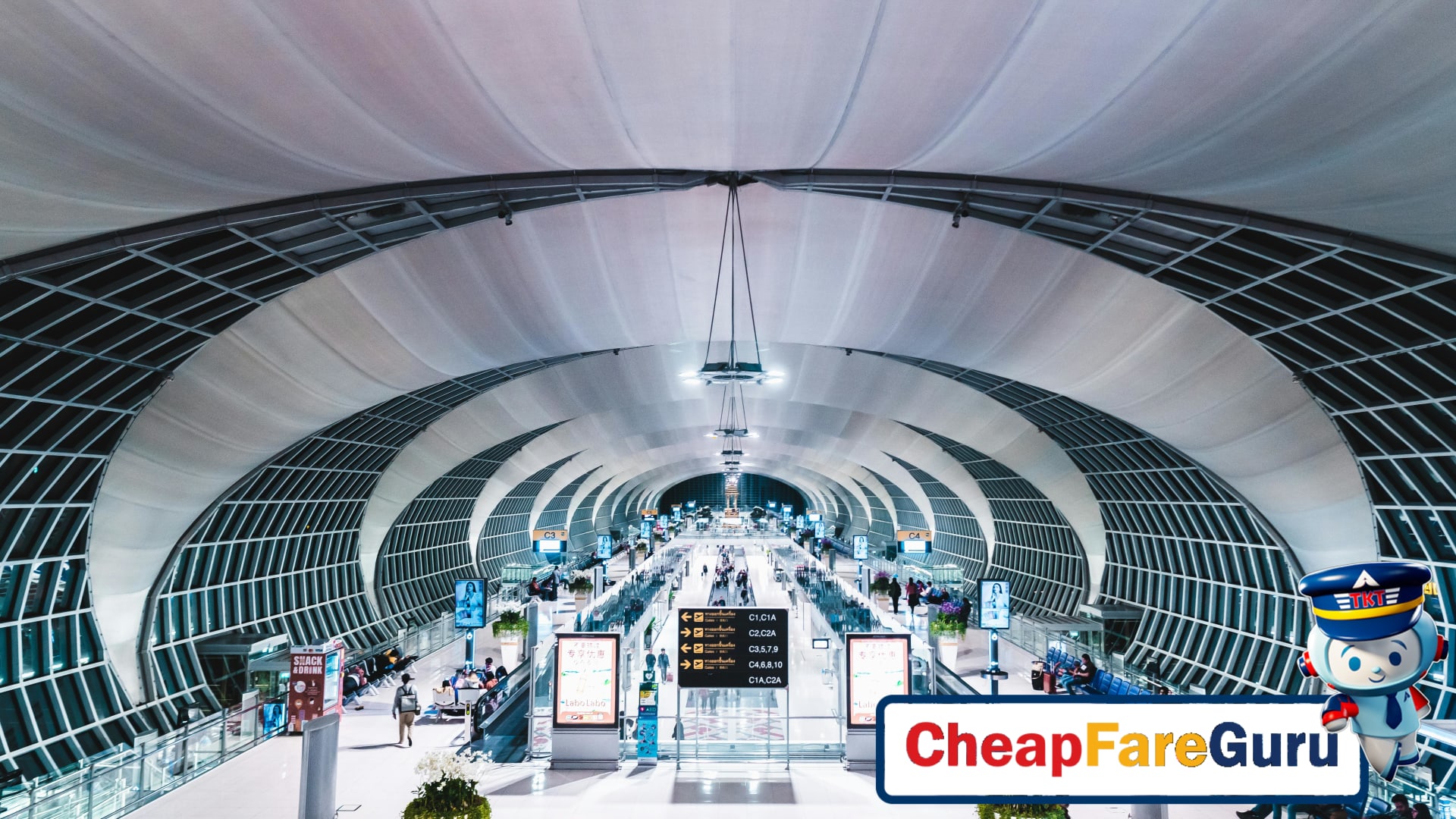
Best-case scenario—you’re past immigration and staring at arrivals by 7 AM. Next step: pick the transfer that actually fits your wallet, your luggage, and your jetlag level. Here’s why regulars and first-timers do it differently in Bangkok.
The Airport Rail Link sets the standard for speed and pricing. Trains run daily from 5:30 AM to midnight. You’ll find the station two levels below arrivals—just follow the “Airport Rail Link” signs down to Basement B. Single fares: 45 THB ($1.20 USD, March 2026 rate) to the last station, Phaya Thai. Time from airport to city end-to-end: 26 minutes, no traffic drama. Trains hit popular stops: Makkasan (for MRT), Ramkhamhaeng, and end at Phaya Thai, where you’ll connect to the BTS Skytrain slingshotting you to Siam, Silom, or Sukhumvit.
If you want doorstep delivery—metered taxis line up at Gate 4 of the ground level. Grab a queue ticket at the machine (don’t follow anybody who approaches you directly outside). Here’s the money math: 350–500 THB ($9.42–$13.45 USD as of March 2026) to most hotel zones, including 50 THB airport fee + tolls (expect another 70 THB/$1.88 USD for expressways). Time varies: 35 minutes at 6 AM, but it’s more like 90+ after 4 PM. Taxis fit three people plus moderate luggage—if you’re schlepping four heavy suitcases, ask for a larger vehicle at the kiosk.
Look, rideshares work (Grab is Bangkok’s default) but the app sometimes directs you to the short-term parking garage—not the taxi rank. Always double-check your pickup pin inside the app, stick to the designated rideshare spot, and screenshot your driver’s details. Never accept rides from guys hustling in the arrivals hall. Fares in February 2026: usually 330–420 THB ($8.88–$11.30 USD) to the central districts with standard service.
Shoestring budget? Public airport buses leave from Gate 8 (first floor) and hit major spots—Khao San, Silom, Victory Monument. Bus S1 gets to Khao San in about 55 minutes for just 60 THB ($1.61 USD). First bus out is at 6 AM, last one at midnight, every 30 minutes.
Last tip: For late-night arrivals, I always travel with a crossbody and keep my main bag zipped between my feet in transit—Bangkok’s arrivals hall is chaotic after 10 PM, and sleepy travelers sometimes get targeted. If your flight gets in past 10:30, spring for a taxi or rideshare instead of waiting around for the last bus or empty train cars. I track airport ground transfer updates (and price shifts after fuel hikes) in CheapFareGuru’s deal alerts before I land.
4 Bangkok Neighborhoods: Where Safety Meets Convenience
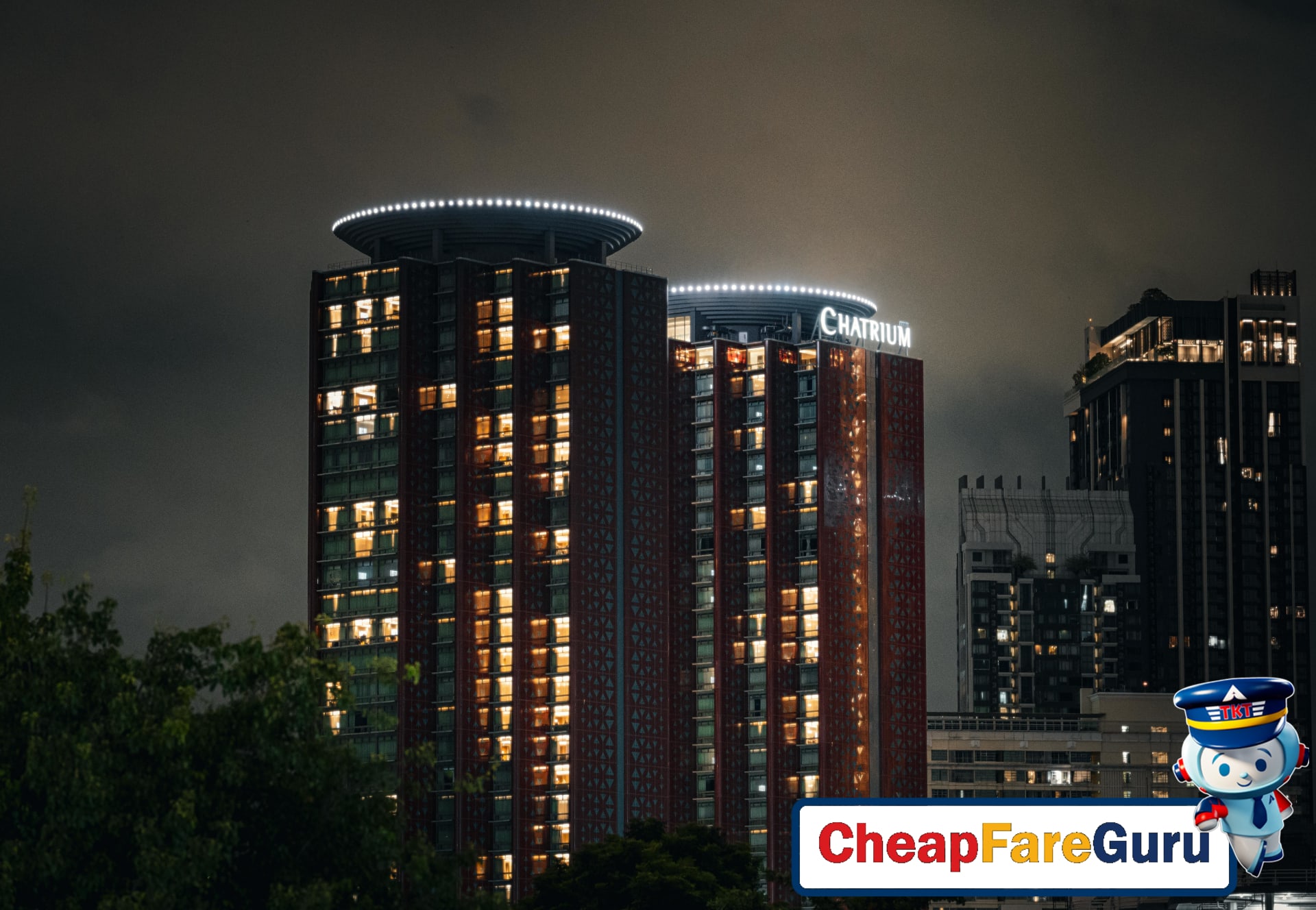
Sukhumvit, Silom, Siam, and the Riverside. These four neighborhoods cover most questions I get about where to stay in Bangkok when you want good food, easy transit, and don’t want to stress about wandering after dark.
Sukhumvit’s usually the top pick for solo travelers and couples who want nightlife but also crave a great dinner or legit Thai street eats. BTS Skytrain stations (like Nana, Asok, and Phrom Phong) sit every few blocks, so it’s easy to dodge the city’s gridlock. You’ll find everything from $25 hostel bunks at Bodega Sukhumvit to $140 rooms at Marriott Marquis Queen’s Park. Serviced apartments like Adelphi Suites (from $62/night, February 2026) work if you want kitchen access with hotel safety.
Silom’s known for banks and business towers in daylight, but come evening, you’ve got Patpong Night Market, hip bars, and plenty of late-night eats. BTS Sala Daeng and MRT Silom make commuting fast even during Bangkok rush hour—and it’s surprisingly affordable. In January 2026, Daniel Kavanagh, an IT recruiter from Dublin, booked a week at Silom Space Hostel: $198 all-in for a private pod, walking distance to Lumpini Park. Larger hotels in Silom usually start around $70/night and you can find deals when booking through CheapFareGuru with their price alerts.
Got family in tow or obsessed with shopping malls? Siam wins for centrality, walkability, and closet proximity to MBK, Siam Paragon, and CentralWorld. I met Priya Kulkarni, a UX designer from Toronto, at Novotel Siam Square in November 2025—she paid $118/night for a family room, which included breakfast and access to the pool (great for kids who melt in Bangkok heat). BTS Siam is the city’s transit heart, keeping all sightseeing options open.
If your vibe is river views and quieter streets, try the Riverside. The biggest hotels (Mandarin Oriental, Shangri-La) average $220–$270 per night in high season, but smaller riverside guesthouses like Loy La Long offer doubles starting around $64 in March 2026. Chao Phraya Express boats connect you to the Grand Palace and Chinatown faster than sitting in a cab on Rama IV at 5 p.m.—can’t beat that for convenience.
Bottom line: every area above balances safety, transit, and atmosphere—just pick your priorities and check for location-linked deals. I track hotel promos using CheapFareGuru price drops for Sukhumvit and Riverside (March and October usually bring the lowest rates outside holiday weeks). Don’t just chase a cheap room; match the neighborhood to your Bangkok energy.
Bangkok in 5-7 Days: Culture, Food, and Nightlife Without Burnout
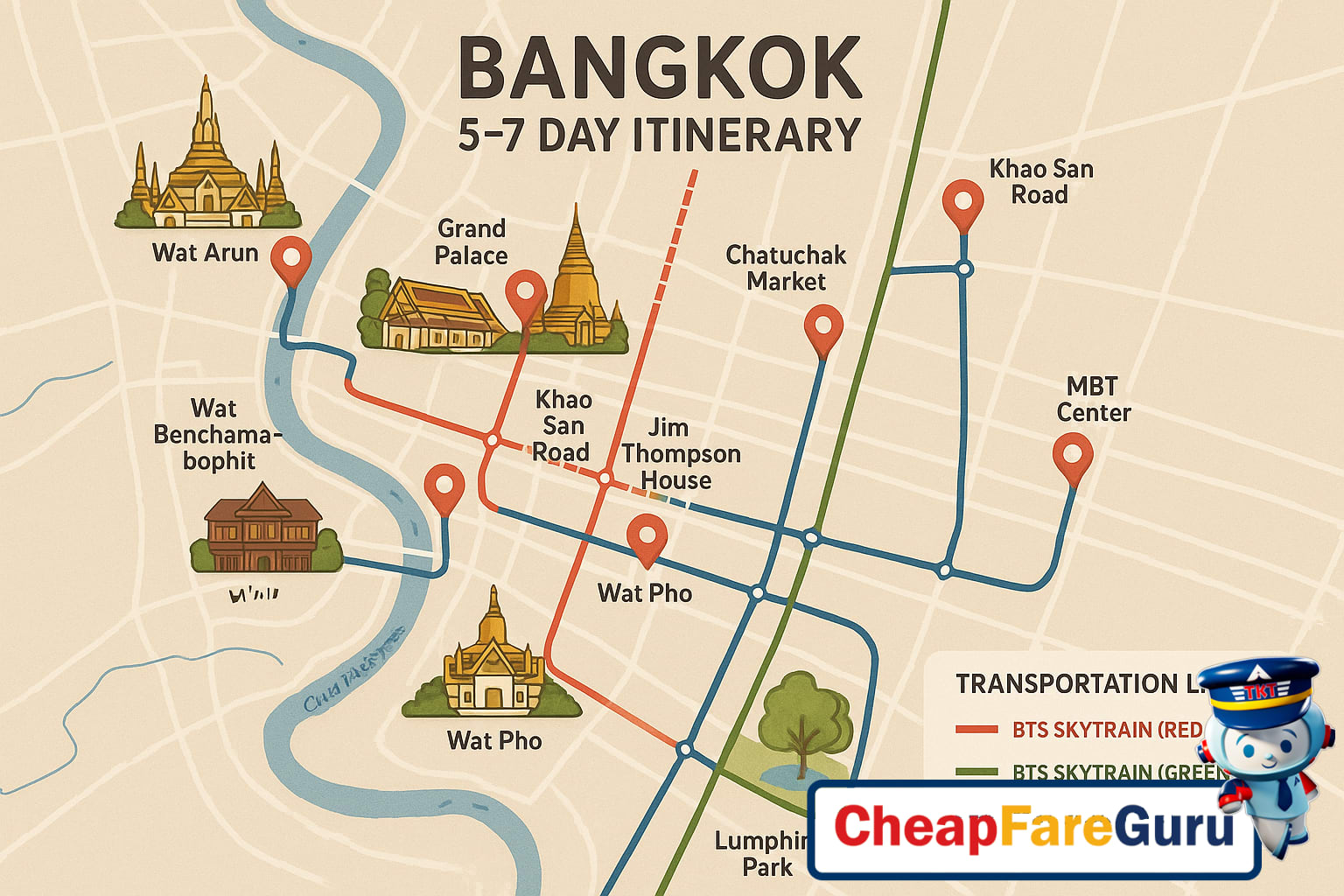
Rookie move: packing temples, malls, and street food into twelve-hour marathons, then wondering why you’re wilted by Day 3. Forget that. This itinerary mixes Bangkok’s gold-leafed wats, top-tier pad Thai, and real downtime—no “every minute scheduled” nonsense. Jump in for five, stretch to seven if you like detours.
- Day 1: Arrival + Old City Loop
Land early (look for that AM arrival—CheapFareGuru flagged 7:40 AM flights out of SFO for $701 in February 2026). Grab a metered taxi ($400 THB from Suvarnabhumi). Unpack at your hotel, drop bags, and hit Wat Pho at 8:30—before tour bus crowds. Take a ten-minute walk to the Grand Palace (opens 8:30). Pace yourself—two hours max. Lunch: May Kaidee’s vegan tom yum soup ($120 THB). Afternoon: wander Phra Athit riverside, nap, or crash at Riva Arun’s rooftop pool if you splurged on a riverfront stay. Night: street food crawl on Khao San Road—mango sticky rice ($60 THB), grilled pork skewers ($30 THB each). - Day 2: Markets + Riverside Sights
Early birds—head to Pak Khlong Talat flower market at sunrise (open 24/7, but best before 7 AM). Ride Chao Phraya Express boat ($32 THB) to Wat Arun for temple selfies—morning light’s the move. Lunch: Savoey at ICONSIAM mall—try som tum (green papaya salad) with sticky rice ($200 THB). Afternoon: browse ICONSIAM’s cool A/C shops. Evening: sunset drink at Sala Rattanakosin rooftop bar (get there before 6 PM for river views). BTS back to Siam: fast, air-conditioned, and a break from clogged roads. - Day 3: Chinatown + Museum Gems
BTS to Hua Lamphong, stroll Yaowarat Rd’s markets for crispy pork and iced Thai tea ($20 THB). Museum time: Jim Thompson House (first tour at 10 AM, book in advance—310 THB admission as of March 2026). Lunch: Bamee Sawang’s egg noodles with roast duck ($120 THB). Nap or massage. After dark, duck into Teens of Thailand bar, sample Thai gin cocktails (drinks from 320 THB). Tuk-tuk or walk home (grab fare estimate on Google Maps—most rides under 150 THB). - Day 4: Shopping Marathon—or Spa Day
Start at Chatuchak Weekend Market (Sat/Sun only, 9 AM)—2,000+ stalls. Serious shoppers: Lydia Tran, UX designer from Toronto, cleared out her backpack with free space after picking up two pairs of elephant pants (each 120 THB, February 2026). Weekday fallback: Platinum Fashion Mall. Set a lunch break for pad kra pao (spicy basil chicken, 80 THB at food court). Afternoon call: spa treatment at Perception Blind Massage—1-hour Thai massage for 400 THB. Dinner: Thip Samai for famed pad Thai, but expect a line after 7 PM. - Day 5: City Parks + Asiatique
Morning walk at Lumphini Park (try to spot the humongous monitor lizards). BTS Silom to river pier, ferry to Asiatique. Lunch: Taling Pling for chicken green curry (180 THB). Afternoon: souvenir hunt or Ferris wheel ride. Night: Bangkok river cruise with dinner for about 1,200 THB. Not cheap, but the city lights are worth it. - Want to go 6-7 days?
Optional Day 6: Take an early train from Hualamphong to Ayutthaya (THB 20 for a third-class ticket), explore ancient ruins, back by 5 PM. Next day, let yourself get lost in Ari’s coffee shops, hunt street art in Charoen Krung, or take it easy at your hotel pool. You’ll thank yourself for not going full throttle.
Do yourself a favor—use BTS and river boats (single rides: 16–59 THB BTS, 15–32 THB boat). Google Maps works for all modes. I track promo alerts via CheapFareGuru when I want to book a last-minute hop to Don Mueang or Suvarnabhumi from Chiang Mai or Phuket. Real talk: Grab rides are less hassle at night, but watch for surges after big events.
Bottom line: Early mornings mean cool temples before the chaos, afternoon A/C keeps your sanity, and every night lands you somewhere with great food or a rooftop view. You won’t need a day off after this trip…unless it’s to plan your return.
Daily Costs in Bangkok: $29, $74, and $203 Breakdown
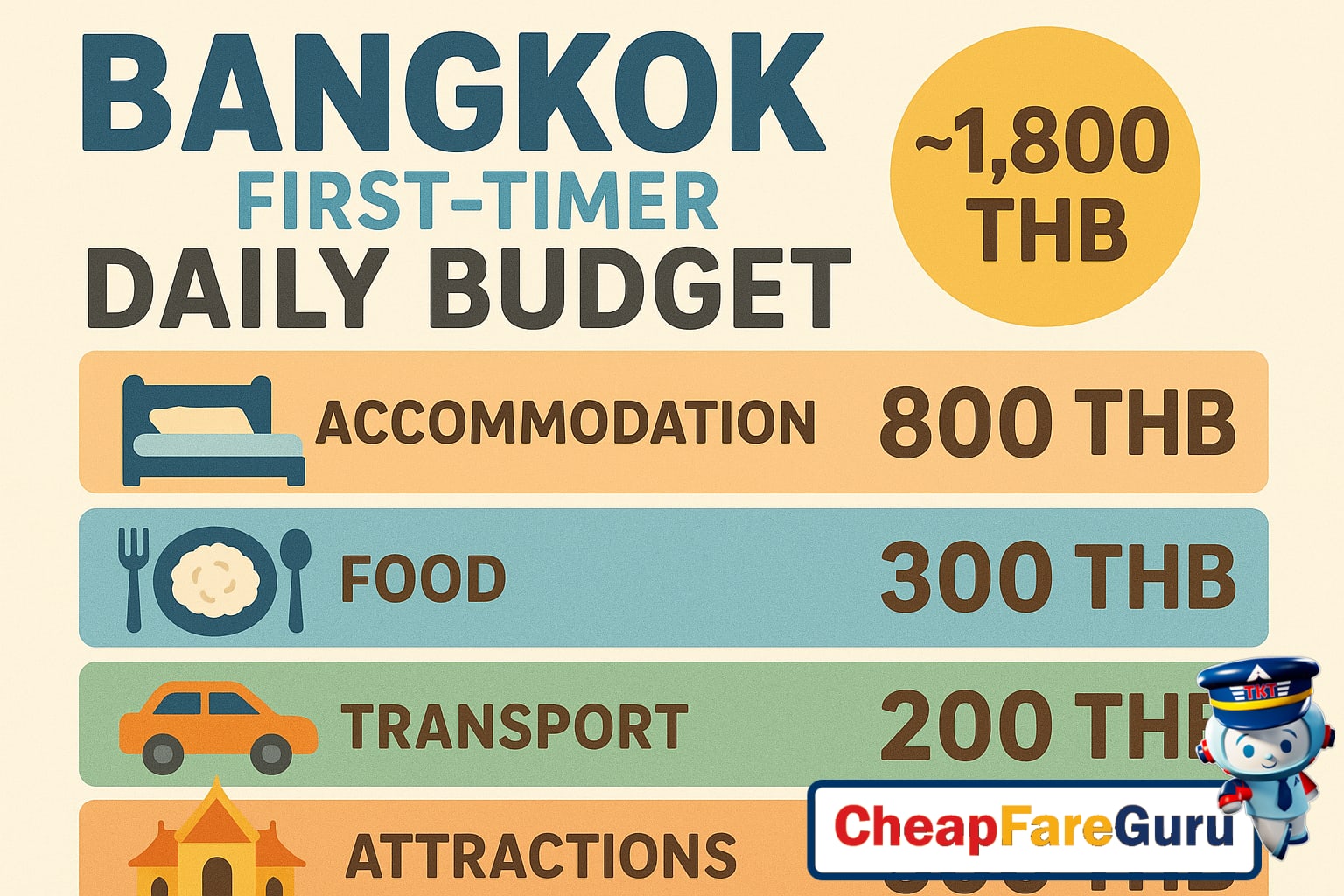
You don’t need a backpack full of cash to get more than pad thai and a shared dorm in Bangkok. Here’s exactly what daily expenses look like in 2026—split by travel style, with real-world examples you can trust.
- Economy (Hostel/Street Food/Public Transit): $29 per day
- Midrange (3-Star Hotel/Casual Dining/Some Rideshares): $74 per day
- Comfort (4-5* Hotel/Restaurant Meals/Taxis): $203 per day
| Category | Economy | Midrange | Comfort |
|---|---|---|---|
| Lodging (night) | $9 (Bed Station Hostel, Feb 2026 dorm) | $38 (Amber Hotel Silom, March 2026 standard) | $119 (Eastin Grand Sathorn, March 2026 deluxe) |
| Meals (day) | $7 (street food: 3 meals, bottled water) | $18 (brunch: Roast, dinner: Som Tam Nua, 2 drinks) | $38 (breakfast buffet + Blue Elephant dinner, wine) |
| Transport | $3 (BTS day pass, March 2026) | $7 (2 BTS rides, 1 Grab car $4.20) | $18 (private taxis, March 2026 route: hotel–mall–river) |
| Entry Fees | $2 (Grand Palace $14, split over 7 days: $2/day) | $6 (Grand Palace $14, Wat Pho $6, pooled) | $28 (same as midrange, plus King Power Mahanakhon SkyWalk: $22) |
| Total | $21 | $69 | $203 |
It’s not hard to trim even further—see what Ayanda Ndlovu, a digital nomad from Cape Town, pulled off last month. He spent $24/day all-in (March 2026) by booking weekly at The Cube Hostel for $58 (7 nights), eating $1 kuay teow on Khao San Road, and skipping taxis entirely. The deal is, those BTS rabbit cards save more than pocket change over a week.
Cheap or free doesn’t mean boring. The Lumphini Park morning tai chi scene, free art at Bangkok Art and Culture Centre, and daily flower market runs cost zero. Street food tours (never more than $15 for a full stomach!) beat any pricey river cruise dinner—if you know where to go. Cash in your baht for sunset at Wat Arun’s riverbank (Taling Chan pier: 16 baht ferry), and you’ve won the day for less than a fancy coffee from Terminal 21 Mall.
Bottom line: watch out for the BTS ‘tourist pass’ trap (almost double for limited rides—buy a regular Rabbit Card instead), tuk tuk drivers that pitch random gemstone “museums,” and souvenir markets inside malls where prices regularly run 3–4x street stalls. I flag those kinds of gotchas through CheapFareGuru alerts—there’s no reason to pay for a “private” floating market tour when the public boat (15 baht) gets you the same selfie for a fraction.
Look, the difference between under $30/day and blowing $200 isn’t “skipping fun,” it’s knowing how to stretch your baht. Get the market meal, take the BTS, and save the splurge for rooftop cocktails with a view. That’s real Bangkok value.
FAQ – First-Time Visitor Guide to Bangkok
What are the top attractions to skip lines for in Bangkok?
Skip the lines at Grand Palace and Wat Pho, especially between December–February when crowds peak. Fast-track tickets on Klook or GetYourGuide (from $16 USD, as of March 2026) let you enter faster—last month, David Kim, a UX designer from Toronto, saved over 40 minutes by pre-booking.
How to use the Airport Rail Link from Suvarnabhumi to downtown?
Trains run from 6:00 a.m. to midnight. Buy tokens at basement level for 45 THB ($1.24). The ride to Phaya Thai station takes 26 minutes. I always use the City Line platform—no reservation needed—then connect to BTS Skytrain or grab a taxi right outside.
When should first-time travelers learn basic Thai phrases?
Start learning simple phrases (“sa-wat-dee,” “khop khun”) before you land. In January 2026, I got consistently better taxi fares using polite Thai greetings. Apps like Drops or free YouTube lessons make a noticeable difference in restaurant and market interactions.
Why is it important to respect cultural etiquette in Bangkok?
Bangkok locals value politeness and modesty. In February 2026, Julia Chawla, a marketing manager from San Jose, wore sleeveless tops at two temples and was refused entry—covered shoulders and knees are 100% required at the Grand Palace. Observing etiquette avoids awkward or costly situations.
Can I use credit cards everywhere in Bangkok?
No—small shops, street vendors, and many taxis accept cash only. Big hotels and malls take credit cards, but rural and market areas don’t. Last month, I paid cash for 9 out of 14 meals around Silom and Khao San Road. ATM withdrawals are easy but check for up-to-date fees.
How safe are the popular tourist neighborhoods at night?
Areas like Sukhumvit, Riverside, and Siam are generally safe until late. In December 2025, Anna Rodriguez, a solo traveler from Chicago, walked Sukhumvit for midnight eats—no issues, but kept valuables hidden and stuck to well-lit streets. Petty theft happens; use Grab or metered cabs after midnight.
What’s the typical daily budget for a week in Bangkok?
Budget travelers spend $35–$55 a day: dorm or basic guesthouse ($9–$18), meals ($10–$18), transport ($4–$7), attractions ($6–$12). Last week, my 7-night stay cost $317, including one $75 splurge dinner. I track promo fares year-round using CheapFareGuru—saved $61 on my outbound flight.
Plan Smart, Book Early, and Make Bangkok Yours
Bangkok isn’t just busy—it’s bold, bright, and brimming with opportunity for anyone who knows how to plan ahead. Picking neighborhoods like Thonglor for nightlife or Banglamphu for riverside temples? Choosing BTS trains over taxis during weekday gridlock? Booking a Grand Palace skip-the-line ticket for June 2026 to dodge the worst crowds? Every move counts when your time (and budget) matter.
Look, the difference between a smooth trip and a stressful one usually comes down to details. I track flash airfare sales and hotel rate changes through CheapFareGuru—grabbed a roundtrip LAX-BKK ticket for $781 in January 2026 when the same flight was $1,060 just days later. Booking early not only scores better deals but also gets you access to perks like refundable fares, flexible dates, and affordable family rooms in central Bangkok neighborhoods.
Your dream itinerary—whether it’s sunrise at Wat Arun, boat rides on the Chao Phraya, or street food on Yaowarat—gets a whole lot easier with the right research and a flexible, budget-friendly plan. CheapFareGuru lines up flights, hotels, and car rentals so you can focus on what actually matters: exploring Bangkok, not hunting for deals. See what we can offer for your travel needs AirTkt.
Official Sources: Thailand Travel, Airports, and Airline Rules
Planning a trip to Thailand? For government-approved info on attractions, events, and entry rules, start with the Tourism Authority of Thailand and TAT Newsroom. Bangkok airport procedures and real-time flight updates are at Bangkok Airport Online. For airline and airport safety or U.S. rules, check out:
- TSA (Security guidelines, U.S. travel)
- FAA (Aviation regulations)
- U.S. DOT (Passenger rights)
- IATA (International air travel info)
I track fare trends and promo drops with CheapFareGuru for the latest booking insights beyond official policy pages.