
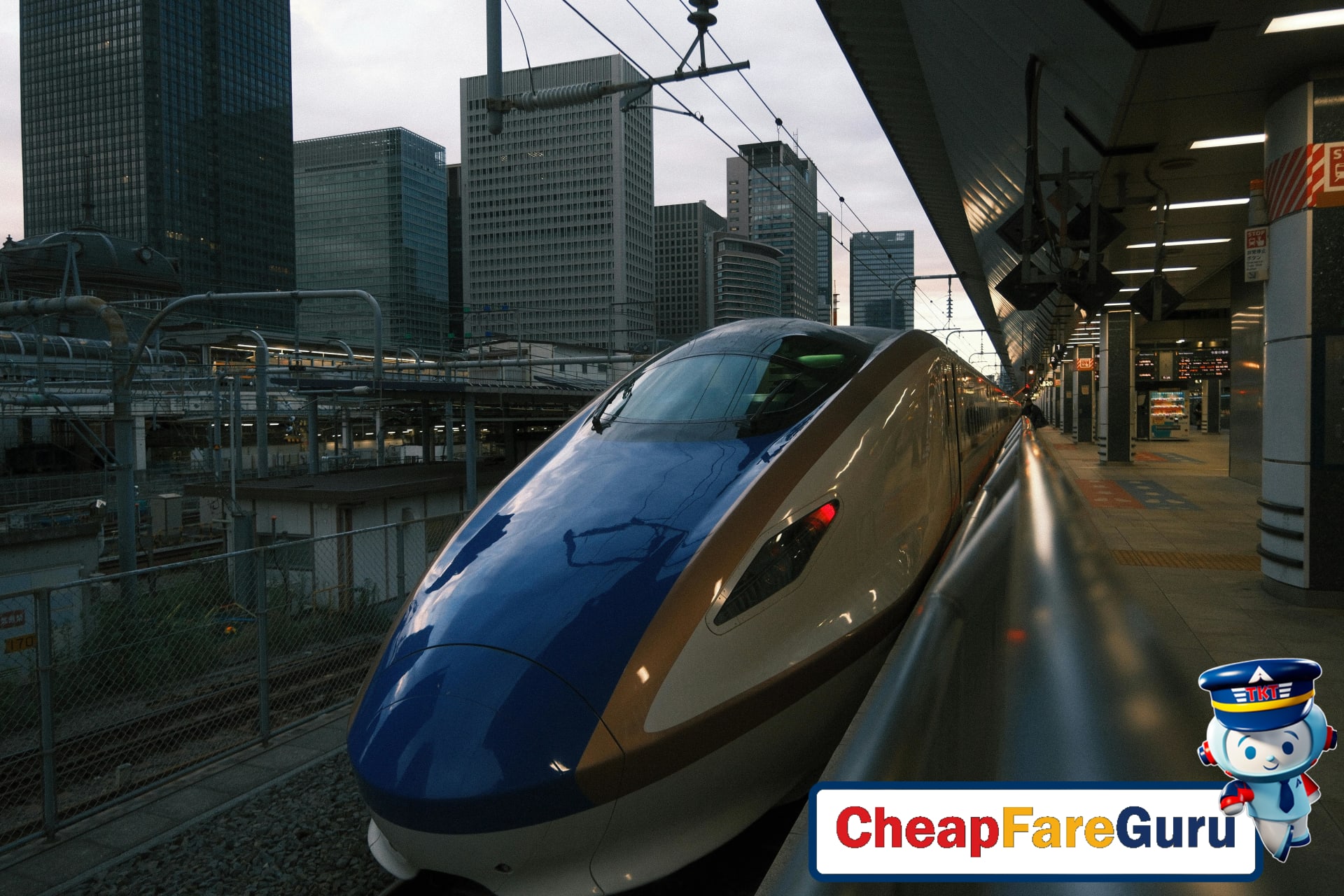
Understanding the Japan Rail Pass

The Japan Rail Pass (JRP) is a special ticket designed for foreign visitors, allowing unlimited travel on most Japan Railways (JR) trains, including the iconic Shinkansen bullet trains. It’s one of the most cost-effective ways to explore Japan by rail, especially if you plan to visit multiple cities in a short period. There are two main types of passes: the Ordinary Pass, which covers standard class cars, and the Green Car Pass, which grants access to more spacious, first-class “Green Cars.”
Eligibility is limited to tourists entering Japan under a “temporary visitor” status. I made sure to confirm my own eligibility by checking the official Japan Rail Pass website before my trip, and I recommend you do the same since rules can change. You must purchase the pass before arriving in Japan—either through authorized online vendors or travel agents. Once in Japan, you’ll need to activate your pass at a JR office, where you’ll show your passport and receive the physical pass to start your travels.
Buying the JRP ahead of time not only ensures you get the best price but also avoids the hassle of last-minute logistics. If you’re still arranging your journey, you might find it helpful to check out this guide to booking international flights from the U.S. to Tokyo for step-by-step flight planning tips.
For the latest eligibility rules and detailed instructions, I’d suggest visiting the official Japan Rail Pass website before making any decisions.
Choosing the Right Rail Pass

Deciding which Japan Rail (JR) Pass to buy can feel overwhelming at first, but breaking down your itinerary makes the choice far easier. The main options are national JR Passes—available in 7, 14, or 21-day durations—and a variety of regional passes that cover smaller areas. I remember weighing the national pass against a regional one when I traveled between Tokyo, Kyoto, and Hiroshima. The national pass made sense for my longer trip, but for a shorter, focused visit, a regional pass would have saved me money.
Pass Duration and Car Classes
The 7, 14, and 21-day passes offer unlimited rides on JR lines during the activation window. If you’ll be traveling extensively across Japan, the longer durations can be cost-effective. You’ll also need to decide between an Ordinary pass (standard class) and a Green Car pass (first class). Green Cars offer more spacious seating and quieter cars, but for most travelers, Ordinary class is comfortable and a better value. I’d compare both options before choosing, especially if you’re planning long-distance journeys or want extra comfort.
National vs Regional Passes
National JR Passes are ideal if you’re covering several regions—think Tokyo, Osaka, Hiroshima, and beyond. But if your trip is focused in one area, such as Kansai (Kyoto, Osaka, Nara), a regional pass can be much cheaper and just as convenient. These regional passes sometimes include lines or perks not covered by the nationwide pass. Before you buy, I suggest checking this authoritative JR Pass map and overview to match your planned routes with the right pass. If you want inspiration, our article on Japan’s top tourist train routes can help you sketch out your travel days.
Calculating If It’s Worth It

Before you buy a Japan Rail Pass, it’s smart to run the numbers for your specific itinerary. Start by listing out the major train routes you plan to take—think airport transfers, city-to-city shinkansen, and any planned day trips. You’ll want to compare the total cost of individual tickets with the fixed price of a JR Pass. In my own trip, I mapped out a classic Tokyo–Kyoto–Osaka–Hiroshima round and found that the standard tickets added up to about $260.00, while a 7-day JR Pass cost roughly $275.00 at the time. The pass was only slightly more, but because I also added a day trip to Nikko, the pass ended up saving me money overall.
How To Compare Costs
To do this yourself, use online tools like Hyperdia or the JR East Fare Search to look up current fares for each leg of your trip. Add up the one-way fares for all routes you plan to take within the pass validity window. Then, match that total against the JR Pass price for the same period.
When The Pass Pays Off
The JR Pass usually makes sense if you’re covering long distances—like going from Tokyo to Hiroshima and back—or stacking several day trips. If you’re only visiting Tokyo and staying local, individual tickets are typically a better value. I’d compare both options before choosing, especially if your plans are flexible. For more help with building out your route, check out this practical Japan itinerary planning guide for sample trip ideas and cost breakdowns.
How To Use the Rail Pass

Once you arrive in Japan, your first step is to exchange your Japan Rail Pass order for the actual pass. You’ll find JR Exchange Offices at major airports and train stations—if you’re landing at Narita or Haneda, check out our airport transfer tips for smooth arrivals. Bring your passport and the exchange voucher; staff will set the start date and hand you the physical pass.
To ride the Shinkansen or any JR train, simply show your pass at the manned ticket gate instead of using the automatic turnstiles. I remember my first time—just holding the pass out for the attendant, who gave a quick nod and let me through. It’s easy, but don’t lose your pass, as you’ll need it every time you enter and exit.
Seat Reservations Step-by-Step
For Shinkansen and limited express trains, you can reserve seats online through the official JR seat reservation system, at ticket offices (Midori no Madoguchi), or via ticket machines at major stations. I usually recommend booking reserved seats ahead, especially during holidays or weekends, as non-reserved cars can fill up quickly. If you’re fine with flexibility, just hop into a non-reserved car—no reservation needed, but seats are first-come, first-served.
When boarding, check the train car signs for “Reserved” or “Non-reserved.” Reserved cars require your seat ticket and the pass; non-reserved cars only need the pass. Show your pass to staff if asked while on board.
Where the Rail Pass Works

The Japan Rail Pass is a fantastic way to see the country, but it’s important to know exactly where it works. The pass covers all Japan Rail (JR) lines nationwide, including most Shinkansen (bullet trains). However, there are two big exceptions: the Nozomi and Mizuho Shinkansen services aren’t included. You can still ride the Hikari, Sakura, and Kodama bullet trains, which reach almost all the same destinations, just with a few more stops.
Popular routes like Tokyo to Kyoto, Osaka to Hiroshima, and Sapporo to Hakodate are all covered by the pass using eligible Shinkansen or JR limited express trains. If you’re planning to visit classic spots like Nikko, Kanazawa, or Fukuoka, you’ll find JR lines serving those routes as well. In my experience, I once tried to use the pass for a direct transfer from Kyoto to Koyasan, only to realize that part of the journey used a private railway not covered by the pass—so double-checking routes can really save you a headache.
There are some important exclusions. The pass does not cover private railways, most city subways, or local buses in cities like Tokyo, Kyoto, or Osaka. For urban travel, you’ll often need a prepaid IC card or separate tickets. If you want a full breakdown of city transport options, I’d recommend checking a detailed city transport guide for Osaka, Kyoto, or Tokyo to avoid surprises.
For the most accurate and up-to-date info, always refer to JR’s official list of covered lines and their major route maps before planning your trip.
Rail Pass Budget Breakdown Table

When planning a rail adventure across Japan, your budget will look different depending on your travel style and whether you use a Japan Rail Pass or stick with regular fares. I’ve always found that matching the pass duration and type to my own itinerary made a noticeable difference in how much I spent—especially when I compared it side-by-side with paying for individual tickets. Below is a breakdown of typical daily costs for three travel tiers, with the Transport row showing the impact of using the JR Pass versus buying separate tickets.
| Budget | Mid-range | Luxury | |
|---|---|---|---|
| Accommodation | $35.00 | $90.00 | $220.00 |
| Food | $15.00 | $40.00 | $100.00 |
| Transport (JR Pass/Regular) | $30.00 | $40.00 | $70.00 |
| Activities | $10.00 | $25.00 | $60.00 |
For budget travelers, the JR Pass can cover most long-distance trips for about $30.00 per day if you plan efficiently. Mid-range travelers might add reserved seats or occasional taxis, bumping the daily transport cost a bit higher. Luxury travelers, especially those opting for Green Car upgrades or premium services, should expect a higher daily transport spend. I’d always recommend running your own numbers—sometimes, for shorter stays or city-only trips, regular tickets work out better than the pass.
Tips for Smart Rail Pass Use

Getting the most out of your Japan Rail Pass takes a bit of planning, but it’s worth it. One move I made that saved both time and money was grouping my long-distance trips on consecutive days, then using local city passes for sightseeing in between. This way, I packed the expensive shinkansen rides into the valid JR Pass period and used cheaper transport options on other days.
Reserve Seats and Plan Luggage
For group travel, make seat reservations early—especially during peak seasons. The official JR Pass seat reservation app makes this process much smoother, letting you secure seats together instead of scrambling at the station. If you’re traveling with large suitcases, the official JR recommendation is to book an oversized luggage seat in advance on Tokaido, Sanyo, and Kyushu shinkansen lines. This avoids last-minute hassles and ensures you have space for your bags.
Use Seat Map and City Pass Apps
Apps like NAVITIME and Ekispert help you visualize train routes and seat maps, which is handy when navigating busy stations or making tight connections. Pair your JR Pass with city passes in places like Tokyo or Osaka for local subways and buses—this stretches your value by covering local travel on days when your JR Pass isn’t active.
Maximize Value with Open-Jaw Flights
Consider booking open-jaw flights—flying into one city and out of another—so you don’t need to double back. This works especially well if you find last-minute airfare deals (I usually check the cheapfareguru.com post on last-minute Japan airfare deals for inspiration). Bundling your long-distance train rides between your arrival and departure cities gives you the best bang for your JR Pass buck.
Frequently Asked Rail Pass Questions
- Where can I buy a Japan Rail Pass in the US?
You can buy a Japan Rail Pass online from authorized sellers or through some travel agencies in the US. I usually recommend purchasing before your trip, as it’s often cheaper and more convenient than buying after arrival in Japan. Be sure to check the official JR Pass website for updated vendor lists.
- Are all trains in Japan covered by the rail pass?
The Japan Rail Pass covers most JR trains, including Shinkansen, but it does not include Nozomi and Mizuho bullet trains. Private railways, subways, and certain express services are also excluded. Always check the JR network map before planning your routes to avoid surprises at the station.
- Can I get a refund for an unused Japan Rail Pass?
Refunds for unused Japan Rail Passes are possible if you return the exchange order before activation, but a handling fee will be deducted. According to JR’s official refund policy, once the pass is activated in Japan, no refund is available, even if you don’t use it. Always review the latest terms before purchase.
- What documents do I need to exchange my rail pass in Japan?
To exchange your pass, bring your exchange order, passport, and proof of “temporary visitor” status. The staff will check your passport stamp or sticker. If you forget your passport or lack the correct visa status, you won’t be able to redeem the pass, so double-check your documents before heading to the counter.
- Is the Japan Rail Pass worth it for short trips?
If your Japan itinerary is limited to one city or just a few short trips, the rail pass may not offer much savings. I’d compare the total cost of individual tickets with the pass price before deciding. For more on avoiding extra travel fees, see our guide to hidden travel fees in Japan.
- Can I reserve seats with my Japan Rail Pass?
Yes, seat reservations are included with the Japan Rail Pass at no extra charge. You can reserve seats at JR ticket offices, ticket machines, or online for many routes. Reserving ahead is smart during busy seasons, especially for popular Shinkansen routes and long-distance journeys to avoid standing.
When a Rail Pass Makes Sense

After weighing the pros and cons, I’ve found that a Japan Rail Pass really shines if your itinerary covers multiple cities or includes longer train journeys—especially on the Shinkansen. If you’re mostly staying in one region or making only a couple of short trips, individual tickets might be the smarter call. The key is to map out your route and compare the total cost of point-to-point fares with the pass price.
In my experience, planning ahead and running the numbers can save you both money and surprises. If you’re still unsure, sites like cheapfareguru.com can help you explore other travel savings for your trip.