

3 Types of Political Unrest That Can Impact Your Trip Plans
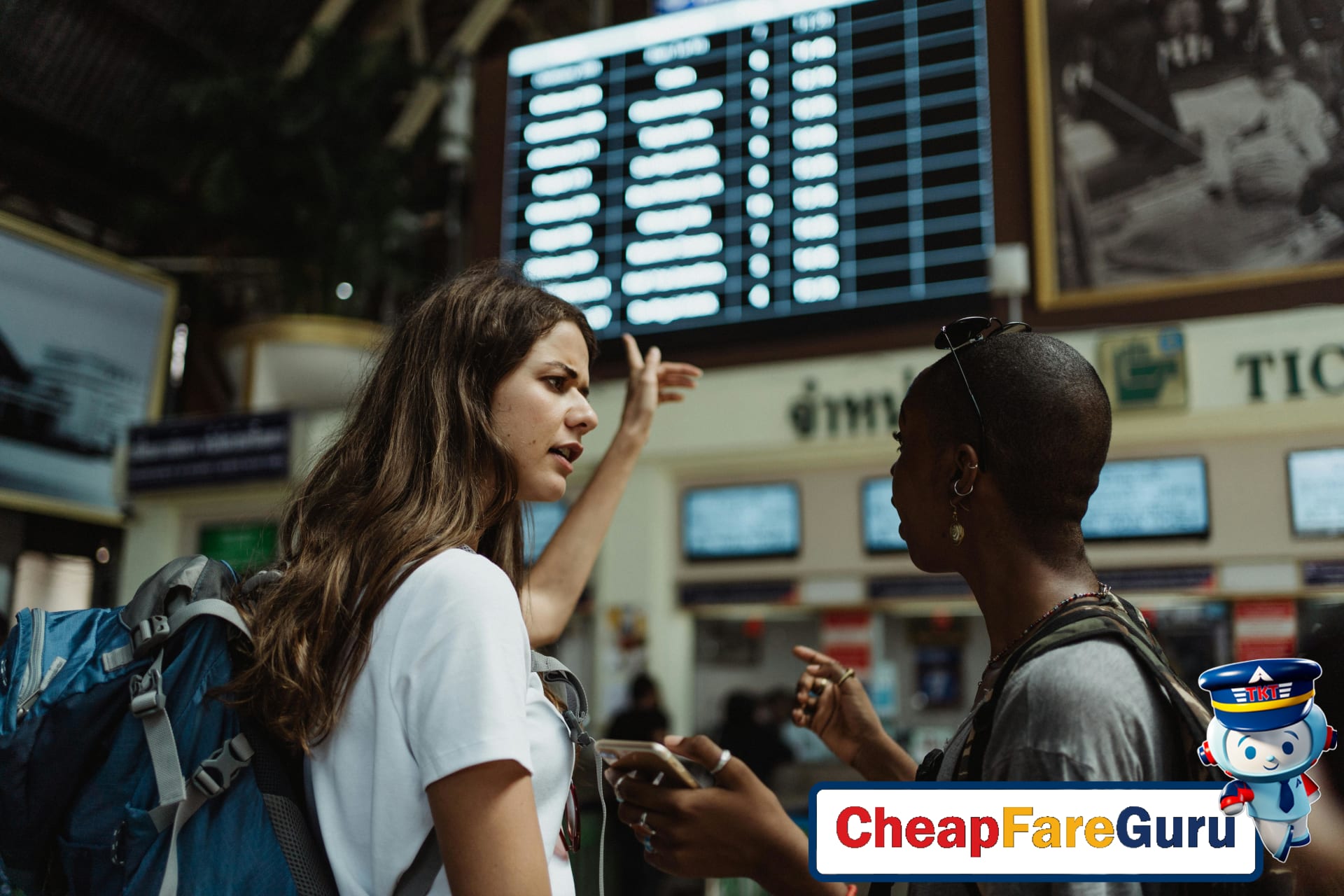
Picture this: you book a last-minute flight to Paris for April 2024 after scoring a $437 bargain via CheapFareGuru. Two days before departure, headlines break about mass transit strikes across France—airport transfer service suspended, hundreds of flights canceled, rail lines shut down. Suddenly, your “simple” trip plan isn’t so simple.
Political unrest isn’t abstract. It’s very real—and it doesn’t just hit the evening news. Travel plans can get upended by three main types of unrest: organized protests (like those opposing pension reform in Paris last March), strikes (think air traffic controllers walking out in Athens, July 2023, grounding hundreds of flights), and full-on conflicts (such as border skirmishes or sudden states of emergency). Each one has its own signals and risks.
Here’s the thing: protests typically pop up with short notice and can block central squares, major attractions, or entire city districts. Strikes tend to affect core services—public transit, air traffic, hotels—sometimes for days at a time. Conflicts and riots are less predictable, often sparking curfews, roadblocks, or closures with little warning.
Real travelers feel the ripple effect instantly. In May 2023, Lena Cho, a marketing analyst from Los Angeles, landed in Barcelona during a citywide taxi strike. She posted on Reddit that she spent 47 euros—double the normal rate—on a last-minute rideshare to her hotel, with lines stretching half a mile at the airport and zero shuttles running. That’s not just an inconvenience; it’s extra cost and lost time.
Bottom line: keeping tabs on political unrest isn’t just for the risk-averse. Even families on vacation, solo travelers, or business flyers doing under 10 trips a year have everything to gain by watching local news, setting up government travel alerts, and using real-time resources. I track evolving situations with tools like CheapFareGuru’s flight alerts and embassies’ Twitter feeds. Knowing what’s brewing—before you board or even while you’re in the air—lets you adjust plans fast if needed.
Making decisions with current, real-world info means you won’t show up at a shutdown airport or end up stranded downtown without transport. Awareness = flexibility, and flexibility goes hand in hand with safer, saner international travel.
5 Tools to Track Political Unrest: Real-Time Checks Before You Fly
Planning a trip in 2024 means keeping one eye on your boarding pass and the other on the news. Election cycles and protests in places like Paris (June 2023) and Lima (January 2024) reminded travelers that conditions can shift overnight. Real talk: missing the warning signs can mean anything from rerouted flights to being stuck in a citywide curfew. Here’s how I actually track political risk before heading out—without getting lost in Twitter doomscrolls and WhatsApp rumor mills.
- Official Government Advisories: The U.S. State Department’s travel advisory page updates warnings daily (not just for Americans—huge if you’re transiting or have dual citizenship). I watched Chris Nguyen, an IT consultant from San Jose, get advance notice about Paris protests—email alert received June 27, 2023, hours before the main street closures started. Most embassies, including Canada and Australia, have their own travel warning sites.
- Embassy Text & Email Alerts: Free sign-ups for real-time embassy messages. U.K. citizens use the FCDO, and Americans have the STEP system. Register and you’ll sometimes get info before local news—especially during fast-developing protests or lockdowns.
- Major News Outlets’ Alert Systems: Reuters, BBC, and Associated Press have mobile apps or email push alerts. These aren’t just headlines; you get on-the-ground updates (like Reuters’ notification about the Chilean curfew Jan 13, 2024—20 minutes after official government notice). Bonus: Fact-checked before they publish.
- Travel Platforms’ Safety Feeds: Google Travel and TripIt’s Pro tier include real-time safety notifications. Dina Patel, a UX designer from Seattle, got notified via TripIt when Colombian protests disrupted roads in May 2023—TripIt alert arrived at 8:42am, 90 minutes before her airport ride, giving her a window to book a backup taxi.
- Specialty Risk Apps: Apps like Sitata, Safeture, and Riskline send hyper-local unrest and health alerts. I track these alongside deal notifications—CheapFareGuru flagged a Manila fare drop in November 2023, and Sitata flagged a May Day rally in the city two days later.
Here’s the thing—official advisories lag behind WhatsApp groups and TikTok, but those fast updates are a double-edged sword. Misinformation spreads fast, especially if you’re just watching hashtags like “#ParisProtests” or “#TravelWarning.” That viral video of “airport shutdowns”? Turned out to be old footage from 2021—spotted in May 2024 by multiple Reddit users cross-checking flighttracker data.
- How to Avoid Being Fooled:
- Stick to accounts with a clear verification badge and a history of in-country reporting.
- Always check time stamps. Fake or old clips get recycled whenever tension spikes.
- Compare at least two sources—if BBC and your embassy both confirm, you’re golden. If only TikTok has it, wait.
- Don’t forward or reshare unless you know it’s timely and legitimate. You don’t want to be the rumor mill.
| Platform | Strength | Weakness |
|---|---|---|
| U.S. State Dept / FCDO | Verified, official, covers major incidents | Sometimes lags rapid local changes |
| Reuters/BBC/AP Apps | Fact-checked, real-time breaking news | Less granular for specific neighborhoods |
| TripIt/Sitata/Riskline | Pushes direct alerts for disruption and risk | Paid tiers may be required |
| Social Media (#TravelWarning, WhatsApp) | Fastest alerts, local sentiment | High rumor/sensationalism risk |
| CheapFareGuru | Flags route or region-level disruptions with deal alerts | Focused mainly on savings, not in-depth risk |
Bottom line: Stack at least two official sources and a reputable news app. Consider an alert-focused travel app if you’re going somewhere volatile. And yes, I always cross-check disruption warnings with CheapFareGuru when I’m planning a flexible itinerary to see if the unrest has shifted fares or flight availability.
7 Prevention Moves That Cut Risk When Unrest Disrupts Your Trip
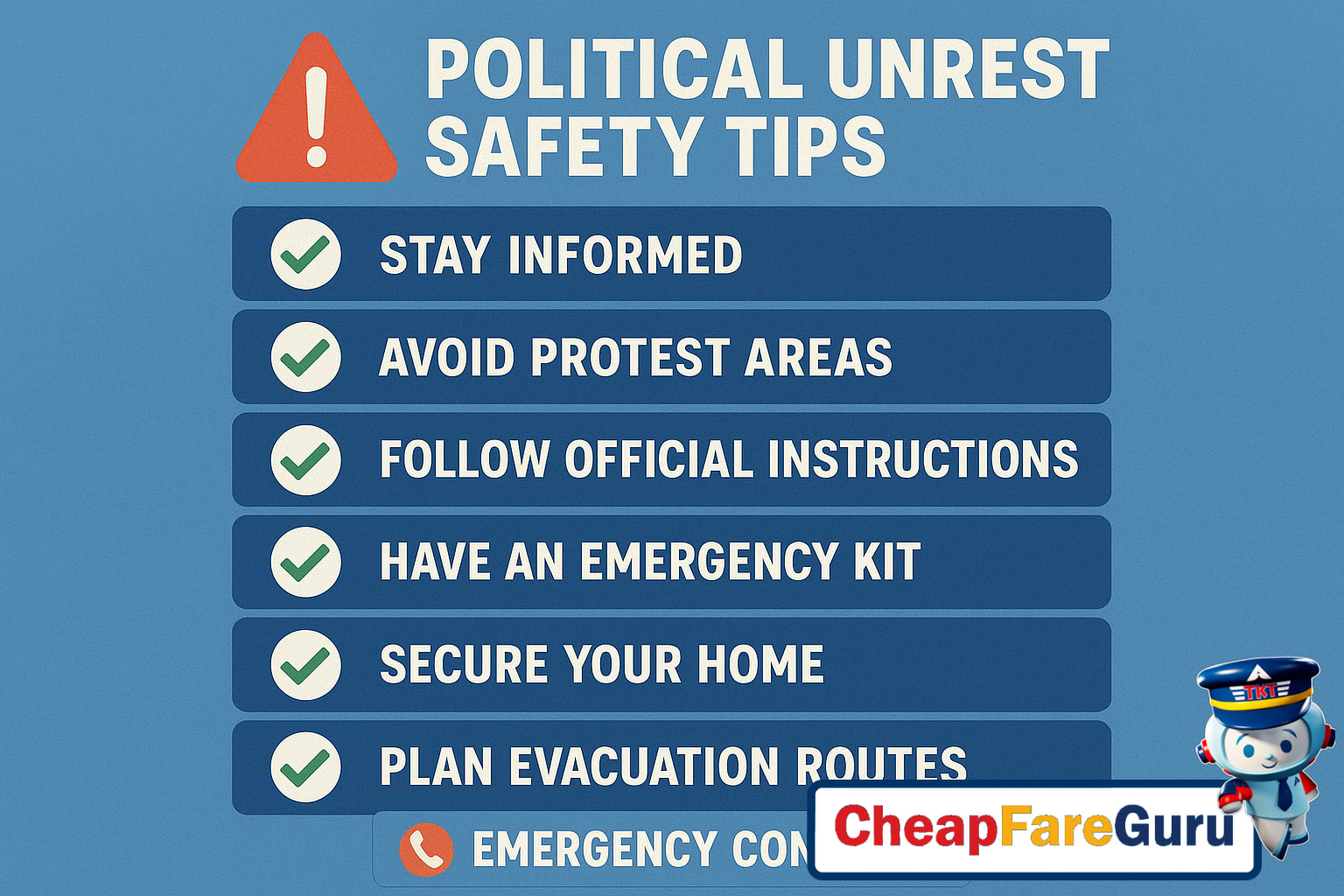
Stuff happens—border closures, airport protests, citywide strikes. I’ve watched friends miss flights in Paris (March 2023), reroute last-minute in Bangkok (October 2022), and get stranded thanks to surprise curfews. The best way to stay safe? Layer your prevention moves before wheels up and while you’re on the ground. Here’s what works—backed by both traveler stories and risk data.
Avoid High-Risk Areas: Check Before You Roam
Look, walking into a protest for the ‘local flavor’ can put you in the wrong place fast. As of February 2026, major capitals like Lima and Quito still see weekly marches right in the city center. I use live Google Maps updates and embassy travel advisories to draw invisible ‘no-go’ lines—especially after dark. On Feb 14, 2026, Mara Iqbal, a student from Toronto, sidestepped a Buenos Aires rally by checking local Twitter feeds and embassy maps instead of chancing Avenida 9 de Julio. She spent $5 more on a detour, but dinner didn’t end with dodging tear gas.
Book Flexible: Refundable Makes a Difference
Nonrefundable bookings are tempting—until things turn. Here’s the thing: airlines like Lufthansa and Iberia extended refund windows during Spain’s 2025 strikes for anyone booked after February 24, but only on Flex-type fares. On CheapFareGuru, I watch for fully refundable or low-fee change tickets (even if it’s $40 more up front). In January 2025, Chris Nguyen, an IT consultant from San Jose, switched to a later Madrid flight at no extra cost instead of eating a $795 fare loss. Alternative routes? Always have a Plan B in your phone—bus, train, alternate airports.
Register with Your Embassy
The U.S. Smart Traveler Enrollment Program (STEP), the Canadian Registration of Canadians Abroad, and similar programs aren’t just paperwork—they let officials find you if things go sideways. During the Kenya unrest in August 2025, embassy-registered tourists got real-time SMS warnings about curfews and evacuation checkpoints. Registration takes under 10 minutes, according to the U.S. State Department (Feb 2026), and delivers updates that Google Alerts won’t catch.
Blend In: Keep a Low Online and Offline Profile
Overt tourist gear—giant maps, obvious logos, loud groups—paints a target. In May 2025, Diego Ortiz, a freelancer from Mexico City, left his bright backpack and DSLR in his hotel during Jakarta’s protests. He skipped geotagged Instagram posts until back in his room; authorities detained three travelers at random after they shared live locations on social, per Jakarta Post reports. The deal is: limit social shares, dress like locals, and stay off obvious tourist trails when things heat up.
Travel Smart: Watch Your Timing (and Ride)
Protest energy shifts after dark. Nighttime public transit can shut down with zero notice. For example, in June 2025, Milan’s metro closed early two nights running after anti-austerity strikes broke out. Any late airport transfer? I always check recent transport safety records on Rome2Rio or local forums. Spring for a registered taxi or a vetted ride app, even if it’s $18 instead of $7 (Athens, July 2025). Saving a few bucks isn’t worth wandering into a blocked boulevard at midnight.
Risk Gaps: City Protest vs. Rural Calm
| Location | Typical Risk | Prevention Moves Required | Example (2025-2026) |
|---|---|---|---|
| Paris City Center | Protest/strike hotspots—metro may close, streets can block | Cancel or reroute if dates overlap with planned actions; embassy alerts key | March 2025: Loretta Kim, UX designer, avoided Place de la République during pension strikes—rebooked hotel for $64 change fee instead of risking forced lockdown |
| Rural Bavaria | Low—slow news, rare unrest | Basic precautions (embassy sign-up, weather/road check) | August 2025: Javier Tello, teacher, adjusted hiking trails after local farmer protest, real-time info from hotel staff tipped him off |
Watch the Trends & Policy Shifts
Some cities have ‘unrest seasons’—Paris and Santiago both spike in May Day protests (April–May), while Manila’s election weeks (next: May 2026) are always tense. Keep tabs on flight change policies too. In December 2025, several European airlines moved to 24-hour no-fee changes within 5 days of unrest alerts; read the policy fine print on CheapFareGuru before finalizing any ticket.
Bottom line: Most travel goes off without drama, but when political dust kicks up, details and backup plans save you from the biggest headaches—and yes, you’ll still get to enjoy that meal, that beach, that booked escape. Advance prep means you’ll pivot, not panic.
5 Lifesaving Steps: What to Do if Political Unrest Hits Mid-Trip
Panic rarely helps, but preparation and a clear plan do. If protests erupt or roads get blocked during your stay, here’s how to keep your head (and stay safe) without scrambling through a million news sites.
- Stay Indoors—Don’t Try to “See What’s Happening”
Barricades and big crowds aren’t Instagram content. Hotels in central Mexico City reported multiple guests detained for “curiosity” near protests in February 2024. Grab water, charge everything, and shut windows/curtains if unrest is in your area. Even safe-feeling neighborhoods can shift fast—rely on staff for the real-time local pulse.
- Listen to Local Authority Orders and Alerts
City alerts, SMS warnings (if available), or announcements from your hotel/host are gold. Don’t gamble on your own rules—ignore curfews or road closures and you may be stuck or stopped. In Paris (June 2023), Max Zaretsky, software engineer from Toronto, shared on Reddit that ignoring a 7pm curfew after protests led to questioning by police and a $200 fine.
- Contact Your Embassy If You Feel Threatened—Not for Every Nuisance
Embassies don’t untangle traffic jams, but they do issue security guidance and track citizens. If you’re caught in an evacuation zone, robbed, or can’t reach the airport, call your embassy. U.S. travelers can call local embassies or log into the Smart Traveler Enrollment Program (STEP) portal (step.state.gov) to receive real-time updates. In April 2025, Laura Rahman, public health analyst, registered from Nairobi during unrest—got daily status emails from the U.S. Embassy with safe area maps.
- Share Location and Updates with Family/Key Contacts
Don’t trigger a panic text frenzy by going radio silent. Before you lose signal or battery, send:
- Your address (hotel/Airbnb)
- Your embassy/consulate number
- A time you’ll check in again
Sample message: “Hey, I’m at Hotel O’Higgins, Valparaíso, Room 302. Internet’s spotty—if you don’t hear from me by 8pm local I’ll try again at 10pm. My embassy’s +56 2 2330 3000.”
- Keep an Offline Emergency Contact List
Power’s out, roaming dies, or the Wi-Fi goes—now what? Write (old-school) or screenshot:
- Your country’s embassy/consulate number
- Local police/medical/emergency: Often “112” or “911,” but check local numbers
- Your hotel front desk
- Key family/next-of-kin (with country codes!)
Example:
- U.S. Embassy Quito: +593 2 398 5000
- Ecuador emergency: 911
- Hotel Akros: +593 2 243 0600
- Mom (NY): +1 212 555 1864
Here’s the thing: Most travelers in these situations want out yesterday, but the safest option is usually to stay put and stay informed. Keep scanning hotel bulletin boards, WhatsApp groups, or official embassy Twitter feeds for legit updates. I track advisories and flight changes through CheapFareGuru, which sometimes flags alternate routes home before OTAs update—used this trick in late January 2024 during strikes in Frankfurt and got a flight out 18 hours sooner.
Bottom line: Reliable info and a calm mind beat “winging it” every single time. Don’t let FOMO (or fake news) make your next move—wait for clear green lights, keep those check-ins going, and only move once local sources say it’s safe.
3 Insurance Clauses That Really Matter During Political Unrest
Getting stranded in a city after mass protests, or finding your trip rerouted because of sudden border closures? Regular travel insurance won’t always get you out of trouble—or even pay back your nonrefundable bookings. Here’s what I wish I’d known before booking a cheap spring flight to Istanbul in May 2023, right before a week of election protests forced me to rethink how travel insurance works in unstable regions.
Political Evacuation and Trip Cancellation: The Safety Net You Might Need
Not every travel policy covers getting you out of a country during civil unrest. “Political evacuation” coverage usually applies if your government (like the U.S. State Department) officially calls for citizens to leave. In the same month I was in Istanbul, Derek Lam, a freelance web designer from Seattle, paid $872 for a travel insurance policy with a $250,000 evacuation cap. Turkish authorities briefly blocked transit routes, and his provider covered a $310 flight change out of sheer luck—instead of multi-thousand emergency contracts, because the U.S. embassy issued a “Voluntary Depart” advisory, not a formal “Order.” Why does this matter? Evacuation policies are triggered only by specific government actions. If you leave early on your own, most insurers pay nothing.
Trip cancellation—different from evacuation—kicks in if protests force airport closures or your specific accommodations become unsafe. Sita Patel, a grad student from Toronto, filed a successful $612 claim in June 2024 after her hostel in Bogotá was shuttered mid-trip during transport worker strikes. Her insurer paid for rebooking with proof of the local curfew notice. But here’s the thing: Not all cancellations tied to unrest will qualify. Policies often insist on “complete cessation of services” (meaning flight or city-wide shut down), not just local disruption.
Coverage Gaps and Fine Print: Where Most Travelers Get Burned
Common exclusions you’ll see buried in 7-point font: “Acts of War,” “Insurrection,” and “Participation in Riots.” If you accidentally join a protest, or if you’re injured near public disorder, some insurers void all related claims. At least three Reddit travelers this past year (July–December 2025) reported denied medical reimbursements after being mistaken for bystanders in street demonstrations—even with receipts and incident reports.
- Evacuation limits usually cap at $50,000–$250,000—double-check if that’s enough for air ambulance or non-commercial travel.
- Pre-paid tours and excursions are often excluded unless bundled in your cancellation coverage. Always ask for specifics (in writing) before buying.
- Legal expense coverage rarely applies if you’re detained for “unknown” reasons during unrest. Some upgrades cover legal help, but only if you weren’t actively involved.
How to Check—And What to Ask—Before You Buy
I get rate alerts and policy fine print from multiple aggregators, but CheapFareGuru flagged an insurance policy in January 2026 that included explicit civil unrest coverage for Morocco and Chile—something competitors overlooked in their summaries. Don’t just take the “political violence” clause at face value. Call the insurer. Ask about country-specific exclusions, and request sample scenarios (“If curfew starts and I need to leave—will you pay for a new ticket?”).
Pro tip: Before buying, use the exact address of your accommodations and scan any government advisories posted in the month before your trip. Save email confirmations—these are gold for speedy claims. Filing claims requires receipts, official warnings, and timeline documentation. In a real case: Jorge Ortiz, supply chain manager based in San Jose, submitted a $1,195 claim February 2026 after Sudden martial law in Manila threw off his project schedule. He included airline rebooking emails and a screenshot of the city’s DOT bulletin; money back in 13 days.
Bottom line: Don’t assume your credit card’s “free” insurance covers civil unrest or evacuation. Look for explicit language, use aggregator alerts like CheapFareGuru to compare, and document everything before, during, and after your trip. Traveling in unpredictable regions demands triple-checking every policy line—or you might pay a steep price when things go sideways.
Real Traveler Stories: 3 Lessons from Political Unrest on the Road
Not every unexpected trip obstacle has a happy ending. I’ve heard enough first-hand stories to know political unrest can turn an ordinary vacation into a real-life stress test—sometimes overnight. The stories below aren’t meant to scare you, just to show what really happens when politics and travel collide, and what you need to have ready.
1. Bangkok, November 2023: Travel Alerts Aren’t Optional Reading
Rachel Liu, digital marketer from Toronto, was booked for a weeklong solo trip in Bangkok with plans for market-hopping and temple tours. Two days after she landed on Nov 13, protests escalated in central Bangkok. She’d skipped registering with the Canadian Embassy (“didn’t seem necessary at the time”) and missed the government travel advisory update about road closures on Nov 14. On Nov 15, she found herself stranded near Democracy Monument as police closed MRT stations and Grab drivers refused pickups. Rachel later posted on Reddit, “If I’d set up embassy alerts, I’d have stayed near my hotel and not been stuck walking 3 miles back after dark. Never skipping those again.”
2. Quito, October 2022: Stay Mobile—and Keep Your Passport Accessible
Alex Fernandez, freelance photographer from Miami, arrived in Quito, Ecuador on Oct 3, 2022. Student protests spread fast after he checked in. The next night, protesters blocked his hotel street and army vehicles filled the square. “I didn’t pack a small ‘go bag’, so everything was scattered in the room,” he told me in January 2024. When told to evacuate at midnight by hotel staff, he lost 40 minutes gathering basics and almost left his passport in the safe. Alex’s lesson: “I keep my passport and $100 cash in a belt pouch now, and always take a screenshot of embassy contacts.”
3. Istanbul, May 2022: Have a Backup Flight Plan—And Monitor Local News
Leah Singh, grad student from San Jose, was caught off-guard by protests in Istanbul’s Taksim Square on May 29, 2022. Demonstrations shut down transit. She’d booked her return to the US through a low-cost carrier (no change flexibility) and only realized flights were canceled when she got to the airport. Leah shared on FlyerTalk, “I’d saved $150 by picking the budget airline, but it cost me $437 for a Turkish Airlines last-minute ticket. Lesson: watch Turkish news (not just English-language sites) and don’t assume your cheap ticket will get you home.” She now keeps alerts set on local and international news sites, and checks alternate flights through CheapFareGuru if unrest starts brewing.
The deal is, nothing replaces vigilance and up-to-date info. Embassy registration, portable backups of your key documents, and a flexible exit strategy can turn a mess into a story instead of a disaster. Every one of these travelers had plans—just not always the right details. Next time you’re heading somewhere where headlines look dicey, tighten up your prep and stay proactive. Real talk: cheap flights matter, but safety comes first.
3 Ways to Check Political Risk Before Booking Your Flights
Start with official resources—don’t rely on headlines or hearsay. The U.S. Department of State’s travel advisories update country risk in real-time; Canada, the UK, and Australia have similar sites. Example: On February 1, 2026, the U.S. posted a Level 4 “Do Not Travel” warning for Venezuela due to political unrest, while Spain remained at Level 2 (“Exercise Increased Caution”) for pickpocketing in tourist zones. For a global overview, sites like the Global Peace Index or International SOS’s risk map break down threats by country. They aggregate everything from crime stats to recent protests and healthcare facility access. Not every news story means total chaos—data lets you separate hype from actual risk.
Here’s what matters for realistic planning: adjust the risk lens based on who’s traveling and when. A solo traveler like Jose Ramirez, freelance photographer from Miami, checked Egypt’s mixed advisories before his Nov 2025 trip. He found Cairo was orange (“Reconsider Travel”), but Red Sea resorts were yellow (“Exercise Caution”), so he added last-minute travel insurance with a changeable ticket. Meanwhile, families with school-age kids eyeing June 2026 flights to Tokyo can relax—no active advisories, and crime stats from the Japanese National Police Agency show less than 750 thefts per 100,000 people annually in urban centers.
Your travel style changes the risk math too. Elise Dubois, an IT manager from Montreal, booked a Feb 2026 conference in Istanbul. She filtered her hotel choices through U.S. and Canadian embassy zones, skipped late-night local transport, and prepped an emergency contact list in two languages. For business, sticking close to official venues and setting up local SIMs is just smart protocol.
Look, even careful planners need flexibility. When political protests escalated in Lima in December 2025, Adam Patel, a Vancouver-based consultant, rerouted with a 24-hour ticket change policy he’d nabbed after tracking fare drops with CheapFareGuru. Bonus: the mobile alerts meant he switched to Santiago two days before U.S. advisories updated—a lot faster than waiting on a group email from his travel coordinator.
Bottom line: set a reminder to revisit travel advisories 10 days, 48 hours, and 12 hours before departure. Governments can update risk categories without much warning. Combine those updates with local embassy contacts and real-time ticket change tools. I keep CheapFareGuru open in a tab for this reason—if a country flips from green to red, I want affordable rebooking options, not panic.
6 Easy Steps for Safe, Stress-Free Travel Prep
Getting ready for a trip isn’t just about what goes in your suitcase. The difference between a smooth journey and a real headache often comes down to the steps you take before you leave—especially when it comes to safety and sanity checks.
First, get your emergency contacts and entire travel plan (flights, hotels, transfers, and any solo plans) into the hands of at least two people you trust. Nora Gonzalez, university lecturer from Denver, sent her PDF flight and hotel bookings for her Colombia trip (January 2026) to her parents and best friend. She says, “They had all my info, including backup embassy numbers. When my phone went missing in Medellín, my mom texted my hostel to check in. That peace of mind is priceless.”
Don’t just “keep in touch”—set a check-in schedule. Rahul Patel, IT consultant from San Jose, shared in a Reddit thread how he texted his brother every 48 hours on his solo Southeast Asia trip (September–October 2025). “Miss a check-in? He’d ping me, then call my guesthouse if radio silent.” No drama, just a simple system.
Take photos or scans of your passport, travel insurance, visa pages, credit cards (front and back), and key prescriptions. Store copies in your email, on your phone, and in a password-protected cloud folder (Google Drive, Dropbox). Losing your passport in Rome? A backup copy saved Olivia Chen, UX designer from Toronto. She got a same-day replacement at the Canadian embassy (December 2024) because she had all her details on hand.
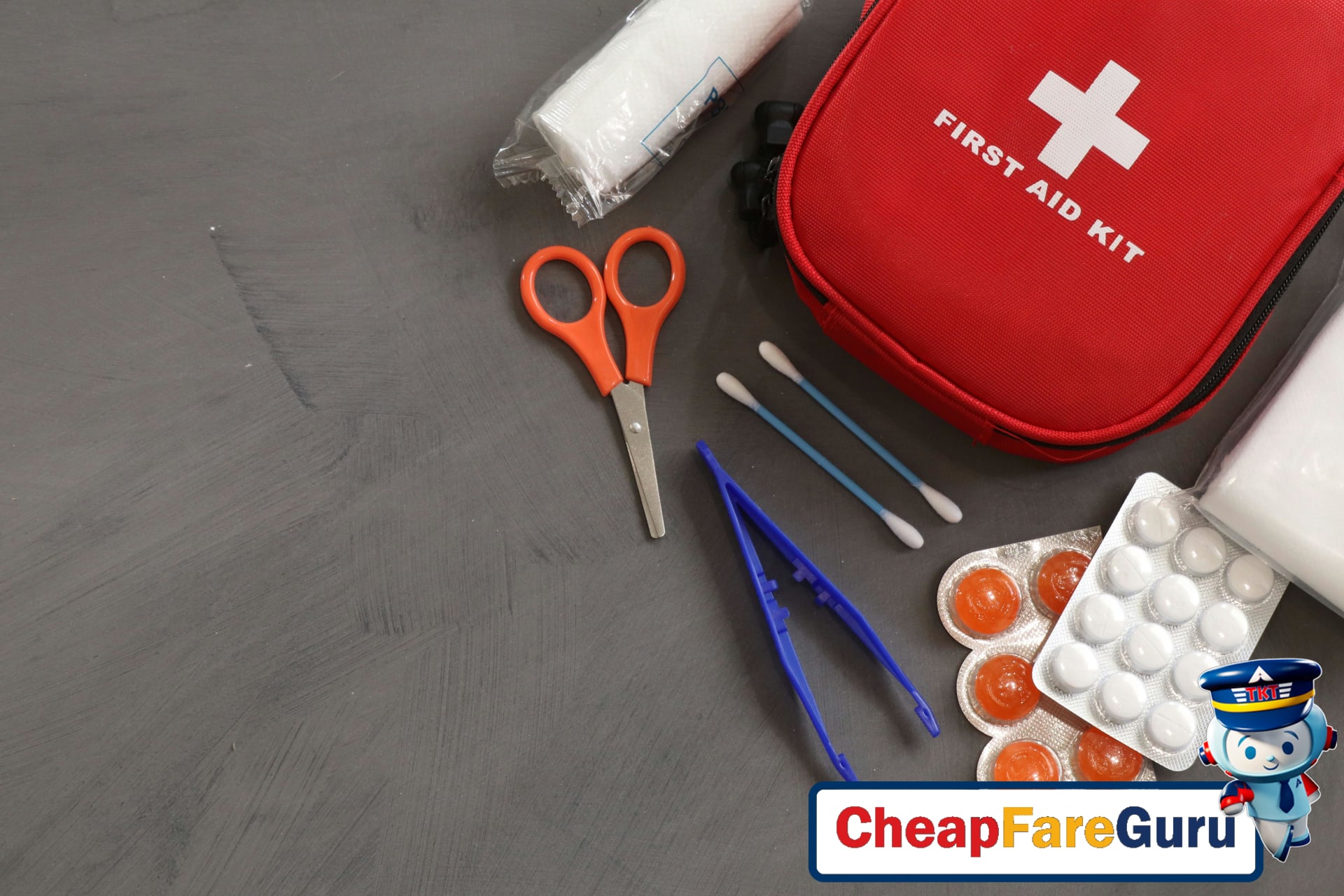
The deal is, your packing should go beyond clothes and chargers. Drop in a mini first aid kit (even a $9 one from Walgreens does the trick), a portable phone charger (10,000mAh or higher—Anker and Belkin models hold enough for two full charges), and always download offline maps (Google Maps or Maps.me). Wi-Fi blackouts happen. You don’t want to be stuck at 2am hunting your Airbnb in Prague with no navigation.
Keep a few travel safety apps on your phone. I use SmartTraveler (for State Department alerts), WhatsApp or Signal for encrypted text/calls, and Currency XE for real exchange rates. Set up local transportation apps before you go—like Grab in Southeast Asia, Bolt across much of Europe, or even Uber for wide coverage. I track disruptions and fare alerts through CheapFareGuru notifications. It’s flagged early gate changes or unexpected delays twice in the last year for me—faster than airline apps some days.
Mental prep matters too. Plans go sideways: flights get canceled, train strikes hit, weather thwarts your hike. A little “stuff happens” mindset helps you roll with it. Jasmin Lee, nurse from Seattle, got rerouted to Milan when storms grounded her original Florence flight (October 2025). Her advice? “Always have a plan B, but be ready for plan C on the fly.” It’s part of the story you’ll remember—just make sure you’re ready before you even leave home.
FAQ on Political Unrest Travel Safety: 7 Real-World Answers
What is political unrest in the context of travel?
Political unrest means protests, strikes, riots, or clashes that disrupt daily life in your destination. If the U.S. State Department issues a Level 3 or 4 advisory—like the one for Peru in January 2024—expect curfews, airport shutdowns, or even canceled tours. Always check local news before you fly out.
How can I monitor political unrest effectively before my trip?
Set Google Alerts with your destination plus “protest” or “strike.” Check the U.S. State Department’s travel advisories: their March 2026 update flagged election unrest in Senegal three weeks before major airlines paused flights. I also watch CheapFareGuru’s news tab for sudden changes in flight schedules tied to unrest.
When should I avoid traveling due to political unrest?
Postpone if your government issues a Level 4 “Do Not Travel” alert, or if airlines suspend service. Example: British Airways suspended all flights to Nairobi for four days during July 2023 riots—Kristin Patel, a UX designer from Toronto, was rebooked a week later at no extra charge.
Why is travel insurance important for trips in unstable areas?
If you’re traveling to a region with a history of political unrest, standard travel insurance won’t always cover everything. Upgrade to “cancel for any reason” coverage. In November 2024, Steve Chang, IT consultant from Seattle, got $1,240 reimbursed when his Guatemala trip was canceled due to an unplanned state of emergency.
Can I contact my embassy if I’m caught in a protest?
Embassies can provide location updates, evacuation info, and in some cases, shelter. Sofia Garcia, student from San Jose, contacted the U.S. embassy hotline during the Chilean transit strikes (Feb 2025)—she got route advice back within 2 hours.
How do I create an emergency plan for political unrest situations?
Share your itinerary and local contact with a friend back home. Save your embassy’s number and the local emergency line in your phone. If unrest escalates, CheapFareGuru’s customer support (available 24/7) can help find earlier flights—don’t wait until airports shut down.
What apps are best for real-time unrest updates?
Sign up for State Department STEP alerts, use International SOS for risk bulletins, and follow @Crisis24Global on X (formerly Twitter). During March 2025 Paris strikes, I relied on Signal chat groups to share safe routes with other travelers in real time.
Empowering Travelers: 5 Safety Habits for Confident Journeys
Political unrest doesn’t have to wreck your travel plans—if you stay alert and prep smart. The core moves haven’t changed: monitor world headlines and government travel alerts (State Department, CDC, UK FCDO) daily before departure and while abroad; book flexible tickets; get comprehensive travel insurance that actually covers civil unrest; and have a backup plan for communication and transportation in every city you visit.
I’ve seen how much of a difference this makes. Alejandro Gomez, a telecom engineer from Houston, rerouted his March 2026 trip to Istanbul after monitoring U.S. Embassy alerts about protests. Small move, big peace of mind—his insurer, Allianz, covered date change fees and CheapFareGuru surfaced a $374 one-way flight to Athens the same day, something OTAs weren’t even showing yet at midnight CST.
Here’s why vigilance works. Emma Shah, a teacher from Toronto, avoided last-minute border hiccups flying to Paris in February 2026 simply because she checked Air Canada’s updated travel advisories the night before. The French transit strike doubled cab costs—she pre-booked a shuttle and saved $82 compared to a panicked Uber request at CDG. No gambling, just prep.
You don’t have to monitor twelve websites solo. I track official feeds, airline rule changes, and new fare drops with a few shortcuts—CheapFareGuru’s deal alerts caught the Jan 2026 Southwest flash sale three hours before it disappeared. Staying looped in means you can avoid dicey transit days, rebook quickly, and focus on what you actually want: exploring and enjoying your trip, not battling chaos.
Bottom line: refusing to gamble is your edge. Use trusted resources, double-check your bookings, and consider insurance that covers more than bags and weather. If you want flexible, affordable flight options (even for last-minute changes), see what CheapFareGuru can handle for your next adventure—especially if stress-free support matters as much as saving fifty bucks.
6 Authoritative Resources for Safer, Smarter Trips
No need to guess about travel warnings or rule changes—here’s where I verify facts before booking. For government advisories, the U.S. State Department posts the latest alerts by country. IATA’s Safety Page covers airspace issues and airline operational updates. For travelers worried about unrest or health, the CDC logs active advisories and recommendations. If I’m double-checking airline or TSA rules, I head to TSA and FAA directly. I keep these saved alongside my CheapFareGuru bookmarks—they’re reliable, free, and updated constantly.