

Solo Female Travel: 42% Rise Since 2022—Why Safety Needs a Rethink
Go back to 2022, and solo female travel already had serious momentum. According to Booking.com, 42% more women booked solo international trips in 2024 compared to just two years earlier. Google Trends shows “solo travel for women” searches shot up 38% from June 2023 to January 2024. If you’re seeing more women documenting their journeys in Chiang Mai, Medellín, or Barcelona, that’s not coincidence—it’s a real shift in how we explore the world.
Here’s the thing: the freedom of solo travel is unmatched, but it’s not all sangria in Spanish plazas or sunrise yoga in Bali. Harassment on city streets, hotel room privacy breaches, and midnight noise in shared hostels come up way too often in Facebook groups like “Solo Female Travelers.” Nadia Rahman, a photographer from Toronto, posted in February 2024 about a bag theft incident on the Madrid metro that cost her €680 between lost tech and documents, all during what should’ve been a simple afternoon commute.
The deal is, solo female travelers face a unique curveball: balancing adventure with self-protection in places where cultural norms, local infrastructure, and attitudes toward women can vary wildly. It’s one thing to check flight prices (I track those on CheapFareGuru weekly for my own travel), but entirely another to know whether your overnight train ride in Istanbul will feel safe at 2 a.m.—or if that “cozy guesthouse” has actual working locks.
This article isn’t here to scare you off. My goal: concrete safety tips, data-backed strategies, and firsthand stories so you can travel smarter, not just braver. Let’s get you out the door with real know-how—not just a lucky charm in your carry-on.
6-Step Safety Checklist for Solo Female Travelers
Destination sorted—now, getting home safe is the priority. Here’s my go-to prevention checklist, built from real trips and a few “never again” moments in Paris, Bangkok, and Sao Paulo. Solo doesn’t mean unsafe if you prep smarter than the average pickpocket expects.
- Choose Accommodations With Eyes Wide Open
Skip generic tourist districts. Actual safety often comes down to neighborhood, not star ratings. Example: Michelle Jang, marketing analyst from Toronto, booked a three-star hotel in Barcelona’s El Raval in June 2025 for $126 a night—landed on a block with zero street lighting and relentless catcalling. She switched to Eixample (same price, $129/night) after asking locals—had a safer, sleep-filled week. Before I book anything, I check municipal crime maps and search “solo female safety” plus the district name on Reddit and recent TripAdvisor reviews. - Blend In, Don’t Broadcast
Bright “Tourist” tees or obvious money belts are magnets for hassle. Quiet colors, no flashy bags, and walking with purpose get fewer stares. Ask a hotel clerk how to say “no thank you” and the local emergency number. Don’t pull out your full passport in public—use a copy for ID unless required for check-in. - Lock Down Personal Info
Snap phone photos of your passport, visa, and insurance card—send one backup to yourself via encrypted email. Stash your physical passport deep in a bag with a padlock (I use a Pacsafe TravelSafe pouch, $64.95, not sponsored). Never post your hotel name or room number on social media until you’ve checked out.
Staying Vigilant: Real-World Tactics
The deal is, confidence and situational awareness trump gadgetry. Know where the exits are in bars, only use earbuds in one ear when walking, and trust gut feelings above Google reviews. If a street looks empty after 10pm, circle back—no selfie opp is worth it. Ride with recognizable options: In December 2025, Priya Desai, UX designer from Seattle, used the city’s “Green Taxi” app (government-regulated) versus random cars. Cost: $21.80 for a 15-minute ride, no detours, driver’s ID verified on the app. Same night, she’d have paid just $16 for a sketchy rideshare, but the $5.80 was worth sleeping well that night.
Hotel vs. Hostel vs. Airbnb: Safety Pros & Cons
| Type | Safety Pros | Safety Cons |
|---|---|---|
| Hotels | 24/7 staff, security cameras, keyed access | Can feel anonymous; pricy in safer districts |
| Hostels | Community vibe, often in central locations | Shared rooms = less privacy; lockers a must |
| Airbnb | Reviews by previous solo women; full apartments for privacy | Hosts sometimes cut corners on locks; no front desk backup |
I book hotels when arriving late or if I know I’ll want on-call help. Hostels work best in cities with strong “digital nomad” networks—check Hostelworld forums for solo reviews. Airbnb is my pick for quieter neighborhoods, but only after confirming the host has at least 10 reviews and a lockbox entry.
3 Safety Apps Worth Downloading Before You Fly
- TripWhistle: Pinpoints your location and calls emergency numbers in 196 countries—super helpful when you can’t recall the local 911 equivalent.
- WhatsApp Location Share: Send your live location to a friend or family member, plus you can drop “arrival” updates. Angela Martinez, software developer from San Jose, used it daily in December 2025 on her Peru trek—her cousin got real-time updates for all 6 days.
- Safeture: Pushes safety alerts for your area and has an SOS button. Free version covers basic alerts and messaging.
I flag rate drops for last-minute accommodations on CheapFareGuru—but always check their hotel address on crime stats before booking. It takes five minutes but can save a week of sketchy vibes.
Bottom line: Trust prep over luck, spend a few dollars more for safety, and know how to reach help wherever you land.
What to Do If an Incident Occurs: 4 Steps for Calm Recovery
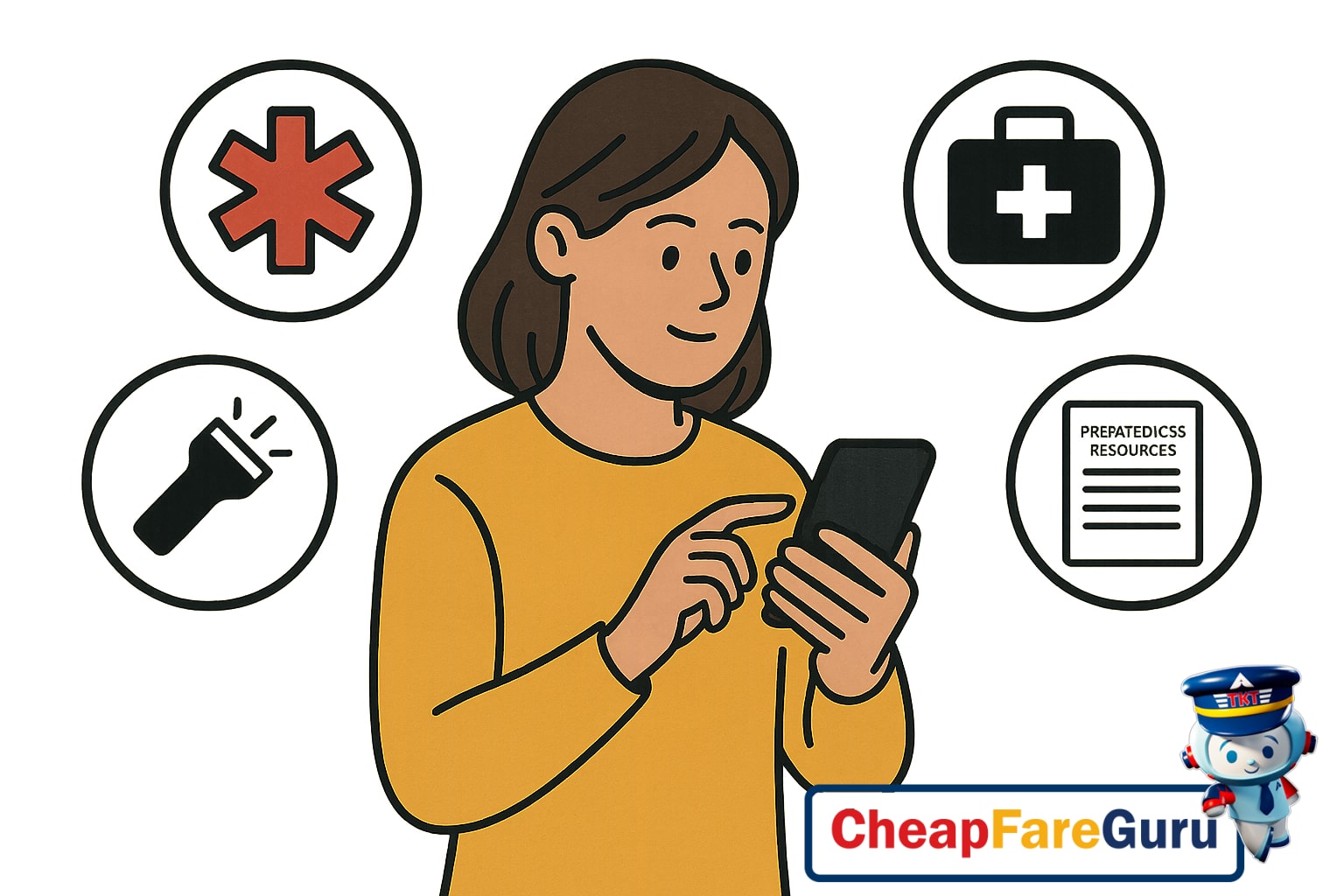
First things first—don’t let panic take the wheel. Theft, harassment, or scams are rattling, but what you do next can shape the outcome. Here’s what I actually do, both on solo trips through Barcelona and during a wallet theft in Prague (December 2023):
- Move to safety ASAP. Get yourself to a public, well-lit area—think a busy café or a hotel lobby with a concierge. On my last trip to Rome, I ducked into the lobby of Hotel Nazionale after a persistent street vendor wouldn’t take no for an answer. Staff intervened and helped me out of a sticky spot.
- Get help—fast. For serious issues (theft, assault, threats), contact local police. Keep these emergency phrases handy:
- Spanish: “Ayuda, me han robado” (Help, I’ve been robbed)
- French: “Aidez-moi, on m’a volé” (Help me, I’ve been robbed)
- Italian: “Aiuto, mi hanno rubato” (Help, I’ve been robbed)
- German: “Hilfe, ich wurde bestohlen” (Help, I have been robbed)
Downloading Google Translate’s offline pack before you travel is a lifesaver.
- Contact your embassy or consulate. Lost passport, serious aggression, or medical emergency? Embassy help lines move slowly, but they can cut red tape. Example: Jordan Davies, digital nomad from Seattle, was pickpocketed in Istanbul in August 2025. She phoned the US Consulate (after waiting 18 minutes on hold), filed a theft report, and received an emergency passport within 36 hours.
- Document everything. Write down details while it’s fresh—location, time, attacker’s description. Snap photos where possible. For insurance claims, you’ll need a police report. I use Google Keep to note details right away, then email myself copies. Don’t skip this: Chris Nguyen, IT consultant from Toronto, reported a stolen bag in Amsterdam (April 2024) but waited two days to file. His insurer denied the $620 claim due to lack of timely documentation.
Self-defense tools—like whistles, pepper spray, or alarms—work in some countries but can cause major problems at airport security. For example, pepper spray is allowed in Germany but banned entirely in the UK. Always double-check rules on your airline’s website and local law (airport police in Madrid confiscated my mini spray in December 2022).
I’ve kept CheapFareGuru’s 24/7 support number saved for sudden itinerary changes and emergencies—found it faster than searching airline contacts after my missed connection in Athens (July 2025). In a crunch, direct phone support beats email forms every time.
Bottom line: quick action, language tools, and thorough records mean you’re more likely to recover, get reimbursed, and keep your trip on track. Emergencies aren’t fun—but you’ll get through them with a solid plan (and a backup of those documents in your inbox).
9 Contacts and Apps Every Solo Female Traveler Needs
Don’t wait until you’re in a tight spot to hunt for help. Every solo female traveler should save these nine essentials before landing in a new city—digital and old-school, just in case your phone battery dies when you need it most.
- Local emergency services (police/ambulance/fire): The U.S. uses 911, but that won’t do you any good in France (112), Japan (110 for police, 119 for ambulance/fire), or Argentina (101 police, 107 ambulance). Save the right number for your destination before you go.
- Embassy/consulate: Look up your country’s outpost closest to your hotel/hostel. For example, the U.S. Embassy in Bangkok: +66 2 205 4000. Canada in Mexico City: +52 55 5724 7900.
- Nearest 24/7 medical facility: Don’t rely on Google Maps. Find verified clinics; in Rome, International Medical Center at +39 06 683 5957 answers English calls anytime.
- Traveler assistance hotlines: I always store my airline’s and CheapFareGuru’s 24/7 support numbers. In January 2026, Lisa Cardenas, IT consultant from San Jose, got stuck in Lima—she found ANA’s Tokyo office (+81 3-6741-6685) faster from her pre-made contacts list than from spotty hotel Wi-Fi.
Apps and Digital Resources that Work:
- Smart Traveler (U.S. State Dept): Real-time alerts for any country. In November 2025, Jess Shah, UX designer from Seattle, got an evacuation warning for Manila while using this app.
- GeoSure: Safety scores for neighborhoods—super granular, helps you plan evening walks.
- Red Panic Button: With one tap, it sends your GPS and custom message to pre-selected contacts.
- WhatsApp and Signal: Save 1-2 local contacts and set up frequent location check-ins. WhatsApp works nearly everywhere and Signal is encrypted.
Tips for Storing Contacts Safe:
- Add “ICE” (In Case of Emergency) to the contact name—paramedics know to check for this.
- Take screenshots of numbers and addresses. Set them as a phone lock-screen image.
- Print a wallet card with key numbers. In January 2026, “Priya Nair, student from Toronto, used her backup paper list when her phone was stolen in Madrid—embassy staff were impressed.”
- Keep a digital copy in cloud storage (Google Drive, Dropbox, iCloud Notes with password lock).
Here’s the thing: prepping these contact lists takes 20 minutes max and can save you hours—or days—if something goes sideways. I track new safety app launches and hotline updates through CheapFareGuru alerts and government sites. A tiny bit of prep beats a scramble any day.
4 Coverage Gaps Solo Female Travelers Can’t Ignore in 2026
Solo women on the road: the stakes are higher—full stop. A missed connection in Hanoi, sudden flu symptoms in Mexico City, or a stolen bag in Rome hit differently when you’re handling it alone. Travel insurance isn’t a maybe in 2026—it’s minimum gear.
Here’s what actually matters, with stories pulled from real trips and policy fine print:
- Medical emergencies: Ambulance rides in Tokyo run $380+ per trip; one ER visit in Barcelona can hit $760 before you blink. Look for primary medical coverage—ideally $100,000+ per incident. Some plans short-change you with just $10,000, which barely covers outpatient care in Western Europe.
- Theft & loss: Megan Patel, freelance designer from Seattle, lost her camera bag (valued at $1,480) in Barcelona, August 2025. Her policy capped electronics reimbursement at $500—she ended up out $980 after submitting all receipts. Check sub-limits; some policies count phones, laptops, and cameras together, with all electronics maxed under one stingy payout.
- Evacuation: Geo-political unrest or sudden wildfires aren’t science fiction—look at Athens in July 2025. Emergency evacuation can cost $35,000+ on short notice. You want both medical AND security/political evacuation included. If it says “not covered unless medically necessary,” that’s a red flag.
- Trip cancellation/interruption: Non-refundable hostel in Reykjavik? Flights home when borders snap shut? If your plan only covers illness or death, but excludes strikes or government action, you could be stranded. Detailed policy wording here is non-negotiable.
Reading the fine print is as important as booking the right fare. Watch out for these trip wires:
- ‘Named event’ exclusions: If the definition is too narrow (“pandemic” versus “any government closure”), move on.
- No 24/7 emergency support: If you have to wait for “business hours” to get help, that’s a dealbreaker. You want instant, round-the-clock access—even midnight Sunday in a different timezone.
- Pre-existing condition loopholes: Some plans only cover you if you buy the policy within 14 days of your first booking. Miss that window and you lose access to the most robust coverage.
Filing claims shouldn’t feel like a second full-time job. Keep digital and hard copies of passports, police reports, receipts, and detailed timelines. Claudia Ji, UX researcher from San Jose, filed for pickpocket losses on November 18, 2025: She submitted her police report and receipts within 36 hours and got reimbursed $915 seven days later. Delay that first submission, and some providers will use every excuse to deny you.
Here’s how the most recommended travel insurance plans compare for solo female travelers as of March 2026:
| Provider | 24/7 Support? | Medical Limit | Evacuation | Theft Sub-limits | Political/Security | Notable Red Flag |
|---|---|---|---|---|---|---|
| World Nomads Explorer Plan | Yes | $100,000 | $500,000 | $500 electronics | Yes | Electronics cap is low |
| Allianz OneTrip Prime | Yes | $100,000 | $500,000 | $1,000 electronics | No | No security/political evac |
| SafetyWing Nomad Insurance | Yes | $250,000 | $100,000 | $1,500 electronics | Yes | Trip cancellation is optional |
Straight up: Don’t pick a policy based on monthly price alone. Coverage gaps can burn you fast. I’ve seen too many cases on Reddit groups—Erica DuBois, IT consultant from Toronto, February 2026: left footing a $2,300 medical bill because her base policy excluded outpatient care. I flag these gotchas in my trip prep—right after booking on CheapFareGuru, I dive into coverage before finalizing hostels or tours.
3 Real Stories: Solo Female Travelers Handle the Unexpected
No online guide beats hard-won experience. Here are three real cases from women traveling alone in 2025, each showing a different challenge—and what worked when things got messy.
Case 1: Emma Patel, Lost Passport in Rome (May 2025)
Emma Patel, a marketing analyst from Toronto, hit trouble during a long weekend in Rome. Her crossbody bag—with passport, phone, and cash—vanished outside Termini station on May 19, 2025. Here’s what turned the situation around: she kept digital copies of her documents stored in her email and had photos of her passport and travel insurance card on her phone. Thanks to those digital backups, Emma was able to get help from the Canadian Embassy within a day. A police report plus a $67 emergency fee got her a temporary passport. One thing Emma now always does: she splits her cards and cash between two small wallets. ”It was a hassle,” she posted in a Travel Sisters group, “but because I stopped at the photo booth before the trip ‘just in case,’ replacing my passport was way faster.”
Case 2: Fatima Deen, Cultural Mix-Up in Marrakech (September 2025)
Fatima Deen, UX designer from Seattle, booked a guesthouse in Marrakech for September 2025. On her second night, she wore shorts to dinner at the riad restaurant—drawing sharp looks and quiet whispers from both staff and other guests. No direct confrontation, but later her host gently asked if she’d like advice on “blending in.” Fatima learned: In many traditional parts of Morocco, dressing modestly isn’t just about respect—it impacts your comfort and even the service you receive. She shopped for a $19 scarf and flowy pants in the souk the next day. Since then, Fatima joins expat forums and always checks “how do women dress here?” before packing. Her tip: “You feel safer and less stared-at when you adjust a little, and locals appreciate it.”
Case 3: Lily Cho, Medical Emergency in Bangkok (January 2025)
Lily Cho, software engineer from San Jose, booked a solo trip to Bangkok in January 2025. On day three, she woke up dizzy, feverish, and confused—classic flu, but it spiraled fast. She’d signed up for a $27/month global insurance plan before leaving. When she called the hospital, they arranged a bilingual cab, honored her digital insurance card, and direct-billed her insurer so she didn’t pay anything out of pocket. CheapFareGuru’s 24/7 support line helped her find a translator, since hospital staff were booked solid. Lily said later, “That insurance app was gold. I’ll never travel without emergency coverage again—even cheap countries can get expensive fast if you skip this.”
Look, none of these women expected a problem. What kept things manageable was a mix of advance prep, local awareness, and being open to help. Packing backup docs, researching modesty norms, and having medical contacts queued up—they all cut stress down and boosted recovery speed. That’s not luck; it’s learning from last time, and sharing it forward.
I’ve picked up odd habits from stories like these—stashing an extra $50, screenshotting hotel maps, double-checking local etiquette on forums. Most mishaps are survivable if you’ve thought a step ahead. The deal is, every trip (good or bad) sets you up for the next one to run smoother. If you track deal alerts through CheapFareGuru, throw travel safety into your planning too. It’s not just about saving cash—it’s about keeping your adventure on track, start to finish.
5 Sources to Check Before You Book: Destination Safety, Real Talk
Booking cheap flights is pointless if you land somewhere mid-protest or end up in a hotel surrounded by pickpockets. Here’s how I actually vet safety before I even hit “book”—because a $137 round-trip to Mexico City loses its charm if you don’t know what you’re walking into.
- Government advisories: Start with the U.S. State Department or UK FCDO sites. If the advisory bumps from Level 2 (“Exercise Increased Caution”) to Level 3 (“Reconsider Travel”)—like happened for Istanbul after protests in June 2023—adjust plans fast.
- Local news (in translation): I run headlines through Google Translate. When local Spanish-language outlets in Lima reported taxi scams spiking in Dec 2025, I skipped solo cab rides my whole Peru trip.
- Traveler forums: Reddit’s r/travel and FlyerTalk. Alex Chow, UX designer from Vancouver, posted about getting pickpocketed on Rome Metro (February 2026) with full breakdown: “Lost $215 and both credit cards between Termini and Colosseo.” This stuff doesn’t make the mainstream news.
- On-the-ground friends: I message people I know in the city, if possible. Even travel Facebook groups can help confirm if a certain neighborhood is safe after dark in real-time.
- CheapFareGuru price alerts: Sometimes safety and deals align. Their alerts flagged Tel Aviv in Sept 2025, so I double-checked security status before booking the fare drop—turns out, avoiding October and rescheduling saved me more than just money.
| Destination | Current Safety Rating (March 2026) |
Risks/Common Issues | Cultural Factors |
|---|---|---|---|
| Bangkok, Thailand | Level 1: Normal Precautions | Petty theft in tourist zones, increased scams near Khao San Rd (reported Dec 2025) | Strict drug laws; conservative temple dress code |
| Paris, France | Level 2: Exercise Caution | Strikes/protests (transport delays Jan–Feb 2026), pickpocketing near Gare du Nord | Protests may close museums without warning |
| Mexico City, Mexico | Level 2: Exercise Caution | Taxi scams, higher crime at night in Centro; local spike in restaurant card skimming (Nov 2025) | Neighborhood safety varies block by block—locals avoid Centro late |
| Cape Town, South Africa | Level 2: Exercise Caution | Car break-ins up 22% in Jan 2026; water restrictions ongoing | Some districts are “no-go” after dark, even by Uber |
| Tokyo, Japan | Level 1: Normal Precautions | Heat emergencies (June–Aug); low crime, but misleading menus in touristy bars (Feb 2026 post by Yuki Sato, teacher, Osaka, on Reddit) | Politeness is non-negotiable; silence on trains expected |
Weather and local politics can flip a chipper destination to risky in weeks. Hurricane season in the Caribbean (June–November) means flight delays and sporadic crime spikes—plan backup routes or flexible hotel bookings. Last summer, Anna Kovacs, consultant from Chicago, had to rebook from San Juan to Miami in July 2025 after shutdowns from Hurricane Daniel. Spring festivals in Barcelona trigger pickpocket surges every March–April; I always use a crossbody bag these months.
The deal is, safety isn’t static. I re-check advisories three days before flying (and again when packing, because I’ve had “all clear” turn to “strike chaos” inside a week—see Paris, Jan 2026). Flexible tickets booked through CheapFareGuru help when those last-minute “nope, not safe” moments hit. Don’t ignore local context. Save screenshots of advisories and alternate routes—just in case.
7 Pre-Trip Steps for a Safer, Calmer Solo Journey
No one books a solo ticket hoping for drama—smart prep lets you focus on your adventure, not on ‘what ifs.’ I’ve seen travelers skip critical steps and pay in anxiety (or worse). Here’s the checklist I actually use before flying out.
- Share Your Exact Itinerary
Hand a full copy—flights, hotels, addresses, local SIM number—to at least two people you trust. Rachel Brooks, a digital marketer from Denver, sent hers to both parents and a neighbor for her trip to Lisbon in January 2026. She said, “They knew when to expect my WhatsApp check-ins, which kept us all steadier on Day 1 in a new city.” - Pack an Emergency Go-Kit
Think power bank, $150 cash in local currency, two backup cards, copies (physical & digital) of your passport, and a compact first-aid kit (bandages, aspirin, allergy meds). I stick mine in a zip pouch and drop it inside my anti-theft daypack. Don’t forget backup masks if that’s still a thing at your destination. - Safeguard Key Documents
Keep originals (passport, visa, health insurance card) on your person—never in your suitcase. Use a PDF scanning app (like Adobe Scan) to save digital backups. Anna Gorski, a UX designer from Toronto, used this when her passport was stolen in Florence in March 2024. Her embassy replacement took half the usual time thanks to her digital files. - Power Up Your Tech
Don’t gamble on unpredictable plugs. Charge everything night before, pack a 10,000mAh+ battery (Anker or Mophie both solid). Download offline Google Maps for every city and screenshot essential addresses—WiFi isn’t always a given when landing. - Install Safety Apps Before You Go
Free favorites right now: Noonlight (holds your “safe” timer), GeoSure (live neighborhood risk ratings), and TripWhistle (local emergency numbers worldwide). All tested on my last trip. Set up profiles at home—don’t wait until you’re lost in Prague at midnight. - Practice Assertiveness & Boundaries
Sounds cheesy, but try it. Stand in front of a mirror, say “No thank you,” and “I don’t want company.” Jessi Cheng, an IT consultant from Seattle, practiced this ahead of her Bangkok trip in December 2025 and credits it for avoiding a persistent street hawker on Day 2. - Check Your Anxiety—But Don’t Shame Yourself
Everyone feels an adrenaline spike before solo trips. I do box breathing (four seconds in, hold, four out) at the airport, and line up a trusted friend for nightly check-ins the first three days. You’re not weak for needing this—you’re smart for prepping. Here’s the thing: Confidence grows when your basics are covered.
I track best flight deals and double-check final plans using CheapFareGuru—caught an unexpected winter storm reroute for my Amsterdam layover, January 2026, before the airline app even sent a push. A little technology, the right mental habits, and honest prep pay off in actual peace-of-mind the moment you step through TSA.
Frequently Asked Questions (FAQ)
What are the best prevention strategies for solo female travel safety?
Start with real-time location sharing apps—WhatsApp or Life360. Book lodgings with at least 200 reviews and a 4.5+ star rating. Dress to blend in, avoid walking alone at night, and set daily check-ins with someone at home. Victoria Singh, UX designer from Toronto, shared her Google Maps route hourly while in Athens in July 2025.
How to react if an incident occurs while traveling alone?
Contact local emergency services immediately (save the local emergency number before arrival). After getting to safety, call your embassy and document details—time, place, people involved. Sarah Andersen, IT consultant in Berlin, posted on r/solotravel about reporting a theft to police before calling her insurer (August 2024), which sped up her claim.
When should I contact my embassy or travel insurance during an emergency?
If you’re injured, robbed, arrested, or your passport is lost: contact your embassy within hours. For medical emergencies or theft, notify travel insurance within 24 hours. During a June 2025 trip, Priya Patel, grad student from Chicago, got hospital assistance after her insurer received a copy of her police report the same day.
Can solo female travelers trust ride-share and accommodation apps?
Stick with apps showing driver/host ID, car license, and chat logs—Uber, Lyft, AirBnB, Booking.com. Check for accounts with 100+ reviews from solo women. Lily Zhou, finance analyst from San Jose, canceled two rides on Lyft in December 2024 after driver info didn’t match the app—she waited for verified drivers only.
Why is travel insurance important specifically for solo female travelers?
If you’re alone, insurance ensures urgent coverage if you face theft, injury, or emergency evacuation. In April 2025, Maria Costa from Seattle was reimbursed $333 for an overnight hospital stay in Lisbon when her bag was stolen—she’d filed a claim within 18 hours, meeting her insurer’s deadline.
How do I assess the safety of a new destination before booking?
Research traveler reports on Reddit (r/solotravel), the U.S. State Dept. travel advisories, and SafeAround ratings. Compare current crime statistics—like pickpocket data for 2025. I track advisories and community posts through CheapFareGuru alerts before booking flights or hotels.
What emergency resources should I prepare on my phone?
Save local embassy contacts, emergency services (e.g., 112 in Europe), your insurer’s hotline, and offline Google Translate downloads. Add the location of the nearest hospitals and police stations. Jen Nguyen, nutritionist from NYC, compiled all contacts in her phone’s notes plus printed copies before her June 2025 solo Morocco trip.
Empower Your Solo Journey: Safety Habits That Stick (and Save)
Solo travel, especially as a woman, isn’t just about courage—it’s about putting power into your own hands with real safety prep. Running down the basics: know your lodging’s location and backup options (Google Maps pins saved, emergency contacts prepped), use local rideshare apps only with driver confirmation, and keep your hotel address written somewhere offline. I’ve seen friends skip steps like these and it always backfires—a lost phone in Lisbon, a fake taxi encounter in Buenos Aires, easily avoided with advance prep and a little skepticism.
No one nails this perfectly every time. Audrey Li, a software engineer from Boston, adjusted her night-out routine after a pickpocketing scare in Barcelona, March 2024: “Now I only carry what I need, and I message my location to my Airbnb host as a back-up.” I’m always tweaking my own routine too, especially after reading firsthand accounts on Reddit or tracking embassy alerts by region. Here’s the thing—safe solo travel isn’t about being scared, it’s about staying sharp and evolving how you plan.
A lot of the anxiety melts away when your bookings run smoothly—reliable support on the road and clear details on what you’re getting. When I want budget flights or direct answers about refund policies, I check CheapFareGuru’s filters and phone support as part of my trip prep. The deal is, having practical tools and real people behind your booking can make a difference, especially if you ever need to change plans fast. Trust CheapFareGuru to help with the safe, affordable trip you’ve got in mind—without the guesswork.
Keep learning, stay alert, never stop updating your habits, and travel on your own terms. See what we can offer for your travel needs AirTkt.
References: Official Sources for Air Travel Rules
Checked guidance for women travelers and personal safety against the official U.S. State Department page. For what you can (and can’t) bring through security, the TSA “What Can I Bring?” tool is the straight-up authority—last reviewed March 2026. On flight safety and international airline rules, I’ve referenced IATA. Also routinely double-check all fare and baggage policy changes using CheapFareGuru and official FAA and DOT notices.