

Compare Direct and OTA Hotel Bookings
Choosing where to book your hotel is a key step in travel planning, often affecting your budget and flexibility. Understanding the difference between direct booking and OTA booking can empower you to make smarter reservations tailored to your needs.
Direct booking means reserving a hotel room through the hotel’s official website or by calling their reservation line. When you book directly, you interact straight with the hotel, which can offer perks like room upgrades, loyalty points, or flexible cancellation policies. Hotels tend to favor guests who book this way because it helps them avoid paying commission fees to intermediaries.
On the other hand, OTA booking involves using Online Travel Agencies such as Expedia, Booking.com, or Hotels.com. These third-party platforms aggregate multiple hotel options, offering convenience by allowing side-by-side price and amenity comparisons. OTAs often feature user reviews and bundled deals but may include service fees or have stricter cancellation rules set by the hotels.
Most travelers appreciate OTAs for the simplicity and breadth of choices. Busy planners enjoy the ability to filter and book accommodations quickly across many properties. In contrast, budget-conscious travelers or those seeking personalized service often prefer booking directly to leverage exclusive hotel offers or loyalty programs.
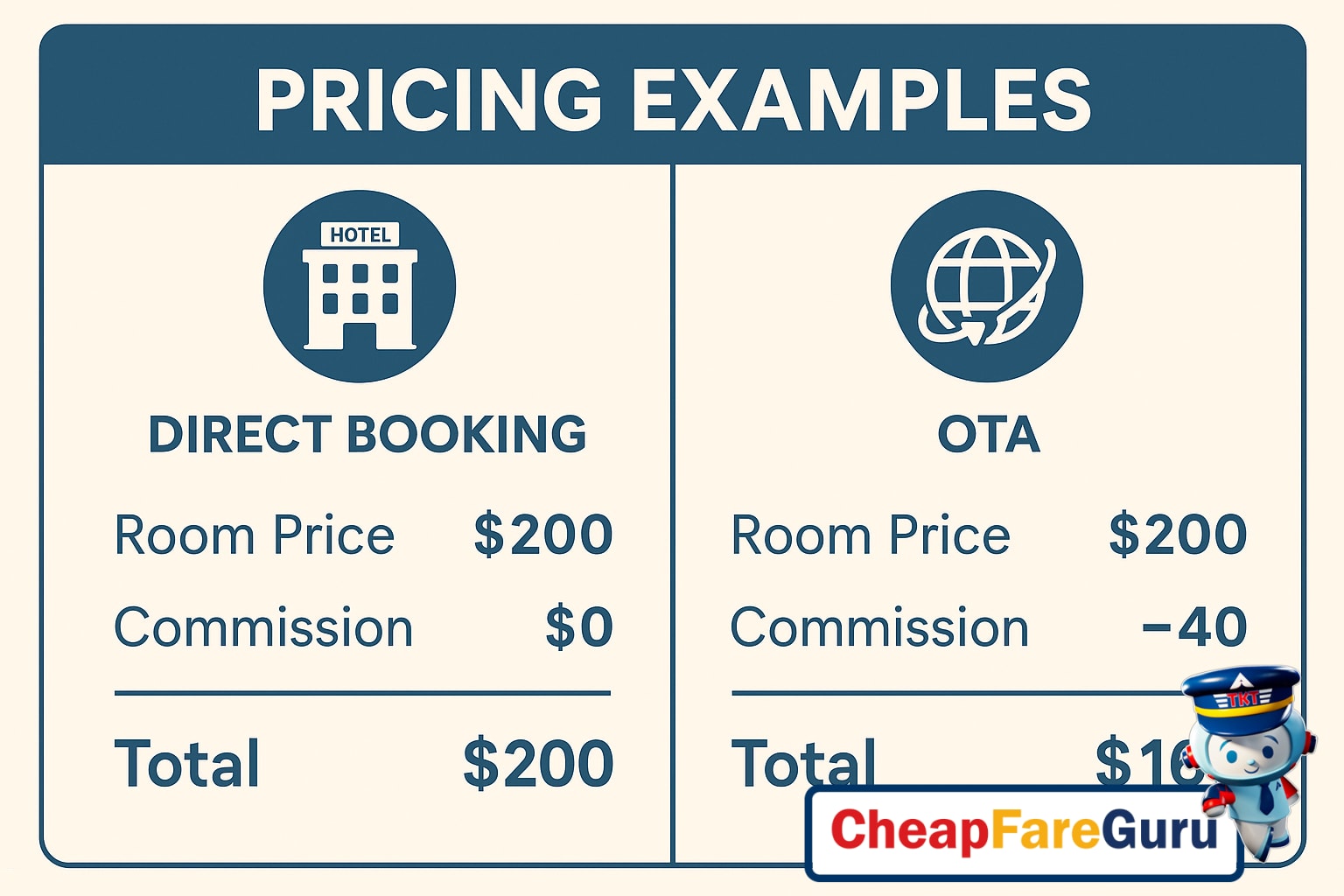
The hotel industry plays a crucial role in shaping these booking experiences. Many hotels provide lower room rates or added benefits to guests who book directly to maximize their profit margins by cutting out OTA commissions, which can range from 15% to 25%. However, some hotels also list room inventory on OTAs to increase exposure and fill rooms during low-demand periods, sometimes offering last-minute discounts.
The relationship between hotels and OTAs is dynamic, balancing wide accessibility with pricing control. Travelers aware of this interplay can attempt both booking channels and compare conditions like cancellation policies, hidden fees, and special offers to find the best deal and flexibility.

Outline Booking Steps for Direct and OTA Methods
Direct Hotel Booking Process
- Visit the official hotel website: Start by navigating to the hotel’s own site, where rates are often guaranteed and special promos may be available.
- Search for availability: Enter your check-in and check-out dates along with the number of guests to check room options.
- Choose a room type: Review the options presented, comparing features, bed types, and cancellation policies.
- Review pricing and packages: Look for bundled offers such as free breakfast or parking discounts directly from the hotel.
- Enter guest details: Fill in personal information like name, contact, and any loyalty program numbers to earn rewards.
- Provide payment information: Input credit card details or select alternative payment methods accepted by the hotel.
- Confirm and receive booking confirmation: Submit your reservation and wait for the confirmation email or voucher.
OTA Booking Process
- Select an OTA platform: Visit popular websites such as Expedia, Booking.com, or CheapFareGuru to start your search.
- Enter travel dates and destination: Specify check-in/check-out dates and hotel location to fetch available options.
- Apply filters: Narrow down options by price range, star rating, amenities, and guest reviews for targeted results.
- Compare rates: Evaluate pricing across different hotels and room types, often including promotions exclusive to the OTA.
- Read hotel policies: Review cancellation terms, extra fees, and check-in procedures before booking.
- Fill in traveler details: Provide names and contact info for all guests included in the reservation.
- Enter payment details: Complete payment using secure checkout options like credit cards, PayPal, or OTA-specific payment plans.
- Confirm reservation: Receive immediate confirmation via email or app notification with reservation details.
User Interface and Navigation Differences
Booking via direct hotel websites often offers a streamlined and brand-consistent experience focused exclusively on that property. These sites tend to feature a minimal number of choices, simplifying decisions but limiting variety.
In contrast, OTA platforms provide broader selection pools across multiple hotels and destinations. Their interfaces emphasize filters, sorting options, and price comparisons to help users narrow choices efficiently. However, the wealth of options can sometimes overwhelm users unfamiliar with complex filtering systems.
Direct bookings typically highlight property-specific perks like loyalty benefits or property upgrades, while OTAs prioritize competitive pricing and user reviews to build trust. OTAs like CheapFareGuru also support 24/7 customer service that can assist travelers through multi-step conversions, an advantage for those who prefer guided booking assistance.
Present Typical Savings and Price Differences
Travelers booking flights often see average savings ranging from 15% to 40% depending on whether they choose to book through online travel agencies (OTAs) or directly with the airline. These savings vary by destination, timing, and the platform used, but understanding the typical price differences can help you optimize your travel budget.
For example, when comparing round-trip flights from New York to Los Angeles, OTA platforms frequently offer fares that are about 20% lower than direct airline websites, primarily due to negotiated bulk discounts and promotional partnerships. Similarly, a round-trip ticket from Chicago to Miami booked via an OTA might be $50 to $100 cheaper than booking directly, especially during shoulder seasons when airlines boost OTA promotions to fill seats.
Interestingly, prices for international routes often reveal even larger discrepancies. A flight from Boston to London can cost as much as 35% less on some OTAs compared to the airline’s official site during off-peak months like October or November. Conversely, during peak travel periods such as the summer or holiday season, price differences tighten because airlines tend to standardize fares across channels to capitalize on high demand.
OTAs excel at aggregating flight options from numerous carriers and displaying them side-by-side, making it easier for travelers to identify the best deals. However, pricing transparency can be an issue. Some OTAs list initial fares but add taxes, fees, or baggage charges during checkout, which can lead to sticker shock if you don’t scrutinize the full breakdown. Airline websites sometimes provide a clearer structure of these costs, helping travelers make informed decisions.
Booking directly with airlines has distinct advantages beyond just price. Many airlines offer exclusive perks such as seat upgrades, priority boarding, or added frequent flyer miles when you reserve on their site. Furthermore, direct bookings often allow easier modifications or cancellations thanks to streamlined customer service. These benefits may justify choosing a slightly higher fare, depending on your travel preferences.
Seasonal demand heavily influences flight pricing, causing rates to fluctuate substantially throughout the year. For example, flights to beach destinations like Miami or Cancun typically spike in winter months, reducing savings chances on both OTAs and airline sites. Conversely, traveling during off-peak periods such as mid-fall or early spring often yields broader opportunities for bargains, with OTAs typically featuring the widest range of discounted options.
With platforms like CheapFareGuru, users leverage powerful fare comparisons that capture both OTA deals and direct airline pricing, making it easier than ever to understand these nuances and find the best option for your budget and travel preferences.
Evaluate Best Platforms and Booking Tools
Finding the best hotel deal requires using the right platforms and booking tools designed to reveal competitive prices and flexible options. CheapFareGuru stands out with its user-friendly interface and powerful search technology, which scans a vast inventory of hotels worldwide. Its real-time price updates and comprehensive filtering options help travelers quickly pinpoint accommodations that fit both budget and preferences. Additionally, CheapFareGuru offers 24/7 customer support with phone-assisted bookings, adding confidence for users who value human assistance during their booking process.
In comparison, popular online travel agencies (OTAs) like Expedia, Booking.com, and Hotels.com offer extensive hotel listings but vary in features and perks. Expedia frequently bundles deals for flights and hotels, offering travelers convenience and occasional extra savings. Booking.com boasts a large inventory coupled with a flexible cancellation policy on many properties, making it ideal for travelers with uncertain plans. Hotels.com distinguishes itself by rewarding repeat customers with its loyalty program that awards free nights after a certain number of stays, appealing to frequent users.
While OTAs are excellent for broad searches, direct bookings with hotel loyalty programs bring added value. Many major hotel chains provide exclusive member benefits when booking directly, such as room upgrades, complimentary Wi-Fi, and bonus points redeemable for future stays. Joining these loyalty programs can grant access to lower rates that OTAs might not display, making direct bookings an essential complement to OTA use. Combining loyalty perks with price comparisons ensures travelers maximize savings and receive personalized advantages.
To cross-check prices across platforms and find the best available rate, metasearch engines like Google Hotels and Kayak are indispensable. These tools aggregate offers from OTAs and hotel websites, allowing users to instantly compare and identify the lowest prices. The transparency from metasearch engines can uncover hidden discounts or flash sales not immediately visible on individual booking sites. Furthermore, they provide useful filters by guest rating, amenities, and location, streamlining the decision-making process.
Ultimately, combining the strength of CheapFareGuru’s competitive pricing and customer service with the expansive reach of OTAs, the benefits of hotel loyalty programs, and the price transparency of metasearch engines creates a comprehensive strategy. Budget-minded travelers can confidently secure affordable hotels worldwide without sacrificing quality or convenience.
Explore Timing Strategies for Hotel Deals
Booking timing plays a crucial role in securing the best hotel deals. Understanding when to book can significantly impact the price you pay, often saving you tens or even hundreds of dollars. Industry data consistently shows that both advanced and last-minute booking strategies have advantages depending on your travel flexibility and destination.
Master Advanced Booking Windows
Hotels typically offer the deepest discounts when you book several weeks to months ahead. According to recent market research, the optimal window to book a hotel room ranges from 21 to 45 days before your check-in date. During this period, hotels balance occupancy goals with attractive pricing to fill rooms early.
For example, business travel hotels in major cities can decrease prices by up to 25% if booked 30 days in advance, while leisure destinations often provide discounts around 15%-20%. Early bookings also give you more room and rate options, especially for popular dates or special events.
Leverage Last-Minute Deal Availability
Conversely, last-minute bookings can unlock remarkable savings when hotels need to fill unsold rooms. Apps and booking platforms powered by real-time inventory alerts, such as CheapFareGuru, highlight these offers effectively. On average, last-minute deals can reduce prices by 10%-30%, especially for weekday stays or less busy periods.
However, this approach carries risks. Availability is unpredictable, and rooms in sought-after hotels or peak seasons might not be offered. Advanced planners may prefer to combine last-minute tactics with flexible cancellation policies to maximize savings while maintaining some security.
Compare Weekday vs Weekend Pricing
When planning your hotel stay, consider the day of the week, as weekday and weekend rates often vary significantly. In business-centric cities, weekday rates tend to be higher due to demand from corporate travelers, while weekends can be cheaper with leisure travelers tapering off. Prices for weekend stays can be 10%-20% lower compared to weekdays in these markets.
Conversely, in resort or tourist destinations, weekends and holiday periods usually attract premium pricing, so midweek stays might provide better value. For example, in beach towns, Sunday through Thursday nights can be up to 30% less expensive than weekend nights.
Data-Backed Impact of Timing Strategies
A 2023 industry report indicates travelers who book hotels 30 to 45 days in advance save an average of $40-$60 per night compared to last-minute bookings without guarantees. Meanwhile, last-minute deals may drop the price by up to $50 on average but come with availability risks. Weekday versus weekend price differences range between 10% and 30% depending on location and season.
For example, a 4-night stay in a popular U.S. city using an advanced booking saved a traveler approximately $180 compared to booking last-minute. Meanwhile, shifting the stay to weekdays instead of weekends yielded an additional $75 savings.
Understanding these timing strategies empowers budget-conscious travelers to make smarter booking decisions and maximize travel savings. Whether you plan early or are flexible with last-minute options, timing your booking effectively is key to accessing the best hotel prices.
Share Insider Hotel Industry Booking Tips
Booking directly with hotels can unlock a range of valuable perks that are often unavailable through third-party online travel agencies (OTAs). Many hotels reward loyalty program members who book straight from their official websites or call centers, offering benefits such as discounted rates, points accumulation, and exclusive room packages. These perks can enhance your stay experience while delivering tangible savings.
Hotels frequently provide direct booking guarantees that sweeten the deal. For instance, free high-speed Wi-Fi is often guaranteed only if you book directly, making it a must-have for business travelers or streaming enthusiasts. Some hotels offer complimentary upgrades to better rooms or suites when you book onsite, along with flexible check-in and check-out policies that adapt to your schedule—something rarely granted through OTAs.
It’s also crucial to understand cancellation and modification policies, which tend to be more lenient with direct bookings. Hotels often allow free cancellations or changes closer to your arrival date if you book through their official channels, whereas many third-party sites enforce stricter, non-refundable conditions. This flexibility can save you both stress and money if your plans change unexpectedly.
To leverage hotel policies for the best value, always check if the hotel offers perks like waived resort fees, complimentary breakfast, or parking only for direct bookers. Additionally, some chains provide price-match guarantees—if you find a better rate elsewhere after booking, they will match or beat it. Knowing and utilizing these policies can maximize your savings and upgrade your stay comforts.
By booking direct through a trusted platform like CheapFareGuru, you can easily compare rates and take advantage of exclusive hotel offers, ensuring that every reservation delivers the best possible value and service quality. Understanding these insider booking nuances gives you the edge for smarter travel planning and more rewarding stays.
Compare Cancellation Policies and Flexibility
When booking accommodations, understanding cancellation policies and flexibility can save you significant stress and money. Direct hotel bookings and online travel agencies (OTAs) often have different terms, affecting refunds and rescheduling options. Here’s a checklist of common cancellation rules to consider:
- Refund eligibility: Direct hotels may offer full refunds if canceled within a specified window; OTAs sometimes impose stricter rules or non-refundable rates.
- Cancellation deadlines: Hotels often allow cancellations up to 24-48 hours before check-in; OTAs vary widely depending on the provider’s agreement with hotels.
- Modification policies: Changing dates or room types is generally easier with direct bookings, while OTAs may charge change fees or restrict modifications.
- Non-refundable rates: Both options can feature non-refundable deals that, while cheaper, offer no reimbursement if you cancel.
The impact of cancellation terms extends beyond just losing your money. With direct hotel bookings, refunds are often processed faster since you deal directly with the property. OTAs act as intermediaries, which can delay refund timelines and complicate communication. Additionally, some OTAs lock in strict conditions that limit rescheduling flexibility—potentially forcing travelers to rebook at full price if plans shift unexpectedly.
Travel insurance plays a critical role regardless of booking channel. Policies covering trip cancellation or interruption provide a safety net if unforeseen events prevent travel. For direct hotel reservations, verify whether your insurer accepts coverage based on the property’s cancellation terms. For OTA bookings, confirm that insurance covers third-party restrictions or penalties—since OTAs may have different dispute procedures. Knowing these nuances helps in choosing suitable coverage aligned with your booking method.
Before booking, follow these tips to verify cancellation terms:
- Click through every linked policy section provided by the hotel or OTA to understand penalties and deadlines.
- Check if cancellation deadlines are in local hotel time zones to avoid surprises.
- Contact customer service if any terms appear unclear or inconsistent.
- Save screenshots or emails of your booking terms for future reference.
By carefully comparing cancellation policies between direct hotel bookings and OTAs, you can select accommodations with confidence and protect your travel investment. For budget-conscious travelers aiming to maximize value and flexibility, thorough policy review and smart insurance choices are essential steps on the road to hassle-free travel.
Illustrate Real Price Differences with Case Studies
To demonstrate the tangible savings travelers can achieve, we analyzed identical hotel room prices across different booking channels, focusing on Online Travel Agencies (OTAs) versus direct hotel bookings. These real-world examples highlight how the choice of platform can significantly impact your travel budget.
| Booking Channel | Price per Night | Taxes & Fees | Total Price |
|---|---|---|---|
| OTA (Example Site) | $150.00 | $35.00 | $185.00 |
| Direct Hotel Website | $155.00 | $30.00 | $185.00 |
Here we see both channels offer the same total price, but with a subtle difference in tax and base rates. This might encourage some travelers to prefer booking direct because of perceived reliability. However, the true value often unfolds when factoring in additional perks such as free breakfast, loyalty points, or flexible cancellation policies frequently offered on direct bookings.
| Booking Channel | Price per Night | Service Charges | Total Price |
|---|---|---|---|
| OTA | $120.00 | $25.00 | $145.00 |
| Direct Hotel | $135.00 | $5.00 | $140.00 |
This Charleston hotel example shows a clear $5 saving when booking directly, attributed mainly to lower service charges. Travelers looking to minimize fees can benefit by comparing comprehensive prices rather than just room rates.

To visualize these disparities further, the above bar graph highlights average price differences across three popular destinations: New York City, Charleston, and Miami. On average, direct bookings are about 3%-7% cheaper for boutique hotels, while OTAs occasionally offer promotional rates on larger hotel chains.
For luxury hotel chains in Miami, the pricing splits differently. OTAs sometimes provide better short-term discounts due to bulk room allocations, but direct channels often reward repeat customers with exclusive perks that add value over time.
| Booking Channel | Price per Night | Taxes & Fees | Total Price | Additional Benefits |
|---|---|---|---|---|
| OTA | $250.00 | $62.50 | $812.50 | Free cancellation, no loyalty points |
| Direct Hotel | $260.00 | $55.00 | $835.00 | Loyalty points, room upgrade offers |
In this case, the OTA saves about $22.50 for a 3-night stay. Yet the long-term rewards of booking directly, including upgrades and points redeemable for future stays, often outweigh immediate savings, depending on your travel habits.
At CheapFareGuru, we emphasize the importance of evaluating both cost and value. By reviewing data like these case studies, you can make informed decisions to optimize your travel budget without sacrificing quality or benefits. Remember: the best deal is not always the cheapest upfront price, but the one that aligns with your travel priorities and saves you money overall.
Address Frequently Asked Questions About Hotel Booking
What is the difference between direct and OTA hotel booking?
Direct hotel booking means reserving through the hotel’s own website or call center, while OTA (Online Travel Agency) bookings go through platforms like Expedia or Booking.com. Direct bookings often offer better cancellation policies, loyalty perks, and sometimes exclusive discounts. OTAs provide wide hotel choices and convenient price comparisons.
How to find the best savings on hotel bookings?
To find the best savings on hotel bookings, compare prices on OTAs and check the hotel’s direct site for exclusive deals. Signing up for newsletters, using price alerts, and booking during sales events through platforms like CheapFareGuru can uncover extra discounts and value-packed offers.
When should I book my hotel to get the lowest price?
Booking your hotel several weeks in advance usually secures the lowest price. Prices often rise closer to the stay date, especially during peak seasons. However, last-minute deals on OTAs can save money—just know they come with some risks. Use tools at CheapFareGuru to track optimal booking times.
Why is cancellation flexibility better with direct bookings?
Hotels typically offer more flexible and clear cancellation policies for direct bookings. OTAs may impose stricter rules or fees. Booking direct reduces hassle and ensures quicker refunds, making cancellation easier if your plans change—an important factor for budget-conscious travelers.
Can I get loyalty perks through OTA bookings?
Most OTA bookings don’t earn loyalty points or perks with the hotel’s rewards program. Direct bookings, however, usually allow you to collect points and enjoy member-exclusive benefits. For frequent travelers, booking through hotel websites ensures better long-term value beyond just price.
How do OTAs aggregate hotel deals?
OTAs gather hotel deals by partnering with numerous providers, combining availability and rates in one place. They offer filters and reviews to help travelers find the best options quickly. However, prices can vary from direct channels, so double-check before booking through OTAs.
What are the risks of booking last-minute through OTAs?
Last-minute OTA bookings can mean significant savings but carry risks like limited availability, higher prices for popular hotels, and less cancellation flexibility. Sometimes rooms show up as “sold out” or are non-refundable. Use CheapFareGuru tools to balance risk and savings effectively.
Summarize Smart Hotel Booking Choices
Choosing between booking directly with a hotel or using an online travel agency (OTA) can feel overwhelming. The key is balancing cost, convenience, and flexibility to get the best value for your stay. Typically, OTAs can offer competitive pricing and bundled deals, sometimes saving travelers 10-20% compared to booking directly. However, direct bookings often provide better cancellation policies, loyalty perks, and clearer communication with the hotel.
Understanding the booking process differences is essential: OTAs aggregate multiple options in one place to help compare prices quickly, while direct hotel bookings may require more time but can offer additional benefits such as room upgrades or waived fees. Timing plays a crucial role; booking early often ensures the best rates, but last-minute direct bookings can occasionally unlock exclusive discounts unavailable on OTAs.
Cancellation policies vary widely, so verifying these terms directly with the hotel is crucial to avoid unexpected fees or restrictions. Some hotels may allow free cancellations up to 24-48 hours before check-in only on their official site. Always confirm these details by checking the hotel’s own website or calling their customer service.
For travelers seeking streamlined, budget-friendly hotel booking options with reliable support, CheapFareGuru offers powerful, real-time tools designed to find the latest hotel deals worldwide. Whether you prefer direct bookings or OTA options, CheapFareGuru’s platform compares prices efficiently and provides insightful filters to tailor your search by budget, amenities, and cancellation flexibility.
Incorporating these smart hotel booking strategies can help secure the ideal balance of price, convenience, and peace of mind. Use trusted resources like CheapFareGuru to research thoroughly, compare options, and book confidently — whether your next trip is a business stay, family vacation, or weekend getaway.