
Getting Around DC Without a Car

Washington, DC is one of those cities where you can truly get by without ever renting a car. The first time I visited, I realized almost immediately that navigating the city was simpler on foot, by Metro, or by bus than it would have been behind the wheel. Not only does this save you money on parking and gas, but it also means you won’t have to stress about DC’s notorious traffic or confusing one-way streets.
The Metro system is the backbone of DC’s public transit, connecting major neighborhoods, museums, and attractions with clean, frequent trains. Metrobus extends your reach even further, taking you to spots the subway doesn’t cover. For shorter trips or when you want to enjoy the outdoors, Capital Bikeshare offers plenty of stations and is a fun way to explore at your own pace. You can check official schedules, maps, and fare details at the Washington Metropolitan Area Transit Authority (WMATA) site before your trip.
Going car-free in DC is not only practical—it’s often the most enjoyable way to see the city. If you’re interested in other destinations where you can skip the rental, you might like our guide to the Best Car-Free Cities in the U.S..
How To Use The DC Metro System

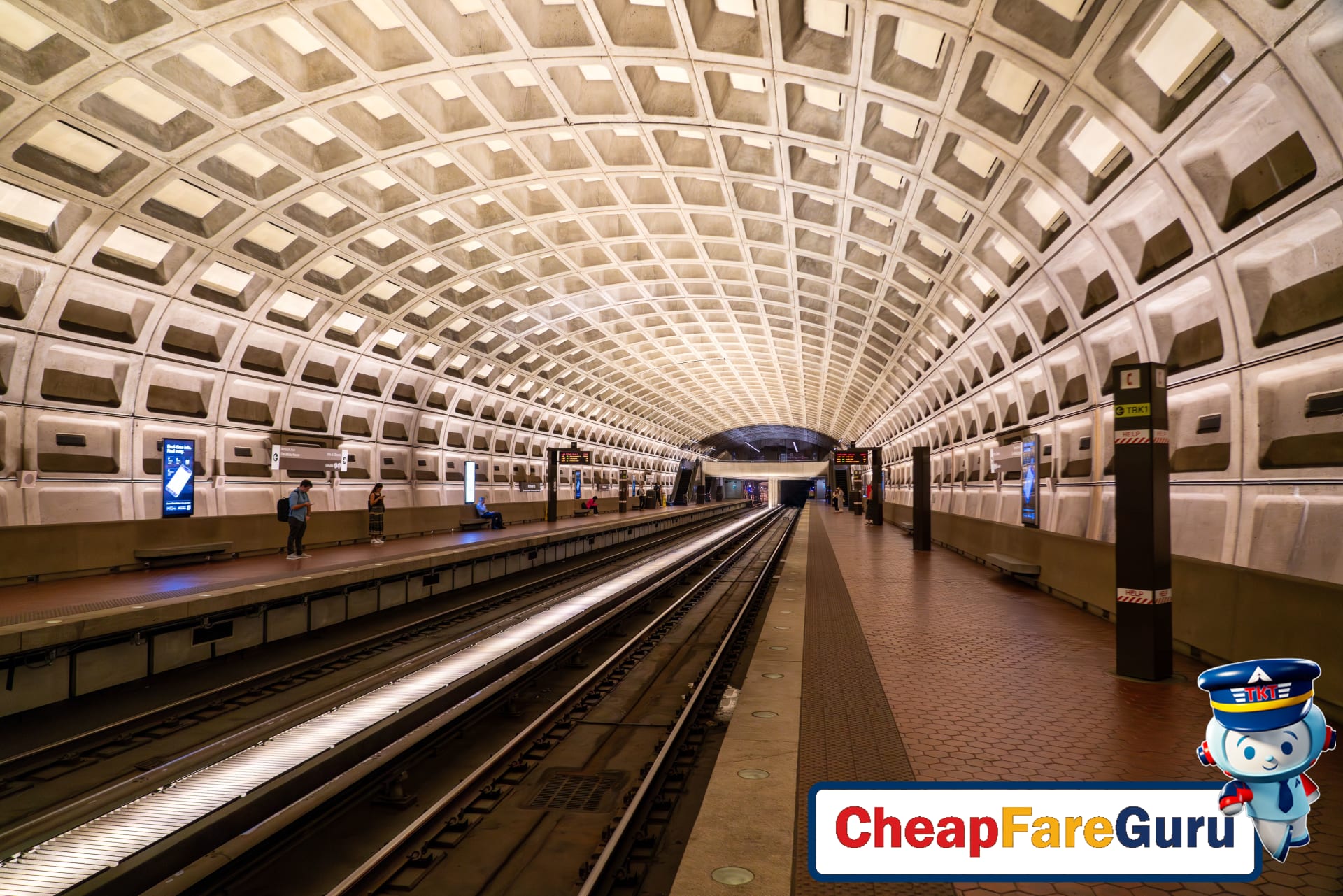
The DC Metro is one of the fastest ways to get around Washington, DC, especially if you want to skip city traffic and parking headaches. If you’re new to the Metro, start by checking the official Metro map to plan your route—every color-coded line connects major neighborhoods and attractions, with key stations like Metro Center, Gallery Place, and L’Enfant Plaza serving as main transfer points. Trains generally run from early morning until late at night, but service hours can vary by line and day, so I usually recommend checking schedules before heading out.
To ride, you’ll need a SmarTrip card, which you can buy from vending machines at any Metro station. The first time I bought a SmarTrip card, I was surprised by how easy it was to reload it right at the station kiosks or through the official WMATA app. Fares are calculated based on distance and time of day, so be sure to tap your card both when entering and exiting.
Metro Navigation And Etiquette
If you’re traveling during rush hour—typically weekday mornings and evenings—expect crowded trains and platforms. Stand to the right on escalators to let others pass, and always let passengers exit before you board. Seating is first-come, first-served, but priority seats near the doors are reserved for seniors and people with disabilities. Most stations and trains are accessible, with elevators and tactile platform edges for those who need them.
Transfers, Express Trains, And More
Transferring lines is straightforward at major hubs, but I’d compare transfer options on the Metro map in advance to avoid backtracking. While the DC Metro doesn’t offer traditional express trains, some lines skip less-busy stations during peak times, so pay attention to train displays and announcements. For more tips on stretching your transit budget, check out our guide on How To Save on City Transportation Costs.
When Metrobus Is The Better Choice

Metrobus in Washington, DC, fills in the gaps where the Metro doesn’t reach, making it especially useful if your destination isn’t near a train station or if you’re traveling outside Metro hours. I remember the first time I relied on Metrobus to get to a museum early on a Sunday—Metro wasn’t running yet, but the bus got me there right on time. Buses also tend to run more frequently along major corridors, and they’re a solid alternative during Metro service disruptions or track work.
Finding Stops And Planning Routes
Metrobus stops are marked with red, white, and blue signs showing route numbers and a map. To plan your trip, I’d suggest using Google Maps or the WMATA Metrobus information page, which lets you check live arrival times and route details. Google Maps is especially handy for seeing real-time ETAs and finding the fastest route, especially if you’re in a hurry or traveling with family—buses are stroller-friendly and easier for groups. If you’re visiting with kids, you might find our Traveling DC With Kids guide helpful for more family-specific tips.
Paying Fares And Riding Etiquette
You can pay your Metrobus fare with a SmarTrip card or exact cash (no change given). Tap your SmarTrip at the front when boarding. If using cash, drop your bills and coins into the farebox. Once on board, move quickly to your seat or stand behind the yellow line. Offer seats to seniors and people with disabilities, and keep bags off empty seats when it’s crowded. Exiting is simple—just pull the cord before your stop.
How To Use Capital Bikeshare

Capital Bikeshare is Washington DC’s public bike rental system, offering thousands of bright red bikes at docking stations across the city and nearby suburbs. You’ll find docks near major attractions, Metro stops, and in neighborhoods throughout the District, making it a convenient way to get around without relying on a car or rideshare.
You can rent a bike as a casual user or sign up for a membership. Casual trips are easy—just use your credit card or the Capital Bikeshare app at any kiosk and pay about $2.00 for a short ride. If you’re planning multiple rides in a day, a day pass or monthly membership might save you money. For the latest membership details and pricing, I always check the official Capital Bikeshare website before committing.
Renting is straightforward: unlock a bike at the dock using the app or a ride code from the kiosk, adjust your seat, and start pedaling. When you’re done, return the bike to any station with an open dock. The app will show you real-time dock availability—something I learned is crucial, since a full or empty station can throw off your plans. Personally, I found biking in DC easier than I expected, especially with the city’s growing network of protected bike lanes, though traffic can be busy in some areas.
Safety And Local Bike Laws
DC encourages safe cycling, but helmets aren’t required for adults—though I recommend wearing one for peace of mind. Bike lanes are well-marked on many major streets, and some routes have dedicated, protected lanes. Always watch for turning vehicles and pedestrians, and use lights at night. If you’re combining bikes with public transit, you can dock your bike near most Metro stations and bus stops for a smooth transfer.
For more ideas on enjoying the outdoors in DC, check out our guide to the Best Outdoor Activities in DC for even more inspiration.
How To Use SmarTrip Everywhere

Washington DC’s SmarTrip card is a real game-changer for getting around. With just one card, you can pay for Metro trains, Metrobus rides, regional commuter rail like MARC and VRE, and even parking at Metro-operated garages. I’ve hopped from the Metro to a bus and then parked—all with the same SmarTrip card in a single day, which made my travels much more straightforward.
Buying a SmarTrip card is simple. You can pick one up at any Metro station vending machine, select retail locations, or order online. Reloading is just as easy: use station machines, participating retailers, or add value instantly through the SmarTrip app or your online account. I usually recommend checking the official WMATA site for the latest list of reload stations, as locations can change.
Registering your card online is a smart move. This lets you track your balance, reload funds, and—most importantly—protect your money if you lose the card. If your registered card goes missing, you can report it and transfer the balance to a new one. Unregistered cards can’t be replaced, so I always take a minute to register mine right after purchase.
For more advice on avoiding transit pitfalls, check out our post on Common Travel Mistakes To Avoid In DC.
Saving Money With Transit Passes

DC’s public transportation system offers several types of transit passes designed to help visitors save money, especially if you plan to explore a lot in a short time. You’ll find unlimited day passes, weekly options, and special deals for tourists. Children typically ride at a discount, and there are passes specifically for families traveling together. The unlimited-ride day pass is especially handy for sightseeing—when I compared the day pass cost to individual fares for a packed day of museum hopping, the savings added up quickly.
For most travelers, a pass becomes worthwhile if you plan to take at least three or four Metro or bus rides in one day. The WMATA’s official visitor pass and fare promotion page is the best place to check current offers. Passes can be purchased at Metro stations, online, or through the SmarTrip app. Using them is simple: just tap your card or phone at the gate or farebox. If you’re planning a weekend packed with activities, look for special unlimited ride deals that are often available on Saturdays and Sundays.
If you’re looking for more ways to save while exploring, check out our guide to Affordable Things To Do In DC.
Sample One-Day DC Transit Itinerary

Planning a one-day adventure in Washington DC using public transit is totally doable—and honestly, it’s the way I prefer to see the city. With a little strategy, you can cover a lot of ground using Metro, Metrobus, and Capital Bikeshare. Here’s a practical sample itinerary that balances major sights with easy transfers, plus a few tips I’ve picked up along the way.
Morning: National Mall Museums
Start your day early at Smithsonian Metro Station (Blue, Orange, Silver lines). From here, you’re steps away from the National Mall’s most famous museums. I usually recommend the National Museum of American History and the National Air and Space Museum as top picks—both are an easy walk from the Metro exit. If you want more ideas, check out this guide to must-see museums in Washington DC for inspiration.
Midday: Monuments & Memorials
After a couple of museums, grab a Capital Bikeshare from one of the many stations near the Mall. Biking is the fastest way to see the Lincoln Memorial, World War II Memorial, and Martin Luther King Jr. Memorial in a single loop. Dock your bike and take time to walk around—this is where you’ll get those postcard-worthy views.
Afternoon: Local Neighborhoods
Ready for a change of pace? Hop back on the Metro from Smithsonian or L’Enfant Plaza and ride to U Street or Dupont Circle. Both neighborhoods offer great lunch spots and local flavor. In my own explorations, I’ve found the U Street stop especially convenient for grabbing a bite and exploring DC’s music history.
Late Afternoon: Capitol Hill or Georgetown
Finish your day with a Metrobus ride to Capitol Hill (routes like the 30N or 30S) or take Bikeshare to Georgetown for some riverside strolling and shopping. Just keep an eye on the time—DC’s rush hour can sneak up on you, so plan your return toward Metro Center or your hotel accordingly.
Washington DC Transit Budget Table

Planning your Washington DC trip is much easier when you have a clear sense of daily costs. I’ve found that making budget-conscious choices on things like transport and food lets you see more of DC’s museums and monuments in a single visit. Here’s a breakdown of what you can expect to spend per day, whether you’re sticking to the basics or indulging a bit more. If you want even more ways to stretch your sightseeing dollars, check out our guide on How To Visit Top DC Sites For Less.
| Budget | Mid-range | Luxury | |
|---|---|---|---|
| Accommodation | $60.00 | $150.00 | $350.00 |
| Food | $20.00 | $50.00 | $120.00 |
| Transport | $8.00 | $20.00 | $50.00 |
| Activities | $10.00 | $30.00 | $70.00 |
Frequently Asked Questions About Transit
Travelers often ask me about the ins and outs of getting around DC, especially when it comes to using public transportation and choosing the best way to reach the city’s top sights. Here are the most common questions I hear, along with practical answers to help you plan your trip.
- What’s the easiest way of getting around DC without a car?
The Metro system is the backbone of DC transit, with color-coded lines covering most major areas and attractions. I usually recommend using the Metro and Metrobus for sightseeing, since parking is tough and traffic can be unpredictable. Walking is also practical in central neighborhoods like the National Mall and Capitol Hill.
- How do I pay for Metro or bus rides?
To ride the Metro or Metrobus, you’ll need a SmarTrip card, which you can buy at any Metro station or order online before your trip. You load the card with funds and tap it at the gate or farebox. A single Metro ride typically costs about $2.00, depending on distance and time of day.
- Is getting around DC safe at night?
Most central areas and Metro stations are well-patrolled and busy until late evening, especially around tourist sites. Still, I’d suggest avoiding empty Metro cars and sticking to well-lit streets after dark. For more details, check out our Washington DC Safety Tips For Visitors guide if you want extra peace of mind.
- Are taxis and rideshares convenient in DC?
Taxis and rideshares like Uber and Lyft are widely available in DC, especially near hotels, airports, and major landmarks. They’re handy if you’re traveling late, with luggage, or heading somewhere not easily reached by Metro. Just be aware that traffic delays can raise fares during peak hours or special events downtown.
- Can I use bikes or scooters for getting around DC?
DC has a robust bike-share system called Capital Bikeshare, plus plenty of rentable electric scooters. You’ll find docking stations and scooters all over downtown and near the monuments. I find these options especially useful for short trips or when the weather’s nice, but always use the bike lanes and wear a helmet for safety.
- What’s the best way to get from the airport into DC?
From Reagan National Airport, the Metro’s Blue and Yellow lines take you directly into the city center. Dulles International now has a Silver Line Metro stop, while Baltimore-Washington (BWI) travelers can use the MARC train or a shuttle to connect with Metro. Taxis and rideshares are also available at all airports.
Making The Most of DC Transit
Exploring Washington, DC is so much easier when you use Metro, Metrobus, and Bikeshare. These three options connect you to nearly every corner of the city, whether you’re heading to museums, neighborhoods, or out for a late-night bite. I’ve found that mixing all three gives you the freedom to move at your own pace and skip the parking headaches.
Trying Metro for the big sights, hopping a bus for hidden gems, and cruising on a Bikeshare bike between neighborhoods really lets you experience DC like a local. If you’re still planning your trip, check out cheapfareguru.com for flight deals to help you get here without spending more than you need.